
03 September 2026
Bathtub Screens 2026: Glass vs. Curtain Guide | Mudelar
Choosing the right bathtub screens? Compare glass, aluminium, and curtain options for your bathroom renovation in Portugal. Get a free quote for your project.
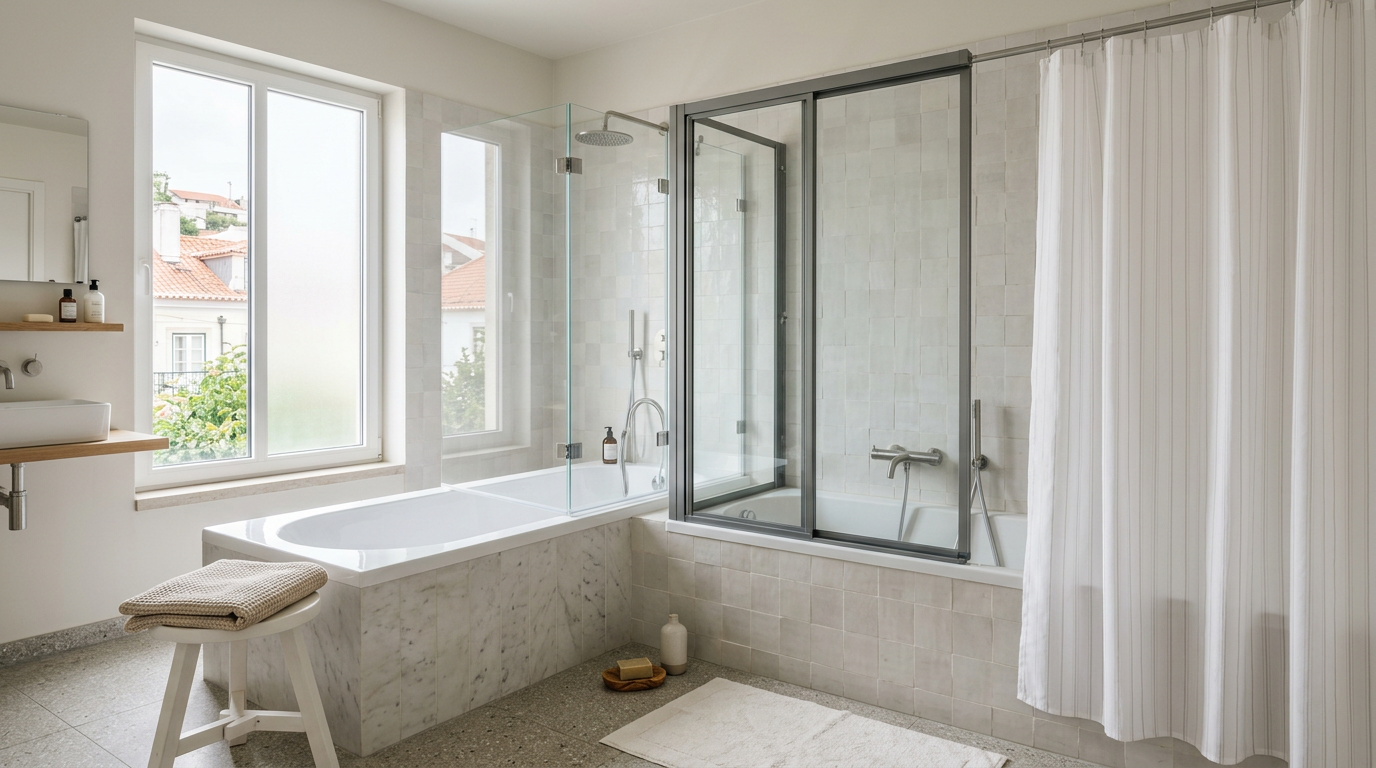
As a technical lead at Mudelar, I’ve overseen countless bathroom renovations across Portugal, and one of the most impactful decisions is choosing the right bathtub screens. It might seem like a minor detail, but this choice fundamentally affects your bathroom's functionality, safety, and long-term maintenance. It’s about more than just keeping water off the floor; it’s about creating a space that is both beautiful and practical. In this guide, I'll walk you through the pros and cons of sleek glass panels, sturdy aluminium-framed screens, and traditional shower curtains, giving you the hands-on advice you need to make the best choice for your home in Porto, Lisbon, or anywhere in between.
Quick summary
- Glass Screens: Offer a modern, minimalist aesthetic and make small bathrooms feel larger, but require regular cleaning to prevent limescale.
- Framed Aluminium Screens: Provide maximum durability and water containment, with various frame finishes like matte black or chrome to match your fixtures.
- Shower Curtains: Are a flexible and easily changeable option, but are prone to mould and less effective at preventing water splashes.
- Safety is Paramount: Always choose tempered safety glass (at least 6mm thick) for any glass screen to prevent dangerous breakages.
- Installation Matters: Professional installation is crucial for a watertight seal and to ensure the screen is securely fixed, especially on older, uneven walls.
- Functionality First: Consider your bathroom layout. A folding or sliding screen might be better for a compact space than a fixed panel.
- Long-Term Value: While curtains are a quick fix, a well-installed glass bathtub screen adds lasting value and functionality to your property.
Table of contents
- What Are Bathtub Screens and Why Do They Matter?
- Deep Dive: Glass Bathtub Screens
- Understanding Aluminium-Framed Screens
- The Case for (and Against) Shower Curtains
- The Installation Process: A Step-by-Step Guide
- Maintenance and Cleaning for Long-Term Durability
- Choosing the Right Bathtub Screen for Your Space
What Are Bathtub Screens and Why Do They Matter?
A bathtub screen is a barrier, typically made of glass or rigid plastic, installed on the edge of a bathtub to contain water during a shower. Unlike a shower curtain, a screen provides a solid, more permanent structure. Its primary purpose is functional: to prevent water from splashing onto the floor, which can cause slip hazards, water damage to flooring and subflooring, and encourage the growth of mould and mildew. In the humid climate of coastal cities like Aveiro and Porto, effective water containment is not a luxury—it's a necessity for a healthy home.
Beyond pure function, the right bathtub screen plays a significant role in the overall aesthetic of your bathroom. A clear, frameless glass screen can make a small bathroom feel more open and spacious, a common challenge in city apartments in Lisbon or Sintra. Conversely, a framed screen with a bold matte black finish can become a striking design feature. Choosing a screen is a key decision in any bathroom renovation, balancing practicality with the style you want to achieve.
Deep Dive: Glass Bathtub Screens
Glass is by far the most popular choice for modern bathtub screens, and for good reason. It offers unparalleled clarity and a high-end finish that can elevate any bathroom design. However, not all glass screens are created equal. Understanding the different types, styles, and features is essential before making a decision. As a team, we at Mudelar always prioritise safety and quality, so let's break down the details.
Types of Glass and Safety Standards
The most critical factor is the type of glass used. It must be tempered safety glass. This glass is heat-treated to be four to five times stronger than standard glass. If it does break, it shatters into small, blunt, pebble-like pieces rather than sharp shards, significantly reducing the risk of injury. Standard thicknesses are 6mm, 8mm, and 10mm. While 6mm is perfectly adequate and the most common, 8mm or 10mm options provide a more substantial, luxurious feel and enhanced rigidity, especially for larger or frameless panels.
Frameless vs. Framed vs. Semi-Framed
The structure supporting the glass defines its style. A frameless screen uses minimal hardware—just clips or hinges attached directly to the wall—for a clean, all-glass look that's easy to clean. Framed screens have a full aluminium frame around the glass panel, offering maximum sturdiness and water-tightness. Semi-framed screens offer a compromise, with framing on some sides but not all, often leaving the top and opening edge exposed for a lighter appearance.
Styles and Configurations
Your bathroom's layout will heavily influence the best configuration. Here are the main options:
- Fixed Panel: A single, stationary pane of glass that covers part of the tub. It's minimalist and easy to clean but offers a smaller opening to get in and out.
- Folding (or Bi-Fold) Screen: Consists of two or more panels that fold inwards, either against the wall or onto each other. This is an excellent solution for small bathrooms in areas like Braga where space is at a premium, as it can be moved completely out of the way.
- Pivoting (or Hinged) Screen: A single panel that swings open like a door. It provides a wide opening but requires clear floor space for the door to swing.
- Sliding Screen: Typically has two overlapping panels that slide past each other. This is ideal for larger tubs but has more tracks and components to clean.
Understanding Aluminium-Framed Screens
While the trend leans towards frameless glass, aluminium-framed screens remain a robust and reliable option. Their primary advantage is structural integrity. The frame provides excellent support for the glass panel, making it a durable choice for high-traffic family bathrooms. The seals and overlaps inherent in a framed design often provide superior water containment, leaving little room for leaks.
Frame Finishes and Aesthetics
Modern aluminium frames are available in a wide array of finishes beyond the traditional polished chrome. Matte black frames are incredibly popular, offering a bold, industrial-chic statement that pairs well with matching taps from brands like Grohe. Other options include white, brushed nickel, and anodised silver, allowing you to perfectly coordinate the screen with your bathroom's hardware and tile choices. This level of customisation ensures the screen acts as a cohesive part of your overall design, not just a functional afterthought.
Infill Panel Options
While tempered glass is the standard infill, framed screens can also accommodate other materials like patterned or frosted glass for added privacy. Less common today, but still an option in some models, are acrylic or polystyrene panels. These are lighter and generally have a lower price point, but they scratch more easily and can yellow over time. For a durable, high-quality renovation, I always recommend sticking with tempered glass as the infill material, even within a frame.
The Case for (and Against) Shower Curtains
No discussion about bathtub enclosures is complete without mentioning the classic shower curtain. For decades, it was the default solution, and it still holds some advantages. Curtains offer endless design possibilities—colours, patterns, and textures can be changed in minutes to refresh the bathroom's look. They are also easy to install and replace, requiring no permanent alteration to the walls or tub.
However, from a technical standpoint, the disadvantages are significant. Shower curtains are far less effective at containing water. Billowing curtains can let water splash onto the floor, and the bottom often clings to the inside of the tub, failing to create a proper seal. More importantly, they are a prime breeding ground for mould and mildew. The fabric stays damp and requires frequent washing or replacement to remain hygienic, making them a high-maintenance item in the long run. For a truly professional, lasting renovation, a glass screen is almost always the superior choice.
The Installation Process: A Step-by-Step Guide
Properly installing a bathtub screen is a job where precision is non-negotiable. A poor installation will lead to leaks, instability, and potential damage. As a professional, this is the process my team at Mudelar follows:
- Preparation and Measurement: First, we check the wall for plumb (vertical straightness) using a spirit level. An out-of-plumb wall requires shims or adjustments. We then confirm the bathtub's top edge is level and wide enough to support the screen's base profile.
- Marking the Position: The wall profile is held against the wall, and its position is carefully marked. We double-check that it is perfectly vertical. The screw holes are then marked through the profile onto the tile.
- Drilling and Anchoring: This is a critical step. We use a diamond-tipped drill bit specifically for porcelain or ceramic tiles to prevent cracking. Once through the tile, we switch to a masonry bit for the wall behind it. High-quality wall plugs are inserted to ensure a secure anchor.
- Fixing the Wall Profile: The aluminium wall channel is screwed securely into place. A thin bead of mould-resistant silicone is often applied behind the profile for an initial waterproof barrier.
- Fitting the Glass Panel: The glass screen is carefully slotted into the wall profile. Depending on the model, it is then secured with screws or a compression fitting.
- Sealing: The final, most crucial step for water-tightness. We apply a continuous bead of high-quality, anti-fungal silicone sealant along the exterior join between the frame and the wall, and between the base of the screen and the bathtub. The interior is generally left unsealed to allow any water that gets into the channel to drain back into the tub. The silicone requires about 24 hours to cure fully.
Maintenance and Cleaning for Long-Term Durability
Keeping your new bathtub screen looking its best is straightforward with the right routine. The biggest enemy of glass screens is limescale (hard water deposits). The best defence is to use a squeegee to wipe down the glass after every shower. This takes less than 30 seconds and dramatically reduces buildup. For weekly cleaning, a simple solution of white vinegar and water is effective and non-toxic.
For screens with an anti-limescale coating, avoid abrasive cleaners or harsh chemicals, as they can damage the protective layer. Stick to soft cloths and pH-neutral cleaners. For aluminium frames, especially matte black or other special finishes, a gentle, non-abrasive cleaner is essential to prevent scratching or discolouration. Regularly check the silicone seal for any signs of peeling or mould and have it replaced if necessary to maintain a perfect seal.
Choosing the Right Bathtub Screen for Your Space
Tailoring the screen to your specific bathroom is key to a successful outcome. The needs of a small guest bathroom in an Almada apartment are very different from a large family bathroom in a house in Cascais.
For Small Bathrooms
In a compact space, the goal is to create an illusion of size and openness. A frameless, clear glass screen is the best choice. It allows light to pass through and avoids visually dividing the room. A folding screen that can be pushed back against the wall is also an excellent option, as it opens up the entire bathtub area when not in use, making the room feel much larger.
For Family Bathrooms
Durability and ease of use are priorities here. A sturdy, semi-framed or fully framed screen can withstand more wear and tear. A fixed panel combined with a hinged door can offer a good balance of robustness and accessibility for bathing children. Opting for glass with an anti-limescale coating will be a huge time-saver in a busy household.
For a Luxury or Master En-suite
To create a spa-like, luxurious feel, invest in a premium screen. This means a frameless design using thick 10mm tempered glass. A simple, large fixed panel exudes minimalist elegance. Consider high-end hardware finishes like brushed brass or gunmetal to match fixtures from brands like Roca or Sanindusa for a cohesive, designer look.
Recommended materials and options
Request a free, no-commitment quote. We reply within 24 hours.
Request a quote →| Type | Features | When to choose |
|---|---|---|
| Frameless Tempered Glass Screen | 8-10mm thick safety glass, minimal hardware, clear or frosted finish. | For a modern, minimalist look and to make small bathrooms feel larger. |
| Semi-Framed Glass Screen | 6-8mm thick safety glass with a frame on the wall-side and base. | A good balance between the sleek look of frameless and the sturdiness of framed. |
| Fully-Framed Aluminium Screen | 6mm safety glass enclosed in an aluminium frame (chrome, black, white). | For maximum durability, water-tightness, and in high-traffic family bathrooms. |
| Folding (Bi-Fold) Bath Screen | Multiple glass panels that fold inwards against the wall. | Ideal for small bathrooms where floor space is limited and you want to open up the tub area. |
| Fixed Panel Screen with Pivot Door | A stationary glass panel combined with a hinged door section. | A versatile option for larger tubs, providing a splash guard and a wide entry point. |
Quick comparison
| Feature | Glass Screen (Frameless) | Aluminium-Framed Screen | Shower Curtain |
|---|---|---|---|
| Durability | High (with tempered glass) | Very High | Low (needs frequent replacement) |
| Water Containment | Good to Excellent | Excellent | Poor to Fair |
| Maintenance | Requires regular squeegeeing | Easy to clean, tracks can trap dirt | High (requires frequent washing) |
| Aesthetic Appeal | High (modern, sleek) | Medium to High (can be a design feature) | Low to Medium (less premium) |
| Spatial Perception | Makes space feel larger | Can make space feel more enclosed | Neutral to slightly enclosing |
Common mistakes to avoid
- Taking Incorrect Measurements. Even a few millimetres can make a difference. Always measure at the top, middle, and bottom, as walls are rarely perfectly straight.
- Ignoring the Wall's Condition. Attempting to install a heavy glass screen on a weak or non-plumb plasterboard wall without proper reinforcement is a recipe for disaster.
- Using Cheap, Low-Quality Silicone. This will quickly lead to leaks, peeling, and black mould. Always use a top-grade, anti-fungal sanitary silicone.
- Choosing the Wrong Opening Style. Installing a pivot door that can't open fully because it hits the toilet or vanity is a common and frustrating planning error.
- Forgetting to Check the Bathtub Lip. The top edge of the bath must be wide enough and flat enough to accommodate the screen's base profile and create a seal.
- Drilling Tiles Incorrectly. Using the wrong drill bit or too much pressure will crack your expensive bathroom tiles, creating a much bigger problem.
- Sealing the Inside of the Screen. Sealing the join between the frame and the tub on the inside traps water within the profile, leading to stagnant water and mould. It should only be sealed on the outside.
Pre-project checklist
- Measure the length of the bathtub area you want to cover.
- Measure the desired height of the screen (typically 140-150cm).
- Use a spirit level to check if the wall is plumb.
- Confirm your wall is solid (brick/block) or has been reinforced if it's plasterboard.
- Decide on the opening mechanism: fixed, folding, pivoting, or sliding.
- Choose between frameless, semi-framed, or fully framed.
- Select your glass thickness (6mm, 8mm, or 10mm) and finish (clear, frosted).
- Choose a frame and hardware finish (chrome, black, etc.) to match your taps.
- Verify the bathtub rim is at least 5cm wide and flat.
- Plan for professional installation to ensure warranty and a perfect, leak-proof fit.
How Mudelar handles it
At Mudelar, we integrate the selection and installation of your bathtub screen into our seamless turnkey renovation process. It begins with a detailed on-site survey where we take precise measurements and assess the specific conditions of your bathroom. We guide you through the options, helping you select the perfect screen from trusted manufacturers like Roca and Sanindusa that complements your design and meets your functional needs. Our expert installers handle the entire process, from preparing the surface to the final meticulous silicone seal, ensuring a flawless and water-tight result. This attention to detail is part of our services and commitment to quality. You can learn more about us and our approach to creating beautiful, functional homes. To start your project, simply request a free quote.
Frequently asked questions (FAQ)
How long does it take to install a bathtub screen?
A professional can typically install a standard bathtub screen in 2 to 4 hours. This includes preparation, fitting, and sealing. However, you must wait at least 24 hours for the silicone sealant to fully cure before using the shower to ensure a completely waterproof seal.
Do I need a permit to install a bathtub screen in Portugal?
No, you do not need a license or permit to install a bathtub screen. This type of work is considered a minor interior finishing and does not require municipal approval, whether you're in a house or an apartment.
Is a glass bathtub screen safe for a family with children?
Absolutely, provided it is made from tempered safety glass. This is a legal requirement for shower enclosures in most places. Tempered glass is incredibly strong, and if it were to break under extreme force, it would crumble into small, dull pieces, posing a much lower risk of injury than standard glass.
What's the difference between a fixed and a folding bath screen?
A fixed screen is a single, stationary panel of glass that covers a portion of the tub, typically the area directly under the shower head. A folding screen consists of multiple panels connected by hinges, allowing it to be folded back against the wall, opening up the entire tub area. Folding screens are ideal for small bathrooms or for easier access when bathing children.
How do you stop a glass shower screen from leaking?
Leak prevention comes down to two things: proper installation and high-quality materials. The screen must be fitted perfectly plumb against the wall and sealed meticulously along the outside edge and wall join with a premium, anti-mould sanitary silicone. A professional installation is the best way to guarantee a leak-proof result.
How thick should a glass bathtub screen be?
The standard thickness for a quality bathtub screen is 6mm tempered glass. This provides sufficient strength and rigidity for most applications, especially in framed or semi-framed models. For a more luxurious, premium feel, especially with larger or frameless screens, 8mm or 10mm glass is recommended.
Is a frameless bath screen better than a framed one?
Neither is inherently 'better'; it depends on your priorities. Frameless screens offer a superior, modern aesthetic and are easier to clean. Framed screens offer maximum structural strength and are often more effective at containing water, making them a very practical choice for a busy family bathroom. The decision is a balance between style and rugged functionality.
How to choose the right size bathtub screen?
For length, the screen should cover at least half the length of the tub, extending past the shower head to contain splashes. A length of 80-90cm is common for a standard 170cm tub. For height, a standard of 140cm to 150cm from the tub edge is usually sufficient to prevent water from splashing over the top for most users.
Conclusion
Choosing between glass bathtub screens, framed units, or a simple curtain is a defining moment in your bathroom renovation. As we've explored, the decision hinges on a balance of aesthetics, functionality, durability, and your willingness to perform routine maintenance. A glass screen, whether frameless or framed, is a clear investment in your property's long-term value and daily comfort, offering superior water protection and a polished look. A shower curtain offers flexibility but falls short on performance and hygiene. My advice is to prioritise a solution that will stand the test of time. For expert guidance tailored to your home in Setúbal or anywhere in Portugal, please don't hesitate to request a free quote.
Ready to start your renovation?
Request a free, no-commitment quote. We reply within 24 hours.
Request a quoteLer em português: Resguardos de Banheira: Vidro ou Cortina? Guia 2026 | Mudelar