
14 August 2026
Handles vs Handleless Kitchens 2026: A Lisbon Guide | Mudelar
Choosing handles vs handleless kitchen cabinets? Our 2026 guide covers the pros, cons, and styles for your Lisbon home. Get a free quote from Mudelar.
As a project manager here at Mudelar, I’ve overseen dozens of kitchen renovations across Lisbon and Porto. One of the biggest decisions homeowners face is choosing between traditional handles and a sleek, handleless kitchen cabinet design. It’s more than just aesthetics; it affects daily workflow, cleaning routines, and the overall feel of your space. Whether you're in a modern apartment in Oeiras or a family home in Setúbal, this choice sets the tone. In this guide, I’ll share my hands-on experience, breaking down the pros and cons of each style to help you make an informed decision for your kitchen renovation in Portugal. We will cover everything from mechanisms and materials to long-term practicality.
Quick summary
- Sleek Aesthetics: Handleless kitchens offer a clean, uninterrupted, and minimalist look, perfect for modern and contemporary homes.
- Functionality Matters: Traditional handles are often more intuitive and easier to grip, especially for those with limited hand strength or when hands are wet.
- Cleaning Differences: Handleless cabinets have smooth surfaces that are easy to wipe down, but high-gloss finishes may show fingerprints more readily. Handle crevices can trap grime.
- Mechanism Types: Handleless isn't one-size-fits-all. Options include 'true handleless' with a Gola rail, integrated J-pull doors, and push-to-open systems, each with unique pros and cons.
- Style Cohesion: The choice should complement your home's architecture and your other appliances. A handleless design works best when all elements are cohesive.
- Material Focus: A handleless design places greater emphasis on the cabinet material and finish, making choices like Fenix NTM or high-quality laminates from Egger even more important.
Table of contents
- What Are Handleless Kitchen Cabinets? The Sleek Alternative
- The Case for Traditional Handles: Timeless and Practical
- Design Aesthetics: Choosing a Look for Your Lisbon Home
- Functionality and Ergonomics: A Day-to-Day Comparison
- Cleaning and Maintenance: What to Expect
- Materials and Finishes: How They Impact Your Choice
- Recommended materials and options
- Quick comparison
- Common mistakes to avoid
- Pre-project checklist
- How Mudelar handles it
- Frequently asked questions (FAQ)
- Conclusion
What Are Handleless Kitchen Cabinets? The Sleek Alternative
The term handleless kitchen cabinets refers to a design style where doors and drawers have no external handles. This creates a smooth, unbroken line of cabinetry that is highly sought after in modern design. But it's not just one system; there are a few clever ways we achieve this look. Understanding them is key to choosing the right fit for your home, whether you're in a new build in Amadora or renovating a classic apartment in Lisbon's city centre.
I always tell my clients that the 'how' is just as important as the 'what'. A handleless design is defined by its opening mechanism, which directly impacts its usability and longevity. The choice you make will affect how you interact with your kitchen every single day.
True Handleless (Gola Profile System)
This is what designers consider 'true handleless'. A continuous metal or plastic channel, known as a Gola profile, is installed horizontally along the top of the base cabinets and vertically between tall cabinets. This creates a gap that you can hook your fingers into to pull the door or drawer open. It’s a structurally integrated solution that provides a stunning, high-end look and is very robust. The key here is precision during installation, as the Gola profile must be perfectly aligned for a seamless appearance.
J-Pull or Integrated Handles
This is a very popular and practical approach. Instead of a separate channel on the cabinet carcase, a 'J' shaped groove is routed directly into the top or side edge of the cabinet door or drawer front itself. Your fingers slip into this recess to pull it open. This method is simpler to install than a Gola system and still delivers that clean, handleless look. Brands like Egger and Kronospan offer door fronts with these integrated profiles, ensuring a perfect factory finish on the moisture-resistant MDF core.
Push-to-Open Mechanisms
For the ultimate minimalist aesthetic, push-to-open hardware is the answer. A spring-loaded mechanical or magnetic device is installed inside the cabinet. You simply push the door or drawer front, and it springs open a few centimetres, allowing you to pull it fully open. This system allows for completely flat, uninterrupted surfaces. However, the quality of the mechanism is paramount. I've seen low-quality versions fail within a year, so we at Mudelar only use trusted, durable brands to ensure reliability for our clients in places like Cascais and Oeiras.
The Case for Traditional Handles: Timeless and Practical
While the buzz is often around handleless designs, we shouldn't dismiss the enduring appeal of traditional handles. For many homeowners in Portugal, especially those blending modern updates with classic architecture, handles offer a perfect balance of form and function. They are not just functional items; they are the 'jewellery' of your kitchen, providing an opportunity to inject personality and style. The range of options is vast, from simple knobs to statement bar pulls.
Handles are incredibly practical. They provide a clear, easy-to-grab point of contact, which is fantastic when your hands are wet or full. For families with young children or older adults who might struggle with the grip needed for a J-pull or the coordination for a push-to-open system, handles are often the more ergonomic and accessible choice. This is a crucial point I always discuss during our initial on-site consultations, from Braga to Setúbal.
A World of Style
Unlike the singular minimalist statement of a handleless kitchen, handles open up a world of design possibilities. You can choose a sleek, brushed nickel bar handle for a contemporary look, a matte black knob for an industrial edge, or an antique brass cup handle for a more traditional or farmhouse feel. This versatility allows you to customise your kitchen to a much finer degree. You can even change the handles years later for a quick and effective style update, something not possible with an integrated handleless design.
Co-ordinating with Appliances
One practical aspect often overlooked in the early design stages is how your cabinets will coordinate with your appliances. Most ovens, refrigerators, and dishwashers come with handles. In a kitchen with handled cabinets, these elements blend in seamlessly. In a strictly handleless kitchen, a large refrigerator handle can sometimes disrupt the clean lines. While integrated appliances solve this, it's an important consideration that a handled design navigates more easily.
Design Aesthetics: Choosing a Look for Your Lisbon Home
The choice between handles and handleless is fundamentally a stylistic one. It dictates the entire visual language of your kitchen. A handleless kitchen cabinet design is the cornerstone of minimalism. It's about clean lines, uncluttered surfaces, and a sense of calm. The focus shifts from hardware to the material and finish of the cabinetry itself. This style is incredibly popular in modern apartments across Lisbon and Porto, creating a feeling of space even in smaller kitchens.
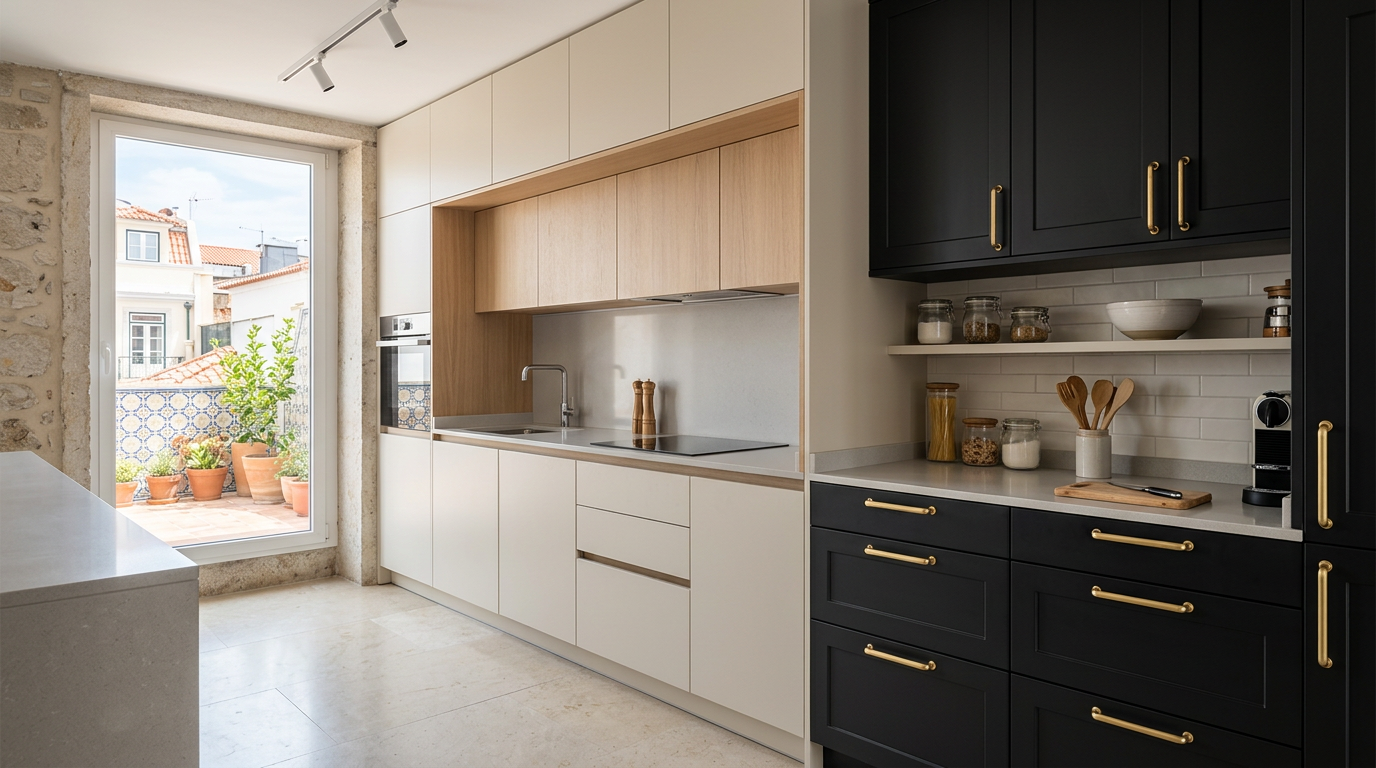
On the other hand, handled kitchens offer a broader stylistic spectrum. They can be just as modern as a handleless kitchen—think long, slim, metallic bar pulls on a dark matt cabinet. But they can also evoke classic charm, rustic warmth, or industrial chic, depending on the hardware chosen. For those living in character properties, such as a renovated townhouse in Sintra, handles can help bridge the gap between the building's original features and the new kitchen.
The Minimalist and Modern Appeal
If you're aiming for a sleek, efficient, and ultra-modern space, handleless is the clear winner. The unbroken horizontal lines draw the eye through the room, making the kitchen feel wider and more spacious. It’s a design choice that says 'less is more'. Paired with materials like engineered quartz from Silestone or Compac for the worktops, and high-quality matt or gloss lacquer doors, the result is a sophisticated, high-end look that is both timeless and very current.
Creating Character and Personality
Handles are an expressive element. They add texture, detail, and a tactile quality that handleless kitchens lack by design. Think of beautiful brass handles warming up a deep blue kitchen, or chunky stainless steel pulls adding a professional, chef's kitchen feel. This ability to add a finishing touch is why many of our clients in family homes around the Greater Lisbon area opt for handles. It allows them to put a personal stamp on what is truly the heart of their home.
Functionality and Ergonomics: A Day-to-Day Comparison
Beyond looks, how your kitchen works for you on a daily basis is paramount. I always encourage clients to think about their cooking style and household needs. Do you often cook with messy hands? Do you have children who will be opening and closing drawers? The answers can steer you toward one style over the other.
Traditional handles offer undeniable ergonomic benefits. They are easy to locate and grip without looking, and you can even open a drawer with the back of your hand if your fingers are covered in flour. This simple, effective functionality is a major advantage. For heavy, wide drawers full of pots and pans, a sturdy bar handle provides a confident and comfortable pull that a fingertip grip on a J-pull might not match.
In contrast, handleless kitchen cabinets have their own functional perks. The lack of protruding hardware means you won't snag your clothes or bump your hip on a handle corner—a small but appreciated benefit in a busy or narrow kitchen galley. The push-to-open mechanism is particularly useful for overhead cabinets; a simple nudge with your elbow is enough if your hands are full. However, it does add an extra step: push, wait for it to pop, then pull. This can feel less immediate than simply grabbing a handle.
The Touch and Feel
For a J-pull system, the depth and shape of the channel make a huge difference. A well-designed groove is comfortable to use, but a shallow or sharp-edged one can be awkward and even painful on the fingertips over time. This is why at Mudelar we source our cabinet fronts from reputable manufacturers who have perfected this ergonomic detail. Similarly, the 'action' of a push-to-open system matters. A good quality one is smooth and responsive, while a poor one can feel flimsy or require a hard shove.
Accessibility for All
Considering all members of the household is crucial. For people with arthritis or reduced grip strength, a traditional D-shaped or bar handle is often much easier to use than the pinch-grip required for a J-pull or true handleless rail. Conversely, the lack of handles can be a safety feature with very young children, removing tempting things to grab or climb on. It's about finding the right balance for your family's needs in your home, whether that's in Braga or Almada.
Cleaning and Maintenance: What to Expect
Keeping a kitchen clean is a daily reality, and the choice between handles and handleless directly impacts this chore. It’s one of the most practical questions I get from clients. My advice is always to be realistic about your tolerance for cleaning and to choose a finish that suits your lifestyle.
The most obvious advantage of a handleless kitchen is the smooth, unbroken surface. Wiping down a run of handleless doors is quick and satisfying. There are no obstacles to clean around, and no crevices in the hardware to trap grease and grime. This is a significant plus for anyone who values a low-maintenance, hygienic kitchen environment. A simple wipe with a microfibre cloth is usually all it takes to keep the fronts looking pristine.
However, there's a flip side. With handleless designs, you are touching the door or drawer surface itself to open it. This means fingerprints, smudges, and marks are more likely, especially on certain finishes. High-gloss doors, while stunning, are notorious for showing every single touch. Matt finishes, particularly advanced ones like Fenix NTM, are much more forgiving as they are often anti-fingerprint. J-pull channels, while part of the door, can also gather dust and crumbs over time and require a specific wipe-down.
The Reality of Cleaning Handles
With handled kitchens, the cabinet surface stays cleaner as you're only touching the handle. However, the handles themselves, and the area immediately around them, become hotspots for grime. Intricately designed or ornate handles can be particularly tricky to clean thoroughly. Simple bar pulls or knobs are easier, but they still require more detailed cleaning than a flat door. It’s a trade-off: fingerprints on the door surface versus grime build-up on and around the hardware.
Materials and Finishes: How They Impact Your Choice
Your choice of cabinet style heavily influences, and is influenced by, your choice of material. A handleless design, by its nature, makes the cabinet finish the star of the show. With no hardware to distract the eye, the texture, colour, and quality of the door front are paramount. This is why we often pair handleless designs with premium finishes.
For a sleek, modern handleless kitchen, materials like high-gloss or super-matt lacquered MDF, acrylic fronts, or advanced laminates like Fenix NTM are superb choices. They provide a flawless, uniform surface that enhances the minimalist aesthetic. Wood veneers can also be used in handleless designs, often with a horizontal grain to accentuate the clean lines and add organic warmth to the modern look. Sourcing high-quality, moisture-resistant MDF from suppliers like Egger or Kronospan is crucial for longevity, especially for integrated J-pull doors.
Materials Suited for Handles
Handled kitchens are more versatile in their material pairings. They work beautifully with shaker-style doors, which have a frame and panel construction that doesn't lend itself to a handleless format. This classic style, often made from solid wood or high-quality MDF, is perfect for creating a traditional, transitional, or farmhouse look. The handles you choose then complete the aesthetic. For example, a painted shaker door with brass cup handles is a timeless combination we often install in family homes across Portugal.
Ultimately, the material should support the design. A handleless kitchen demands a perfect, seamless finish, whereas a handled kitchen allows for more traditional construction methods and materials. When we design a kitchen at Mudelar, we present material samples alongside handle options so you can see and feel how they work together before making a final decision.
Recommended materials and options
Request a free, no-commitment quote. We reply within 24 hours.
Request a quote →Choosing the right mechanism or handle type is crucial for your kitchen's daily use. Here’s a breakdown of the most common options I discuss with my clients.
| Type | Features | When to choose |
|---|---|---|
| J-Pull (Integrated) | A 'J' shaped groove is routed into the door/drawer front. Clean lines, no hardware. | For a minimalist look without the complexity of a rail system. Great balance of form and function. |
| Push-to-Open | A mechanical or magnetic device inside the cabinet opens the door when pushed. | For the ultimate seamless, flat-fronted aesthetic. Ideal for wall cabinets or less-frequently used doors. |
| True Handleless (Gola) | A continuous metal channel is fitted to the cabinet carcase, creating a space to pull open doors. | For a high-end, architectural, and robust handleless design. Best for a completely new kitchen installation. |
| Bar Handles | Long, linear pulls, typically metal. Available in many lengths and finishes. | For a contemporary, modern, or industrial look. Ergonomic and easy to grab. Great on wide drawers. |
| Knob Handles | Single-point handles, usually round or square. Come in endless materials and styles. | For traditional, classic, or shaker-style kitchens. Easy to change for a future style update. |
Quick comparison
Here's a side-by-side look at the key differences to help you decide.
| Feature | Handleless Kitchens | Handled Kitchens |
|---|---|---|
| Aesthetics | Minimalist, sleek, modern, seamless. | Versatile: modern, traditional, industrial, rustic. |
| Cleaning | Easy to wipe down door surfaces; fingerprints can be an issue on certain finishes. J-pulls can collect dust. | Cabinet surfaces stay cleaner; handles and surrounding areas can trap grime. |
| Ergonomics | Can require more precise finger grip (J-Pull) or an extra step (Push-to-Open). | Generally easier to grip and open, especially with wet hands or for those with limited mobility. |
| Safety | No protruding hardware to bump into or snag clothes on. Safer for toddlers. | Handles can be a hazard in tight spaces. Can be used by children to climb. |
| Style Variety | Limited to modern and minimalist aesthetics. | Huge variety of handle styles allows for greater personalisation and customisation. |
| Appliance Integration | Requires careful planning to match appliance handles or use fully integrated appliances for a cohesive look. | Easily coordinates with standard, non-integrated appliances that have their own handles. |
Common mistakes to avoid
Over my years managing projects, I've seen a few recurring issues. Avoiding these pitfalls will ensure you're happy with your choice for years to come.
- Choosing a Low-Quality Push-to-Open Mechanism. This is the number one mistake. Cheap spring-loaded systems fail, get stuck, or lose their 'push'. Insist on high-quality, branded mechanisms with a good warranty. It's a small part that makes a huge difference.
- Ignoring Appliance Handles. You’ve designed a beautiful, sleek handleless kitchen, but your freestanding American-style fridge has two enormous vertical handles. This can completely disrupt the minimalist aesthetic. Plan your appliances and cabinets together for a cohesive look.
- Underestimating Fingerprints. A high-gloss white handleless kitchen looks incredible in a showroom, but in a real home with kids, it can be a constant battle against smudges. Be honest with yourself about your cleaning tolerance and choose an appropriate finish, like a matt or anti-fingerprint surface.
- Forgetting to Test the 'Feel'. Don't choose based on photos alone. How does the J-pull groove feel on your fingertips? Is the push-to-open action smooth? Visit a showroom to physically interact with the systems you're considering.
- Creating a 'Sterile' Environment. Sometimes, a completely handleless kitchen in a neutral colour can feel a bit clinical or cold. If you opt for this style, be sure to add warmth and personality through other elements like a textured backsplash, wood accents, or interesting lighting.
- Not Planning for Heavy Drawers. A wide, deep drawer filled with heavy pots and pans needs a sturdy opening mechanism. A flimsy J-pull or a standard push-to-open system might not be sufficient or feel secure. For heavy loads, a strong handle or a robust true handleless system is often better.
Pre-project checklist
Before you finalise your decision, run through this simple checklist to ensure you've covered all your bases.
- [ ] Assess your home's overall architectural style. Does it lean modern or traditional?
- [ ] Visit a showroom (or two!) to physically test J-pull, push-to-open, and various handle types.
- [ ] Make a list of your current and planned kitchen appliances, noting their handle design (or lack thereof).
- [ ] Consider who uses the kitchen: are there children, elderly family members, or anyone with mobility/grip challenges?
- [ ] Request samples of your preferred cabinet door finishes (e.g., high-gloss, matt, wood veneer) to see how they show fingerprints in your own home's light.
- [ ] Think about your cleaning habits. Are you a 'wipe-as-you-go' person or do you prefer a deeper weekly clean?
- [ ] Measure your kitchen's walkways. Are they narrow enough that protruding handles could be a nuisance?
- [ ] Review your inspiration photos: what is it you truly love about the kitchens you've saved? The hardware, or the lack of it?
How Mudelar handles it
At Mudelar, we understand that this is a significant decision. Our turnkey renovation process is designed to guide you to the perfect choice for your home and lifestyle. It begins with a detailed on-site consultation where we discuss your vision, daily routines, and aesthetic preferences. We don't just present one option; we explore the functional and visual implications of both handled and handleless kitchen cabinets within the context of your space in Lisbon, Porto, or wherever you are in our service areas.
We source high-quality materials from trusted partners like Egger and Kronospan, and our mechanisms are from leading European brands, ensuring durability. Our 3D design phase allows you to visualise your kitchen completely before any work begins, so you can see exactly how the final choice will look. From initial design to flawless installation by our expert team, we manage every detail. To learn more about our comprehensive approach, see our services and find out more about us. When you're ready, the first step is always a simple, no-obligation conversation to get your free quote.
Frequently asked questions (FAQ)
How do you open handleless kitchen drawers?
Handleless drawers typically use one of three methods. A 'J-pull' design has a groove at the top to slide your fingers into. A 'push-to-open' system uses an internal spring mechanism, so you push the drawer front and it pops open. A 'true handleless' kitchen uses a recessed rail behind the drawer front, creating a gap for your fingers.
Are handleless kitchens a passing trend?
The minimalist, clean-line aesthetic has been a staple of modern European design for decades. While its popularity peaks and troughs, the handleless kitchen is considered a timeless modern choice, not a fleeting fad. Its emphasis on simplicity and function ensures it remains relevant, especially in contemporary architecture across Portugal.
Can you add handles to handleless cabinets later?
It depends on the type. You cannot easily add handles to J-pull doors, as the integrated groove is part of the door structure. For push-to-open slab doors, yes, you can drill holes and add handles later. However, this requires precision and could void the warranty on the finish, so it's best to make the decision from the start.
What is a J-pull kitchen?
A J-pull kitchen is a type of handleless design where the handle is integrated into the cabinet door itself. A J-shaped channel is routed into the top or side edge of the door, creating a comfortable and discreet recess for your fingers to pull it open. It's a very popular and cost-effective way to achieve a sleek, handleless look.
Are handleless kitchens harder to open?
They can require a slight adjustment in habit. They aren't necessarily 'harder', but they are different. Grabbing a handle is a very direct action. Using a J-pull requires a fingertip grip, and push-to-open involves a two-step 'push-then-pull' motion. People with grip-strength issues may find traditional handles easier to manage on a daily basis.
Do handleless cabinets get dirty easily?
Handleless cabinets don't get 'dirtier', but they show marks differently. Since you touch the door surface to open it, fingerprints and smudges are more common, especially on high-gloss finishes. However, the flat surface is much quicker and easier to wipe clean than cleaning around traditional handles, where grime can build up.
What is the most popular kitchen cabinet style in Portugal?
In urban areas like Lisbon and Porto, there's a strong trend towards modern, minimalist kitchens, making handleless kitchen cabinets very popular. However, in more traditional homes or rural areas, the painted shaker-style kitchen with classic hardware remains a timeless favourite. Ultimately, the choice is very personal and often reflects the home's architecture.
Do I need a permit for a kitchen renovation in Lisbon?
For a standard kitchen renovation in Lisbon that doesn't involve altering structural walls, plumbing mains, or the building's facade, you typically do not need a 'licença de obras'. It's considered maintenance work. However, if you are changing the layout significantly or moving waste pipes, a 'comunicação prévia' to the local council (Câmara Municipal) may be required. We handle all necessary communications at Mudelar.
Conclusion
Ultimately, the 'handles vs handleless' debate has no single right answer. The best choice is the one that fits your personal style, your home's character, and your day-to-day life. A handleless kitchen cabinet design offers a beautifully clean, modern, and spacious feel, but requires thought about finishes and mechanisms. A handled kitchen provides endless opportunities for personalisation and often superior ergonomics. I've guided clients to both solutions in homes across Portugal, and the most successful projects are always those where the homeowner has honestly assessed their priorities. My best advice is to consider the long-term liveability of your choice. If you're ready to explore these options for your own home, I invite you to request a free quote. Our team at Mudelar is ready to help you design the perfect kitchen for you.
Ready to start your renovation?
Request a free, no-commitment quote. We reply within 24 hours.
Request a quoteLer em português: Puxadores vs Gola em Cozinhas: A Escolha Certa 2026 | Mudelar