
05 August 2026
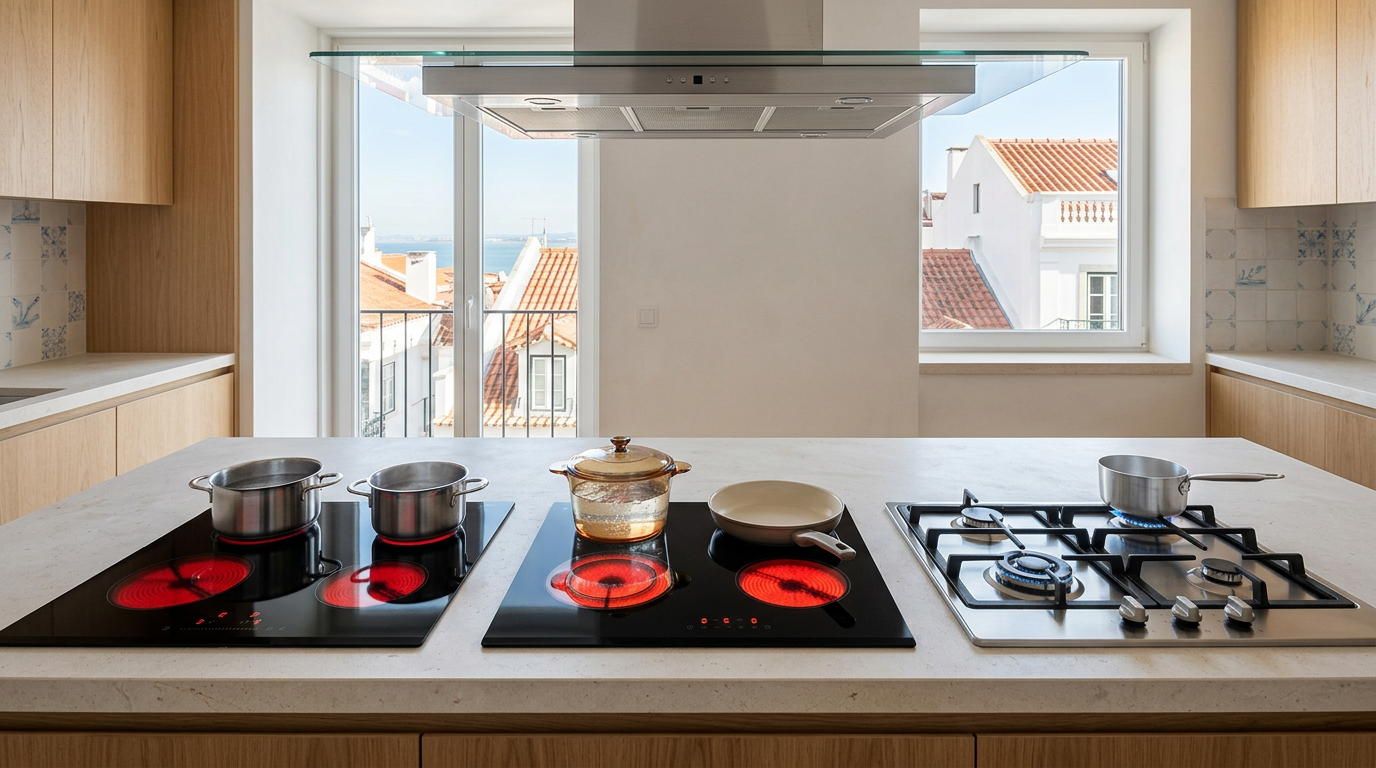
Induction vs Ceramic vs Gas Cooktops 2026 | Mudelar
Induction vs ceramic vs gas cooktops: which is best for your Lisbon kitchen? I'll compare efficiency, safety, and cleaning to help you decide. Get a free quote!
As a project manager at Mudelar, I’ve overseen hundreds of kitchen renovations across Lisbon and Porto. One of the most critical decisions my clients face is choosing the right cooktop. The debate of induction vs ceramic vs gas cooktops is central to designing a modern, functional kitchen. It’s more than just an appliance; it's the heart of your daily cooking routine. Many people feel overwhelmed by the technical differences. In this guide, I'll give you my hands-on experience, breaking down each option's performance, safety, efficiency, and maintenance needs. My goal is to give you the clarity to choose the perfect hob for your home in Portugal.
Quick summary
- Induction Cooktops: These are the most energy-efficient and fastest option, using magnetism to heat the pan directly. The surface stays cool, making it the safest choice, but it requires ferromagnetic cookware.
- Ceramic Cooktops: Valued for their sleek, flat glass surface that is easy to clean. They heat up slower than induction or gas and the surface remains hot after use, posing a burn risk.
- Gas Cooktops: The traditional favourite for many professional chefs and home cooks due to their instant, visual flame control. They work with almost any type of cookware but require a gas connection and are more challenging to clean.
- Efficiency and Performance: Induction is the clear winner in efficiency (around 90%), followed by ceramic (~70%) and then gas (~40-50%). Induction also boils water the fastest.
- Safety First: Induction is the safest due to its cool-to-the-touch surface. Gas hobs carry the inherent risks of an open flame and potential gas leaks.
- Cleaning and Maintenance: Smooth-top electric hobs (induction and ceramic) are significantly easier to clean than gas cooktops with their grates and burners.
Table of contents
- What is an Induction Cooktop? The Magnetic Powerhouse
- Understanding Ceramic Cooktops: The Sleek Electric Option
- The Classic Choice: Gas Cooktops Explained
- Performance and Efficiency: A Head-to-Head Comparison
- Safety Features: Protecting Your Family and Home
- Cleaning and Maintenance: Keeping Your Cooktop Pristine
- Installation Requirements and Kitchen Integration
- Recommended materials and options
- Quick comparison
- Common mistakes to avoid
- Pre-project checklist
- How Mudelar handles it
- Frequently asked questions (FAQ)
- Conclusion
What is an Induction Cooktop? The Magnetic Powerhouse
An induction cooktop, or hob, might look like a ceramic one, but its technology is far more advanced. Instead of heating the surface, it uses a copper coil to create a high-frequency electromagnetic field. When you place a pot made of a magnetic material (like cast iron or stainless steel) on the cooking zone, this field induces an electric current within the pot itself, generating heat directly. The glass surface doesn't get hot, only warm from the residual heat of the pan. This direct-to-pan heating is what makes it incredibly fast and efficient.
At Mudelar, we frequently install high-quality induction hobs from brands like Bosch, Siemens, and Teka. The precision they offer is remarkable. You can go from a rolling boil to a gentle simmer in seconds, a level of control that rivals even gas. For modern apartments in dense urban areas like Lisbon or Porto, where energy efficiency is increasingly important, induction is often my top recommendation. It's the future of home cooking, combining speed, safety, and performance in one sleek package.
Key Advantages of Induction
Speed is the most noticeable benefit. An induction hob can boil a litre of water in just a couple of minutes, often twice as fast as gas or ceramic. This speed translates to energy efficiency. Because the heat is generated in the pan, very little energy is wasted into the surrounding air. This makes induction the most energy-efficient cooking method available. Safety is another huge plus, especially for families with children. The surface remains cool, drastically reducing the risk of burns. Most models also feature pan detection, meaning they won't even turn on unless a suitable pot is in place.
Considerations for Induction
The primary consideration is cookware compatibility. Your pots and pans must be ferromagnetic. A simple test is to see if a magnet sticks to the bottom; if it does, it will work. While many modern sets are induction-ready, you might need to replace some older aluminium or copper pans. Some users also notice a slight buzzing or humming sound at high power settings, which is normal and caused by the magnetic field at work. Finally, the electrical requirements must be considered, as a powerful induction hob needs a dedicated, high-amperage circuit.
Understanding Ceramic Cooktops: The Sleek Electric Option
A ceramic cooktop, also known as a vitroceramic hob, is another popular electric option with a smooth, black glass surface. Unlike induction, it works by using radiant heating elements positioned beneath the glass. These elements glow red as they heat up, transferring warmth through the vitroceramic glass to the pot above. This technology is simpler and has been around for longer than induction, making it a familiar choice in many Portuguese homes, from Almada to Braga.
The main appeal of a ceramic cooktop is its clean, minimalist aesthetic and its universal compatibility with all types of cookware. You don't need to worry about whether your pans are magnetic. The flat surface is also relatively easy to wipe down compared to the intricate grates and burners of a gas hob. However, it's crucial to understand its performance limitations compared to the other two options.
Benefits of Ceramic Hobs
The biggest benefit is the combination of a modern look with cookware flexibility. Any flat-bottomed pot or pan you own will work on a ceramic hob. The surface, when cool, is completely flat, integrating seamlessly into your countertop for a sleek, contemporary look. Cleaning is also straightforward – a simple wipe with a damp cloth for daily spills and a special scraper and cream for more stubborn, burnt-on food. Many models also include safety features like residual heat indicators, which light up to show which zones are still hot.
Drawbacks of Ceramic Hobs
The most significant drawback is thermal inertia. Ceramic hobs are slow to heat up and, more importantly, slow to cool down. This lack of responsiveness can be frustrating if you need to quickly lower the temperature to prevent something from boiling over. The surface stays dangerously hot long after you've finished cooking, creating a burn risk. They are also the least energy-efficient of the three types because a lot of heat radiates into the air and the glass itself, rather than going directly into the pan.
The Classic Choice: Gas Cooktops Explained
For generations, gas has been the go-to fuel for serious cooks. A gas cooktop provides an open flame, offering instant heat and a highly visual, intuitive level of control. You can see the flame increase or decrease as you turn the knob, allowing for immediate adjustments to your cooking. This tactile feedback is why many clients, especially those who love cooking, are hesitant to switch away from gas. It's a tried-and-true technology that works reliably with any type of cookware you can imagine, from a round-bottomed wok to a traditional terracotta pot.
In Portugal, gas installations are common, but they must be handled with extreme care. Whether using bottled gas (`garrafa`) or a mains connection (`gás natural`), safety regulations are strict. Proper ventilation, typically with an effective extractor hood, is non-negotiable. During our renovation projects in older buildings in Sintra or Cascais, we always perform a thorough inspection of existing gas lines and recommend certified professionals for any new installations or modifications to ensure everything is up to code and perfectly safe for the family.
Why Chefs Love Gas Cooktops
The primary reason is unbeatable control. The connection between turning the knob and seeing the flame respond is immediate and precise. This allows for nuanced cooking techniques that require rapid changes in heat. Furthermore, the flame cooks not just the bottom of the pan but also curls up the sides, providing more even heat distribution, especially with certain pan shapes. This is why gas is often preferred for techniques like searing and sautéing. It’s a robust and forgiving system that feels very hands-on.
Safety and Maintenance for Gas
Safety is the biggest concern with gas. The open flame is a fire hazard, and there's always the risk of a gas leak. Modern gas hobs are equipped with a flame failure safety device, which automatically cuts off the gas supply if the flame is extinguished. However, professional installation and regular checks are paramount. Cleaning is another significant downside. Spills can bake onto the burners, and the cast iron or enamel grates are heavy and awkward to clean. It requires more effort to keep a gas hob looking pristine compared to its smooth-top electric counterparts.
Performance and Efficiency: A Head-to-Head Comparison
When choosing between induction, ceramic, and gas, performance and efficiency are often the deciding factors. These two aspects directly impact your daily cooking experience and your utility bills. As a project manager, I always walk my clients through a practical comparison to ensure their choice aligns with their lifestyle, whether they're a busy family in Setúbal needing speed or a culinary enthusiast in Aveiro demanding precision.
It’s not just about which is 'best' overall, but which performs best for *your* specific needs. Do you need to boil water for pasta in record time? Or do you need the delicate, low heat for a perfect sauce? Let’s break down how each type stacks up in the key areas of speed, responsiveness, and energy usage. This data-driven approach helps remove the guesswork from the induction vs ceramic vs gas cooktops debate.
Heating Speed and Responsiveness
- Induction: Unmatched in speed. It heats the pan directly, so there's no waiting for an element or surface to warm up. It can boil water about 50% faster than a high-end gas hob. Responsiveness is also instantaneous, similar to gas.
- Gas: Very responsive. The flame adjusts instantly, giving you immediate control over the heat level. It's fast to heat up, though not as fast as induction.
- Ceramic: The slowest of the three. The radiant element needs time to heat the glass, which then heats the pan. It also has poor responsiveness, as the glass retains heat long after the power is reduced or turned off.
Energy Efficiency Breakdown
Energy efficiency measures how much of the energy consumed is transferred directly to the food. Here, the differences are stark.
- Induction: The clear winner with approximately 90% efficiency. Almost all the magnetic energy goes directly into heating the pot, with very little waste heat.
- Ceramic: Moderately efficient, at around 65-70%. A significant amount of energy is lost heating the glass surface and the surrounding air.
- Gas: The least efficient in these terms, at roughly 40-50%. A large amount of heat from the flame escapes around the sides of the pan and is lost to the kitchen environment. This also means it heats up your kitchen more than the other types.
Safety Features: Protecting Your Family and Home
Safety in the kitchen is paramount, and the cooktop is an area that warrants special attention. Each type—induction, ceramic, and gas—has its own set of safety features and inherent risks. When I'm planning a kitchen renovation, especially for a family with young children or elderly members, the safety profile of the cooktop is a top-priority discussion. Modern appliances have come a long way, but understanding the differences is key to creating a secure cooking environment.
From cool-to-the-touch surfaces to automatic shut-offs, manufacturers like Sanindusa and Roca (though more known for bathrooms, they champion safety in home fixtures) inspire a culture of safety that extends to kitchen appliance brands. We'll look at the specific mechanisms each hob type uses to prevent accidents and what you, as a user, need to be aware of to operate them safely.
Induction and Ceramic Safety Mechanisms
Electric hobs excel in built-in safety technology. Both induction and ceramic models typically feature a child lock function, which prevents the cooktop from being turned on accidentally. They also have residual heat indicators that warn you if a cooking zone is still hot to the touch. Many models include an auto-off feature that shuts down a zone if it's been left on for an extended period or if a pot boils over. Induction takes safety a step further: because the surface itself doesn't get hot, the risk of burns is dramatically reduced. It also won't work without a pan on it, preventing it from being left on by mistake.
Gas Cooktop Safety Protocols
The primary safety feature on any modern gas hob is the Flame Failure Device (FFD). This is a legal requirement for new appliances in Portugal. The FFD is a thermocouple that detects the flame; if the flame goes out for any reason (e.g., blown out by a draft or a spill), the device automatically cuts the gas supply to that burner, preventing dangerous gas build-up. Despite this, the open flame itself remains a hazard. It's crucial that flammable materials like tea towels or paper are kept well away. Professional, certified installation is not just recommended; it's essential for safety and to comply with regulations.
Cleaning and Maintenance: Keeping Your Cooktop Pristine
The joy of a new kitchen can quickly fade if cleaning your appliances becomes a daily chore. The ease of cleaning is a major lifestyle consideration when comparing induction, ceramic, and gas cooktops. A sleek, easy-to-clean surface saves time and keeps your kitchen looking its best. During consultations, I find that this is often a major selling point for clients looking to simplify their lives and modernise their home in places like Oeiras or Loures.
Each cooktop type requires a different cleaning approach and tools. While one can be wiped clean in seconds, another might require disassembly and soaking. Let's look at the practical, day-to-day reality of maintaining each of these surfaces so you can choose the one that best fits your tolerance for tidying up.
Cleaning Induction and Ceramic Surfaces
Here is where smooth-top electric hobs shine. Both induction and ceramic cooktops feature a single, flat sheet of vitroceramic glass. For daily spills, a simple wipe with a damp microfibre cloth is usually all that's needed. Because an induction surface doesn't get very hot, spills are less likely to bake on, making it the easiest of all to clean. For tougher, sugary, or burnt-on stains on a ceramic hob, a special-purpose scraper (held at a 30-degree angle) and a non-abrasive vitroceramic cleaning cream are recommended to avoid scratches. Never use abrasive sponges or powders.
The Challenge of Cleaning Gas Hobs
Cleaning a gas hob is undoubtedly more labour-intensive. You have to deal with multiple components: the pan supports (grates), the burner caps, and the burner heads. These must be removed to clean the surface underneath. The grates are often made of heavy cast iron and can be cumbersome to handle. Spills can get into the intricate parts of the burner and burn on, requiring scrubbing. While some parts may be dishwasher-safe, they often require a good soak and manual cleaning to remove stubborn grime. This multi-step process is a significant drawback for many homeowners.
Installation Requirements and Kitchen Integration
Request a free, no-commitment quote. We reply within 24 hours.
Request a quote →Choosing a new cooktop isn't just about its features; it's also a technical decision that impacts your kitchen's infrastructure. The installation requirements for induction, ceramic, and gas hobs are quite different, and failing to plan for them can lead to delays and unforeseen work during your renovation. At Mudelar, a key part of our process is a technical site visit to assess your home's existing connections and capacity, whether it's an apartment in Amadora or a villa in the Algarve.
We need to consider electrical load, gas plumbing, and countertop specifications. An induction hob might require an upgrade to your electrical panel, while a gas hob needs certified plumbing. Both need a precise cutout in your countertop, which might be made of materials like Silestone or Compac engineered quartz. Ensuring these technical aspects are covered upfront is crucial for a smooth and safe installation.
Electrical and Gas Connections
Induction and powerful ceramic hobs have significant electrical demands. They typically require their own dedicated circuit from your main electrical panel, with a higher amperage than a standard socket. In Portugal, it's also vital to check your contracted power (`potência contratada`) with your electricity provider. Installing a powerful hob might necessitate an upgrade to prevent your main breaker from tripping. For gas cooktops, you need a properly installed and certified gas line, whether from a mains supply or a bottle. All gas work must be carried out by a licensed technician to ensure it's leak-free and compliant with safety standards.
Countertop Cutouts and Ventilation
All cooktops require a specific-sized hole to be cut into your countertop. While standard sizes exist (typically around 60 cm, 80 cm, or 90 cm wide), the exact dimensions can vary between models. It's essential to have the appliance's technical sheet before the countertop is fabricated. Ventilation is another key aspect. While a good extractor hood is recommended for all cooktop types to remove steam, grease, and odours, it is absolutely essential for gas cooktops to safely vent the products of combustion and any unburnt gas.
Recommended materials and options
Here’s a breakdown of common cooktop variations to help you navigate your choices. My advice is always to focus on how you cook first, and then find the option that matches your style.
| Type | Features | When to choose |
|---|---|---|
| Standard Induction | 4-5 predefined cooking zones, booster functions for rapid heating, touch controls. | You want the best in speed, safety, and efficiency for everyday family cooking. |
| Flex/Zoneless Induction | Flexible cooking areas that adapt to the size and shape of your pots. | You use a variety of pan sizes, griddles, or fish kettles and need maximum flexibility. |
| Ceramic (Vitroceramic) | Radiant heat elements, compatible with all cookware, often has extendable dual zones. | You want a sleek electric look and have a collection of non-induction-ready cookware. |
| Standard Gas | 4-5 burners of varying sizes, manual knob controls, cast iron or enamel grates. | You are a passionate cook who loves the visual feedback and instant control of an open flame. |
| Gas on Glass | Gas burners mounted on a ceramic glass base instead of stainless steel. | You want the control of gas but prefer a more modern aesthetic that is easier to clean. |
Quick comparison
This table offers a quick, at-a-glance comparison of the three main cooktop technologies across the most important features.
| Feature | Induction | Ceramic | Gas |
|---|---|---|---|
| Heating Speed | Fastest | Slow | Fast |
| Responsiveness | Instant | Slow | Instant |
| Energy Efficiency | Excellent (~90%) | Fair (~70%) | Poor (~40-50%) |
| Safety | Excellent (cool surface) | Fair (hot surface) | Poor (open flame) |
| Cleaning Ease | Excellent | Good | Fair |
| Cookware Compatibility | Magnetic Only | Universal | Universal |
| Control Precision | Excellent | Good | Excellent |
Common mistakes to avoid
Over my 10+ years in renovations, I've seen a few common missteps when clients choose a new cooktop. Avoiding them will save you headaches down the line.
- Ignoring Cookware for Induction: Buying a beautiful induction hob and then discovering none of your favourite pots and pans work is a frustrating and avoidable mistake. Always do the magnet test on your cookware before committing.
- Underestimating Electrical Needs: A powerful induction or ceramic hob can't just be plugged into any socket. It needs a dedicated, high-amperage circuit, and you may need to increase your home's `potência contratada`.
- Choosing on Looks Alone: A sleek black glass hob might look fantastic in the showroom, but if its slow responsiveness (ceramic) or cookware limitations (induction) don't match your cooking style, you'll regret the choice daily.
- Neglecting Ventilation: All cooktops produce steam and grease, but gas also produces combustion by-products. Skimping on a quality extractor hood is bad for your indoor air quality and the longevity of your kitchen cabinets.
- Attempting a DIY Gas Installation: This is incredibly dangerous and illegal in Portugal. All gas work must be performed by a certified professional to ensure safety and compliance. It's a non-negotiable rule for all Mudelar projects.
- Using Abrasive Cleaners on Glass Tops: Scratching your new ceramic or induction surface by using a scouring pad or harsh chemical is a permanent mistake. Use recommended scrapers and creams only.
- Not Planning for the Cutout: Assuming a new 60cm hob will fit perfectly into the hole from your old 60cm hob is a risky bet. Always check the technical specifications for the exact cutout dimensions before your countertop is cut.
Pre-project checklist
Before you finalise your cooktop decision, run through this simple checklist to ensure you've covered all the bases.
- [ ] Check Cookware: Use a fridge magnet to test the base of your pots and pans if considering induction.
- [ ] Verify Electrical Capacity: Look at your electrical panel. Do you have a spare, high-amperage circuit? Check your electricity bill for your `potência contratada`.
- [ ] Confirm Gas Access: If considering gas, is there a certified gas line already in place? Is it natural gas or do you need space for bottles?
- [ ] Measure Your Space: Measure the width of your current cooktop and the dimensions of the countertop cutout. This is crucial for choosing a replacement.
- [ ] Analyse Your Cooking Style: Are you a fast, efficient cook or do you prefer slow, simmering processes? Be honest about your daily habits.
- [ ] Consider Household Safety: Do you have small children or pets? The cool surface of an induction hob might be a deciding factor.
- [ ] Assess Your Ventilation: Is your current extractor hood powerful enough, especially if you're switching to or upgrading a gas hob?
- [ ] Book a Professional Survey: The best step is to have an expert assess your kitchen. Get a free quote and we can provide a full technical evaluation.
How Mudelar handles it
At Mudelar, we make choosing and installing your new cooktop a seamless part of your kitchen renovation. Our turnkey process begins with a detailed consultation where we discuss your cooking habits, safety concerns, and aesthetic preferences. We don't just sell you an appliance; we help you solve the induction vs ceramic vs gas cooktops puzzle for your specific home. Our technical team then assesses your property's electrical and gas infrastructure to ensure any choice you make is feasible and safe. We'll advise if an electrical upgrade is needed or arrange for a certified gas technician.
We handle everything from sourcing the appliance from trusted brands to the precise cutting of your new countertop and the final, certified installation. Our goal is to integrate your new cooktop perfectly into your dream kitchen, ensuring it's not only beautiful but also perfectly functional and compliant with all Portuguese regulations. To learn more about our comprehensive approach, you can explore our services or read more about us.
Frequently asked questions (FAQ)
Do I need special pans for an induction cooktop?
Yes, you do. Induction cooking works through magnetism, so your pots and pans must be made of a ferrous (magnetic) material like cast iron or magnetic stainless steel. Aluminium, copper, and glass cookware will not work unless they have a specific magnetic base layer. The easiest way to check your existing pans is to see if a simple fridge magnet sticks firmly to the bottom.
Is an induction cooktop better than a ceramic one?
In terms of performance, yes. Induction is significantly faster, more energy-efficient, and much safer because the surface itself doesn't get hot. A ceramic hob's main advantages are that it works with any cookware and can sometimes have a lower initial purchase price. However, for responsiveness and safety, induction is the superior technology. We often guide our clients toward induction for a more modern and functional kitchen.
How long does a cooktop last?
With proper care, a quality cooktop should last between 10 and 15 years. The lifespan can be affected by the brand, usage frequency, and maintenance. Gas hobs may have a slightly longer mechanical life, but the electronic components in modern induction and ceramic hobs are very reliable. Regular cleaning and avoiding physical damage (like dropping a heavy pot on a glass top) are key to longevity.
Do I need a permit to change my cooktop in Portugal?
Generally, you do not need a municipal permit (`licença`) just to replace a cooktop like-for-like. However, if the change involves altering the electrical or gas systems—for example, running a new dedicated circuit for an induction hob or installing a new gas line—that work must be done by certified professionals who can issue the necessary declarations of conformity. This is a critical safety and legal requirement.
What's the difference between a cooktop and a hob?
In practice, the terms are used interchangeably, especially in British English which is common among expats in Portugal. 'Hob' is the more common term in the UK and here, while 'cooktop' is more prevalent in American English. Both refer to the cooking appliance that is installed ('dropped in') to a kitchen countertop. So, whether you're looking for a hob or a cooktop, you're talking about the same thing.
Is it worth switching from gas to induction?
For many of our clients, the answer is a definite yes. The switch offers major benefits in safety (no open flame, cool surface), cleaning ease, and energy efficiency. While some keen cooks miss the visual feedback of a flame, the speed and precision of a modern induction hob quickly win them over. It's a significant upgrade in performance and functionality for most households. We can assess your kitchen's electrical system to see how straightforward the switch would be.
How do I choose the right size cooktop?
Cooktops typically come in standard widths like 30cm (domino), 60cm, 75cm, and 90cm. A 60cm hob with four cooking zones is the most common size and is adequate for most families. If you have a larger kitchen, do a lot of entertaining, or use many large pots at once, upgrading to a 75cm or 90cm hob with five or six zones can be a fantastic improvement. It really depends on your space and cooking style.
Can an induction cooktop interfere with other appliances?
The powerful magnetic fields can, in very rare cases, interfere with other electronic devices. The most cited concern is with pacemakers. Modern pacemakers are generally shielded, but individuals with one should consult their doctor and the cooktop manufacturer's guidelines. For other kitchen appliances, interference is not a common issue as long as the cooktop is installed correctly with proper electrical grounding.
Conclusion
Choosing between induction, ceramic, and gas is a decision that shapes your entire kitchen experience. As we've seen, there's no single 'best' answer, only the best choice for you. If you prioritise speed, cutting-edge safety, and energy efficiency, induction is likely your winner. If you love the traditional, responsive feel of a flame, gas remains a strong contender. Ceramic offers a balance of sleek design and universal cookware compatibility. Your final decision should weigh your cooking style, safety needs, and cleaning preferences. For personalised advice and a technical evaluation of your kitchen in Lisbon, Porto or anywhere in between, request a free quote from the Mudelar team today. We’re here to help you build the kitchen you've always wanted.
Ready to start your renovation?
Request a free, no-commitment quote. We reply within 24 hours.
Request a quoteLer em português: Placa de Indução vs Vitrocerâmica 2026: Guia Completo | Mudelar