
09 August 2026
Kitchen Backsplash Guide 2026: Tile, Glass or Stone? | Mudelar
Choosing a kitchen backsplash? Compare tile, glass, and stone options for your Lisbon or Porto home. We cover durability, style, and maintenance. Get a free quote!
Hello, I’m Marco Rodrigues, a project manager here at Mudelar. With over a decade of experience renovating kitchens across Lisbon and Porto, I can tell you that the kitchen backsplash is one of the most transformative elements you can choose. It’s not just a functional shield against splashes and spills; it’s a crucial design feature that ties your entire kitchen together. It connects your countertops and cabinetry, adding colour, texture, and personality. In this comprehensive guide, I'll draw on my hands-on experience to walk you through the key differences between tile, glass, and stone backsplashes, helping you decide which is the perfect fit for your home and lifestyle in Portugal.
Quick summary
- Tile backsplashes offer endless design variety and are highly durable, but grout lines require regular cleaning and sealing.
- Glass backsplashes provide a sleek, modern, and seamless look that is exceptionally easy to clean, though installation must be precise.
- Stone backsplashes (natural or engineered) deliver a luxurious, high-end feel, often matching the countertop for a cohesive design.
- Material choice heavily impacts maintenance; non-porous materials like glass and engineered quartz are the lowest maintenance.
- Installation complexity varies, with custom-cut glass and large stone slabs requiring more specialised handling than standard tiles.
- Design trends in Portugal are moving towards full-height backsplashes and natural textures for a bold, integrated aesthetic.
- Proper planning before installation is key to avoiding common mistakes like mismatched styles or poor lighting.
Table of contents
- What is a Kitchen Backsplash and Why is it Essential?
- Ceramic & Porcelain Tile Backsplashes: The Classic Choice
- Glass Backsplashes: Sleek, Seamless, and Modern
- Natural & Engineered Stone: Timeless Luxury
- The Installation Process: What to Expect
- Durability and Maintenance: A Practical Comparison
- Design Trends for Kitchen Backsplashes in Portugal 2026
What is a Kitchen Backsplash and Why is it Essential?
A kitchen backsplash is the material covering the wall space between your countertops and your upper cabinets. Its primary practical purpose is to protect the wall from water, grease, and food splatters from the sink and hob. An unshielded plasterboard or painted wall would quickly become stained, warped, and damaged in these high-use areas. Beyond protection, the backsplash serves as a major aesthetic focal point. It’s a canvas for expressing your personal style and can dramatically alter the feel of your kitchen.
Choosing the right backsplash is about balancing three key factors: durability, ease of maintenance, and visual appeal. A busy family kitchen in Cascais that sees a lot of cooking might prioritise a material that's easy to wipe down, like glass or large-format porcelain. A kitchen used less frequently might be able to accommodate a more delicate material like natural marble for its sheer beauty. The right choice elevates the space from purely functional to a truly finished and inviting room, adding value and character to your property.
Functionality First: Protecting Your Walls
The area behind your hob and sink is a war zone for your walls. Boiling water, sizzling oil, and acidic sauces can cause permanent damage. A properly installed backsplash made from a non-porous or well-sealed material creates an impenetrable barrier. This prevents moisture from seeping into the wall structure, which could lead to mould growth and costly structural repairs down the line. It also makes daily clean-up significantly easier, as messes can be wiped away from a smooth surface rather than being scrubbed out of porous paint or plaster.
Design Impact: Setting the Tone
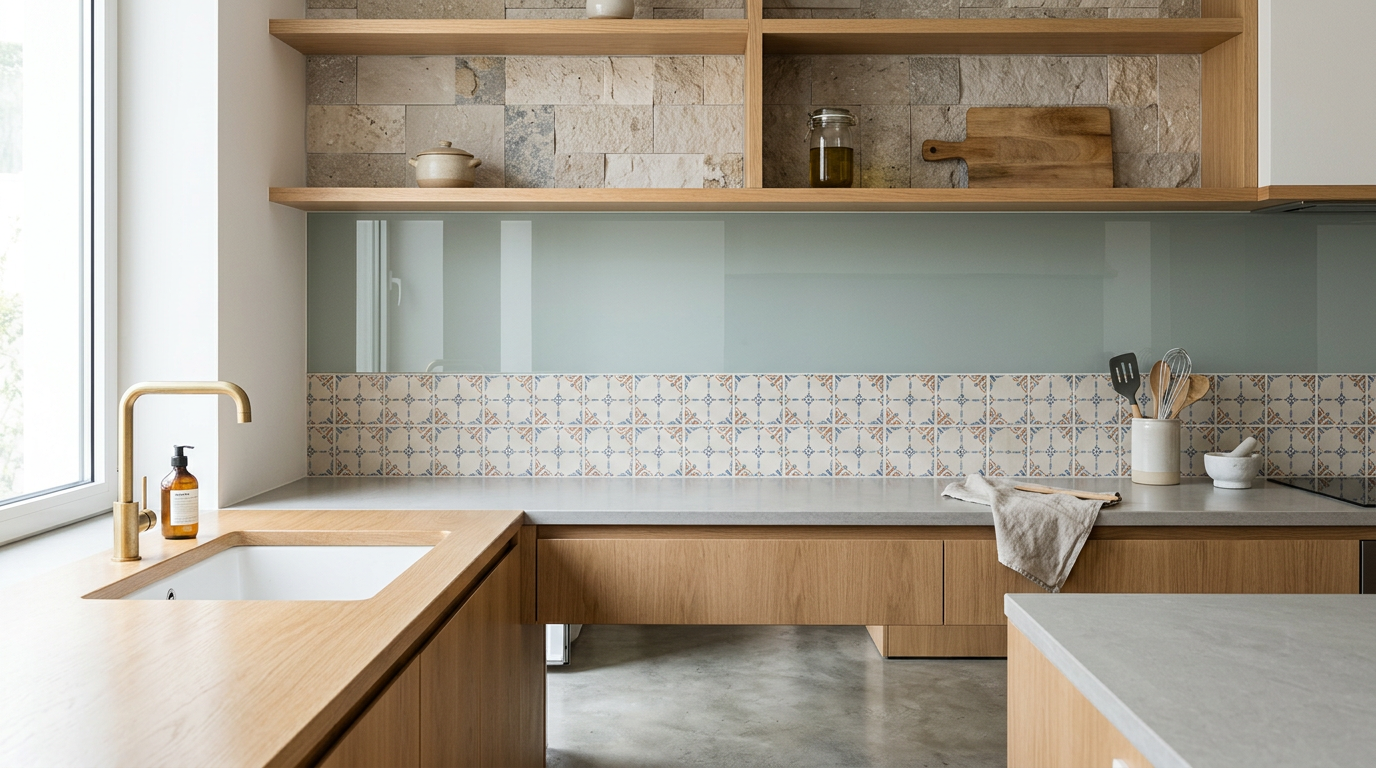
Your choice of backsplash has a profound impact on your kitchen's overall design. A bright, reflective glass backsplash can make a small kitchen feel larger and more open. A rustic, stacked stone backsplash can add texture and warmth to a modern space. Using the same material for your countertop and backsplash, like an engineered quartz slab, creates a seamless and luxurious look. Here at Mudelar, we often see how a simple backsplash change can completely modernise an outdated kitchen without requiring a full renovation.
Ceramic & Porcelain Tile Backsplashes: The Classic Choice
Tile is perhaps the most traditional and versatile option for a kitchen backsplash, and for good reason. It offers a staggering range of colours, shapes, sizes, and patterns, allowing for complete creative control. From classic white subway tiles to intricate, colourful mosaics or traditional Portuguese patterns, there’s a tile to suit every style. Porcelain and ceramic are the two most common types, with porcelain being denser and less porous, making it an excellent choice for wet areas like the kitchen.
One of the main considerations with a tile backsplash is the grout. Grout lines can trap dirt and grease and may require periodic sealing to prevent staining, especially with lighter colours. However, modern solutions like epoxy grout offer superior stain and mould resistance. Furthermore, the trend towards rectified porcelain tiles allows for very thin grout lines (1-2mm), creating a more seamless and easier-to-clean surface that we frequently install in homes from Setúbal to Braga.
Types of Tile
Subway tiles (typically 7.5x15cm or 10x20cm) are a timeless choice that works with almost any kitchen style. They can be laid in various patterns like herringbone or vertical stack for a modern twist. Mosaic tiles, which come on mesh sheets, are great for adding intricate detail or creating a feature behind the hob. Large-format tiles (60x60cm or larger) are increasingly popular as they minimise grout lines, offering a cleaner look and easier maintenance, mimicking the effect of a solid slab.
Grout and Sealing Considerations
Choosing the right grout is as important as choosing the tile itself. Grout colour can either blend in with the tile for a monolithic look or contrast with it to make the pattern pop. As a standard, we recommend cementitious grout with an additive for water resistance. For maximum durability, especially behind the hob, an epoxy grout is the best solution. It’s non-porous and resistant to stains and harsh cleaning chemicals, though it requires a more skilled installation. We always advise sealing standard cement-based grout annually to keep it looking fresh.
Glass Backsplashes: Sleek, Seamless, and Modern
For a clean, contemporary aesthetic, a glass backsplash is an unbeatable option. Typically made from a single sheet of tempered glass (also known as toughened safety glass), it offers a completely smooth, grout-free surface. This makes it incredibly hygienic and easy to clean – a simple wipe with a glass cleaner is all it takes to remove splatters and smudges. The reflective quality of glass also helps to bounce light around the room, making your kitchen feel brighter and more spacious.
Glass backsplashes are highly customisable. They can be back-painted in any colour imaginable, allowing for a perfect match with your cabinetry, walls, or even a statement accent colour. You can also opt for printed glass with a high-resolution image or pattern, or even a mirrored finish to maximise the sense of space. The key to a successful glass backsplash installation is precision. Measurements must be exact, and cut-outs for sockets and switches need to be made before the glass is tempered. This is a job for experienced professionals.
Customisation and Colour
A back-painted glass backsplash is our most requested glass option in urban projects in Lisbon and Porto. We work with suppliers who can match RAL or Pantone colour codes, giving you unlimited choice. The paint is applied to the back of the low-iron, ultra-clear glass, so it's protected from scratches and the colour remains vibrant and true. This creates a stunning, high-gloss finish that complements modern kitchen designs perfectly. Mirrored glass, in either a standard silver or a tinted bronze or grey, is another great option for smaller kitchens or for adding a touch of glamour.
Installation Nuances
Unlike tile, a glass backsplash cannot be adjusted or trimmed on-site. The process involves a detailed site survey to take precise measurements. These measurements are then used to manufacture the glass panel, including all necessary cut-outs. Once the glass is tempered, it cannot be altered. The panel is then installed using a specialised, non-acidic adhesive that won't damage the painted backing. This meticulous process ensures a flawless fit and a beautiful, long-lasting result that only a professional team like Mudelar can guarantee.
Natural & Engineered Stone: Timeless Luxury
Using a slab of stone for your backsplash creates an immediate sense of luxury and cohesion, especially when it matches your countertop. This option eliminates grout lines entirely and results in a bold, seamless statement piece. The choice generally comes down to two categories: natural stone (like marble or granite) and engineered stone (also known as quartz composite), with each having distinct characteristics.
Natural stone offers one-of-a-kind beauty, with unique veining and patterns that no two slabs will share. Marble is prized for its classic elegance, while granite is known for its durability. However, natural stones are porous and require regular sealing (typically once a year) to protect them from stains and acids. Engineered stone, from leading brands like Silestone and Compac, offers the best of both worlds. It combines natural quartz with resins to create a non-porous, highly durable surface that is resistant to stains, scratches, and heat, all without needing to be sealed.
Engineered Quartz vs. Natural Stone
For most of our kitchen renovation projects in areas like Almada and Oeiras, we recommend engineered quartz. It provides a consistent, predictable pattern and colour, and its durability is perfectly suited to the demands of a busy kitchen. Brands like Silestone offer a huge range of colours and finishes, from solid whites to designs that perfectly mimic natural Calacatta or Carrara marble. While natural marble is undeniably stunning, its softness and porosity make it susceptible to staining from things like wine, coffee, or lemon juice if not sealed properly and cleaned immediately.
The Seamless Look: Matching Countertops
One of the most powerful design trends we are implementing is the 'waterfall' effect, where the same stone slab from the countertop continues up the wall to form the backsplash. This creates a visually stunning, continuous surface that is both dramatic and easy to clean. This monolithic look works exceptionally well in open-plan living spaces where the kitchen is on full display. It elevates the kitchen to the level of custom furniture and makes a strong design statement.
The Installation Process: What to Expect
The installation process for a kitchen backsplash varies significantly depending on the material you choose. Proper preparation is the common foundation for all types; the wall must be clean, dry, and perfectly flat. Any imperfections can telegraph through to the final surface, especially with large tiles or glass sheets. Our process always starts with a thorough wall inspection and preparation, which may involve skimming the wall with plaster to ensure a smooth substrate.
For a tile backsplash, the process involves applying tile adhesive to the wall with a notched trowel, carefully placing each tile using spacers for consistent gaps, and then cutting tiles as needed for edges and around outlets. After the adhesive cures (typically 24 hours), we apply grout, pushing it into the joints, and then clean the excess off the tile surface. The final step is applying a bead of silicone sealant where the backsplash meets the countertop.
A glass or stone slab installation is less messy on-site but requires more preparation beforehand. As mentioned, precise measurements are taken, and the single piece is fabricated off-site. Our installation team then carefully transports the heavy piece and fixes it to the wall using a strong, specially formulated adhesive. The process is generally quicker than tiling, often completed in a single day, but it requires at least two skilled fitters and specialised handling equipment.
Durability and Maintenance: A Practical Comparison
When choosing a kitchen backsplash, practical considerations like durability and maintenance are just as important as aesthetics. Your choice will directly impact how much time you spend cleaning and maintaining your kitchen.
Tile: Porcelain tile is extremely durable, resistant to heat, scratches, and fading. The weak point is the grout. We recommend using an epoxy grout or sealing cementitious grout regularly to prevent staining. For cleaning, non-abrasive cleaners are best to avoid scratching the tile glaze or damaging the grout.
Glass: Tempered glass is very strong and heat-resistant, making it safe to use behind a hob. Its biggest advantage is its non-porous, seamless surface. A simple spray of glass cleaner and a wipe with a microfibre cloth is all that's needed to keep it sparkling clean. It's the lowest-maintenance option available.
Stone: The durability of stone varies. Engineered quartz is a champion of durability—it's non-porous, scratch-resistant, and heat-resistant. It requires no sealing and can be cleaned with simple soap and water. Natural stones like granite are also very durable but, being porous, must be sealed. Marble is the most delicate; it's softer, can scratch more easily, and is susceptible to etching from acidic substances. It requires diligent sealing and careful use.
Design Trends for Kitchen Backsplashes in Portugal 2026
As a project manager on the ground in Portugal, I see the latest trends emerging in real homes every day. While classic choices remain popular, there are several key trends shaping modern kitchen design in cities like Lisbon and Sintra. One of the biggest is the move towards full-height backsplashes, where the material extends from the countertop all the way to the ceiling or the bottom of the upper cabinets, creating a bold and immersive feature wall.
Texture is another major trend. Instead of flat, glossy surfaces, we're seeing more demand for tiles with a handmade, zellige-like quality, fluted surfaces, or stone with a honed or leathered finish. These add depth and a tactile quality to the kitchen. Colour-wise, while white and grey are still staples, we're installing more backsplashes in earthy tones—soft greens, warm terracottas, and deep blues—which pair beautifully with natural wood cabinetry from brands like Egger or Kronospan.
Finally, matching the backsplash to the countertop remains a high-end trend that provides a sleek, cohesive look. Using a single slab of engineered quartz or natural stone for both surfaces is the pinnacle of this style. This not only looks incredibly sophisticated but also simplifies the material palette, creating a calm and uncluttered visual. This is a design choice we at Mudelar highly recommend for achieving a premium, architect-designed feel in your kitchen.
Recommended materials and options
Request a free, no-commitment quote. We reply within 24 hours.
Request a quote →| Type | Features | When to choose |
|---|---|---|
| Ceramic Tile | Huge variety of colours, shapes, and patterns. Affordable and versatile. | When you want maximum design flexibility and a classic look on a controlled budget. |
| Rectified Porcelain Tile | Dense, highly durable, and water-resistant. Minimal grout lines for a cleaner, more modern look. | For high-use kitchens where you want the durability of tile with easier maintenance. |
| Tempered Glass | Sleek, non-porous, and extremely easy to clean. Can be back-painted in any colour. | For a minimalist, modern aesthetic where you want to maximise light and minimise cleaning time. |
| Engineered Quartz | Non-porous, stain and scratch-resistant, no sealing required. Consistent patterns and colours. | When you desire the look of stone without the maintenance, perfect for busy family kitchens. |
| Natural Marble | Unique, one-of-a-kind veining and luxurious appeal. A timeless statement piece. | For a high-end, classic kitchen where aesthetics are the top priority and you accept the maintenance. |
Quick comparison
| Feature | Tile Backsplash | Glass Backsplash | Stone Backsplash (Engineered Quartz) |
|---|---|---|---|
| Maintenance | Moderate; grout lines require regular cleaning/sealing. | Very Low; seamless surface, easy to wipe clean. | Very Low; non-porous and stain-resistant. |
| Durability | High (Porcelain is very durable). | High (Tempered glass is tough and heat-resistant). | Very High; resistant to scratches, stains, and heat. |
| Design Customisation | Very High; endless shapes, colours, and patterns. | High; any colour, can be printed or mirrored. | Moderate; wide range of colours/patterns available. |
| Grout Lines | Yes (can be minimised with rectified tiles). | No (completely seamless). | No (completely seamless). |
| Heat Resistance | Excellent. | Very Good (must be tempered). | Excellent. |
| Installation | Labour-intensive, can be done over several days. | Requires precise measurement; installation is fast. | Requires professional handling due to weight/size. |
Common mistakes to avoid
- Ignoring Grout: Choosing a beautiful tile and then using a standard, wide, white grout line can ruin the effect. Consider grout colour (contrast vs. blend) and thickness. Using rectified porcelain tiles with a 1-2mm joint makes a world of difference.
- Mismatching Countertops and Backsplash: The two surfaces are right next to each other. A busy granite countertop paired with a busy mosaic backsplash can look chaotic. If one is visually complex, the other should be simple.
- Forgetting about Lighting: A dark, matte backsplash in a kitchen with poor under-cabinet lighting can make the workspace feel gloomy. A reflective surface like gloss tile or glass can help brighten the area.
- Choosing an Unsuitable Material for Your Lifestyle: If you are an avid cook who makes a lot of tomato sauce, a porous, unsealed marble backsplash is a risky choice. Be honest about your cooking and cleaning habits when selecting a material.
- Poor Preparation: Installing a backsplash over an uneven or unprepared wall will lead to a poor finish. Tiles may sit unevenly, and large slabs might not adhere properly. The wall must be perfectly flat and clean.
- Incorrect Outlet Placement: The placement of electrical outlets and switches should be planned before the backsplash is installed. With glass and stone slabs, the holes must be cut during fabrication, so the layout needs to be final.
- DIY Installation without Experience: While tiling a small area might seem like a manageable DIY project, a kitchen backsplash is a focal point. Crooked lines, messy grout, and bad cuts are very noticeable. For glass and stone, professional installation is non-negotiable.
Pre-project checklist
- Assess your current kitchen style: Is it modern, traditional, or transitional?
- Define your cooking and cleaning habits honestly.
- Measure the backsplash area (height and length) to get a rough idea of the square meterage.
- Take a sample of your countertop material and a cabinet door when shopping for backsplash options.
- Consider the lighting in your kitchen, both natural and artificial.
- Decide on a focal point. Do you want the backsplash to be a statement piece or a subtle background?
- Think about electrical outlets. Do you need to add, move, or change them?
- Browse inspiration online and save images of kitchens you love. Check our blog for ideas.
- Confirm the condition of the wall behind your existing backsplash.
- Schedule a consultation with a professional to discuss options and get an accurate quote.
How Mudelar handles it
At Mudelar, we believe a successful renovation is built on clear communication and expert execution. When it comes to your kitchen backsplash, our turnkey process handles every detail. It starts with an on-site consultation where we listen to your ideas, assess your kitchen's layout, and discuss the best material options for your style and needs. We bring samples of tile, glass, and engineered stone from trusted brands like Silestone to help you visualise the final look in your own space.
Once you’ve made your choice, our team takes over. We handle precise measurements, material procurement, and meticulous installation by our own vetted and experienced craftsmen. Whether it's the careful layout of a complex tile pattern or the specialised handling of a large glass panel, we ensure the highest quality finish. Our project managers oversee the entire process, ensuring it runs on schedule and that your home is respected throughout. To learn more about our comprehensive approach, see our services or feel free to request a free quote to start the conversation about your project.
Frequently asked questions (FAQ)
How long does it take to install a new kitchen backsplash?
A typical tile backsplash installation in a standard-sized kitchen takes around 2-3 working days. Day one is for wall preparation and tile setting. Day two is for grouting and sealing after the adhesive has cured. A single-piece glass or stone slab installation is often quicker on-site, usually taking just one day, but requires a week or more for off-site fabrication after the initial measurements are taken.
Do I need a licence or permit to change my kitchen backsplash?
In most cases in Portugal, simply changing a kitchen backsplash is considered redecoration and does not require a municipal licence (`licença municipal`). It falls under 'works of conservation'. However, if the work involves altering plumbing or electrical layouts, the rules can change. At Mudelar, we handle all necessary paperwork and ensure your project complies with local regulations, giving you complete peace of mind.
How do I choose the right grout colour for my tile?
For a seamless, monolithic look, choose a grout colour that closely matches your tile. This can make the area feel larger and is great for minimalist designs. For a more defined, graphic look that highlights the shape of the tiles (like with classic subway tile), choose a contrasting colour. We can provide grout colour samples alongside your chosen tile to help you decide.
Is a glass backsplash safe to put behind a gas hob?
Yes, absolutely. All glass backsplashes we install are made from tempered glass, which is a type of safety glass processed by thermal treatment to increase its strength. It is four to five times stronger than regular glass and is designed to withstand high temperatures, making it perfectly safe for use behind any type of hob, including gas.
What is the difference between engineered quartz and quartzite?
This is a common point of confusion. Engineered quartz (like Silestone) is a man-made product, composed of about 90% crushed natural quartz mixed with resins, polymers, and pigments. This makes it non-porous and highly durable. Quartzite (note the 'ite') is a natural metamorphic rock. It is harder than granite but is still a natural stone and, like marble, needs to be sealed to prevent staining.
Can I install a new backsplash over existing tiles?
While it is technically possible in some situations, we strongly advise against it. Tiling over existing tiles adds thickness that can interfere with cabinets and sockets, and you are relying on the old tiles being perfectly bonded to the wall. For a durable, high-quality, and long-lasting result, the best practice is always to remove the old tiles and start with a fresh, properly prepared wall surface.
How do I clean and maintain a natural stone backsplash like marble?
For a marble backsplash, you must use pH-neutral cleaners specifically designed for natural stone. Avoid acidic cleaners (like vinegar or lemon juice) and abrasive sponges, as they can etch and scratch the surface. Spills should be wiped up immediately. Most importantly, the marble must be sealed periodically—usually once a year—to protect its porous surface from absorbing liquids and staining.
Is it worth matching the backsplash to the countertop?
Matching your backsplash to your countertop, especially with stone or engineered quartz, is a fantastic way to create a high-end, cohesive, and seamless look. It simplifies the kitchen's visual palette and eliminates the challenge of pairing two different materials. While it can be a significant investment, it delivers a powerful design impact and is a hallmark of a thoughtfully designed, premium kitchen. It’s a trend we see growing in popularity across our projects in the Greater Lisbon area.
Conclusion
Choosing the right kitchen backsplash is a decision that beautifully merges function and style. Whether you are drawn to the endless versatility of tile, the sleek modernity of glass, or the timeless luxury of stone, each material offers unique benefits for your Portuguese home. By considering your cooking habits, maintenance preferences, and overall design vision, you can select a backsplash that not only protects your walls but also serves as the stunning centrepiece of your kitchen for years to come. I hope this guide has provided you with the clarity and confidence to move forward. If you're ready to explore these options further for your home in Lisbon, Porto, or the surrounding areas, our team at Mudelar is here to help. Request a free quote today, and let's start bringing your vision to life.
Ready to start your renovation?
Request a free, no-commitment quote. We reply within 24 hours.
Request a quoteLer em português: Backsplash de Cozinha 2026: Azulejo, Vidro ou Pedra? | Mudelar