
21 July 2026
Modern Bidets Installation Guide 2026 | Mudelar
Your complete guide to modern bidets installation and bidet alternatives in Portugal. Learn about shower toilets, attachments, and more. Get a free quote.
As a project manager at Mudelar, I’ve overseen hundreds of bathroom renovations across Lisbon and Porto. One topic that comes up frequently, especially with my international clients, is the bidet. While a standard feature in most older Portuguese homes, the world of modern sanitary ware has evolved significantly. This guide is my hands-on advice for anyone considering a modern bidets installation. We'll explore everything from sleek wall-hung models and integrated shower toilets to simpler bidet attachments. By the end of this article, you'll understand the different types available, the installation requirements for each, and which solution is the perfect fit for your bathroom renovation project in Portugal.
Quick summary
- Beyond the Classic Bidet: Modern options include integrated shower toilets, electronic bidet seats, and handheld sprayers, offering enhanced hygiene and space-saving benefits.
- Installation is Key: The process varies greatly. A traditional bidet requires dedicated plumbing, while a bidet seat needs a nearby electrical outlet and a water connection tee.
- Shower Toilets are the Future: These all-in-one units, like those from Roca or Geberit AquaClean, combine a toilet and bidet, offering features like warm water, a dryer, and remote control.
- Plumbing & Electrical Needs: A professional assessment is vital. We need to check water pressure, waste pipe location (P-trap or S-trap), and the feasibility of running a dedicated, waterproofed electrical circuit.
- Space-Saving Alternatives Exist: For small bathrooms in apartments in Lisbon or Porto, handheld sprayers or non-electric bidet attachments are excellent, low-impact alternatives.
- Professional Help is Advised: While a handheld sprayer might seem like a DIY job, any work involving main water lines or electrical systems should be handled by certified professionals to avoid leaks and ensure safety.
Table of contents
- What Exactly is a Modern Bidet?
- The Rise of the Shower Toilet in Portugal
- Step-by-Step: The Installation Process for a Modern Bidet
- Bidet Attachments and Handheld Sprayers: The Simpler Alternatives
- Plumbing and Electrical Requirements: A Crucial Checklist
- Choosing the Right System for Your Bathroom in Portugal
- Maintenance and Cleaning for Long-Term Hygiene
- Recommended materials and options
- Quick comparison
- Common mistakes to avoid
- Pre-project checklist
- How Mudelar handles it
- Frequently asked questions (FAQ)
- Conclusion
What Exactly is a Modern Bidet? Beyond the Classic Porcelain
For many people living in Portugal, the bidet is a familiar, if somewhat traditional, bathroom fixture. It’s that separate, low basin next to the toilet. However, when I talk about a modern bidet, I'm referring to a new generation of hygiene solutions that are more integrated, feature-rich, and space-efficient. These are not just about function; they are about comfort, hygiene, and smart design that fits seamlessly into a contemporary bathroom. They represent a significant upgrade from the basic ceramic basin of the past.
Today's market offers a wide spectrum of options. This includes sophisticated shower toilets that combine the functions of a toilet and a bidet in one unit, electronic bidet seats that can be retrofitted onto your existing toilet, and simple, non-electric attachments. The focus has shifted from a separate appliance to an integrated experience. This evolution is particularly relevant for renovations in cities like Lisbon or Cascais, where optimising space without sacrificing comfort is a common goal.
The Shift from Separate Fixture to Integrated Solution
The most significant change is the move away from needing two separate fixtures. A traditional bidet requires its own dedicated space, hot and cold water feeds, and a separate drainpipe. This is often impractical in smaller bathrooms or during a less intensive renovation. Integrated solutions, like a shower toilet, reclaim this valuable floor space. It simplifies the bathroom's layout, creating a cleaner, more minimalist aesthetic which is highly sought after in modern design.
Key Features of Modern Bidet Systems
Modern bidets are packed with technology designed for personal comfort and hygiene. Common features now include adjustable water temperature and pressure, oscillating and pulsating spray nozzles for a more thorough clean, and even a warm air dryer. High-end models from brands like Grohe or Roca might also include a heated seat, automatic opening and closing lids, night lights, and user presets controlled by a remote or a smartphone app. These features transform a basic function into a personalised, spa-like experience.
The Rise of the Shower Toilet in Portugal
While the classic bidet has long been a staple in Portugal, the shower toilet is rapidly gaining popularity, especially in new builds and high-end renovations around the Algarve, Lisbon, and Porto. A shower toilet, often called a 'Japanese toilet' or by brand names like Geberit AquaClean, is a true all-in-one fixture. It integrates the functionality of a high-tech bidet directly into the toilet bowl itself. At Mudelar, we're installing more of these every year, as clients recognise their superior hygiene and space-saving advantages.
This trend is driven by a growing awareness of personal hygiene and a desire for more luxurious and technologically advanced homes. Instead of a simple rinse, these devices provide a complete cleansing and drying solution. For expats accustomed to similar technologies in other parts of the world, or for anyone looking to modernise their home in Setúbal or Aveiro, the shower toilet is a compelling upgrade that adds real value and comfort.
How Shower Toilets Work
The magic of a shower toilet lies in its integrated, retractable spray arm, or wand. After using the toilet, a press of a button extends the wand, which then sprays a gentle stream of warm water for cleaning. The position, pressure, and temperature of the water are usually adjustable to the user's preference. Once the wash cycle is complete, the wand retracts and self-cleans. A built-in dryer then provides a stream of warm air, eliminating the need for toilet paper entirely for many users.
Benefits Over Traditional Bidets
The advantages are significant. Firstly, space is a huge factor. By combining two fixtures into one, you free up nearly a square metre of floor space, which is critical in an apartment in Amadora or a historic home in Sintra. Secondly, the hygiene is superior. The hands-free operation, self-cleaning nozzles, and warm water cleansing are demonstrably more effective and hygienic than using paper. Finally, it offers greater accessibility for individuals with mobility issues, providing independence and dignity.
Step-by-Step: The Installation Process for a Modern Bidet
Installing a bidet, especially an integrated shower toilet or a traditional wall-hung model, is not a simple DIY task. As a project manager, I always stress that it involves precise plumbing, often electrical work, and sometimes even structural changes to the wall. Here’s a general overview of how my team at Mudelar approaches a professional modern bidets installation.
First, we begin with a thorough on-site evaluation. We can't give accurate advice without seeing the bathroom. We check the existing plumbing, measure the space, and discuss the client's needs. This initial step is crucial to creating a plan that avoids surprises down the line. Whether it's a new build in Braga or a vintage apartment renovation in Lisbon’s Chiado district, the starting conditions dictate the entire project.
1. Planning and Preparation
Once a model is chosen, the detailed planning begins. For a wall-hung bidet or toilet, we need to install a concealed support frame (like a Geberit Duofix frame) within the wall. This requires opening the wall, securing the frame to the studs, and running the new water supply and waste pipes to the correct height. For a shower toilet, we must also plan for a dedicated GFCI-protected (RCD) electrical outlet placed safely away from direct water spray, which is a non-negotiable safety requirement.
2. Rough-in Plumbing and Electrical
This is the core of the installation. Our licensed plumbers will run hot and cold water lines (for a traditional bidet) or a single cold line (for a bidet seat/shower toilet which heats its own water). They'll also install the new waste pipe, ensuring the correct slope for drainage. Simultaneously, our certified electrician will run the necessary wiring from the fuse box, installing a new, dedicated circuit for the shower toilet. All this work is done *before* the walls are closed and tiled.
3. Wall Finishing and Fixture Mounting
After the in-wall work is complete and tested, the wall is closed up with moisture-resistant plasterboard (pladur hidrófugo). It's then waterproofed, tiled, and grouted. Only then do we mount the bidet or shower toilet onto its support frame or secure it to the floor. The final connections to the water supply and waste are made, and the cistern and flush plate (for wall-hung models) are installed. Every connection is double-checked for leaks before the water is fully turned on.
4. Final Connection and Testing
The final step is connecting the power, commissioning the unit, and testing all functions. For a smart shower toilet, this includes programming the remote, setting user preferences, and demonstrating to the client how to use all the features, from the adjustable spray to the self-cleaning cycle. We don't consider the job done until the client is completely comfortable using their new fixture and we've cleaned the site thoroughly.
Bidet Attachments and Handheld Sprayers: The Simpler Alternatives
While a full shower toilet or traditional bidet is a fantastic addition to a full bathroom renovation, they aren't always practical or necessary. For those looking for a simpler path to better hygiene, or for renters who cannot make permanent changes, there are two excellent alternatives: bidet seat attachments and handheld bidet sprayers.
I often recommend these options for smaller guest bathrooms or for clients in places like Oeiras or Loures who want to upgrade their hygiene without committing to a major plumbing project. They are less disruptive to install and offer many of the same benefits. These are not just temporary fixes; a high-quality bidet seat from a reputable brand can be a long-term, comfortable, and effective solution.
Electronic Bidet Seats ('Washlets')
An electronic bidet seat completely replaces your existing toilet seat. It mounts onto the same holes and connects to the toilet's existing water supply via a 'T-adapter'. It does require a nearby electrical outlet to power its features, which typically include a heated seat, warm water washing (from an internal heater), a warm air dryer, and a remote control. The modern bidets installation for these is far simpler than a full fixture, but the electrical requirement is often the main hurdle in older Portuguese bathrooms.
Non-Electric Bidet Attachments
This is the most straightforward option. A non-electric attachment is a thin panel that fits under your existing toilet seat. It has a simple nozzle (or two) that is powered purely by your home's water pressure. Installation is very simple: shut off the water, unscrew the toilet seat, place the attachment, screw the seat back on, and connect the supplied T-adapter and hose to the water inlet. They only spray cold water, which is a deal-breaker for some, but they are an incredibly effective and accessible entry point into the world of bidets.
Handheld Bidet Sprayers
A handheld bidet sprayer, sometimes called a 'shattaf,' is a faucet-like sprayer that mounts on the wall or the side of the toilet tank. It connects to the toilet's water supply line, much like an attachment. This gives you complete control over the direction and duration of the spray. It's a very popular option worldwide and is versatile—it can also be used for cleaning the toilet bowl or rinsing cloth nappies. The primary consideration is ensuring the shut-off valve is always closed after use to prevent leaks under constant pressure.
Plumbing and Electrical Requirements: A Crucial Checklist
From my experience managing projects, the biggest 'gotchas' in a bidet installation come from underestimating the technical requirements. It's not just about buying a fixture; it's about ensuring your home's infrastructure can support it safely and effectively. A quick check by a professional before you purchase anything can save you a lot of headaches.
In many older buildings in Lisbon's historic districts, the plumbing can be decades old, and the electrical systems may not be up to modern standards for wet environments. This is why a professional assessment from a company like Mudelar is not just recommended, it's essential for a safe and compliant installation. We need to look behind the walls to know what we're truly working with.
Plumbing Checks:
- Water Supply: For a traditional bidet, you need separate hot and cold water feeds. For a bidet seat or shower toilet, a single cold water stopcock (shut-off valve) near the toilet is required. We check the thread size, usually G 1/2", to ensure compatibility.
- Waste Pipe: A floor-standing bidet needs a floor drain (P-trap). A wall-hung bidet needs a wall drain connected to the in-wall frame. The position and height are critical and must be planned before any tiling.
- Water Pressure: Bidet attachments and shower toilets have minimum required water pressure to function correctly. We test this to ensure the spray will be effective. Low pressure might require a different solution or even a pressure booster pump for the whole house.
Electrical Checks (for Shower Toilets and Electronic Seats):
- Dedicated Circuit: This is a non-negotiable safety rule. An electronic bidet must be on its own dedicated circuit from the fuse box, protected by an RCD (Residual Current Device). It cannot be simply plugged into an existing bathroom socket.
- Outlet Placement: The outlet must be installed according to strict electrical codes for bathrooms, which dictate its minimum distance from the bath, shower, and sink to prevent any risk of electric shock. The outlet itself must be IP rated (Ingress Protection) for wet zones, typically IP44 or higher.
- Wiring Capacity: We ensure the home's main electrical panel and the wiring itself can handle the additional load of the bidet's heater and other functions without issue.
Choosing the Right System for Your Bathroom in Portugal
Selecting the right bidet system is a personal choice that depends on three main factors: your existing bathroom layout and constraints, your renovation scope, and your personal preferences for comfort and features. As we carry out projects from the spacious villas of Cascais to the compact apartments of downtown Porto, the 'right' choice varies dramatically.
My job is to help you navigate these options. The first question I always ask is: "Are you doing a full renovation, or looking for a simple upgrade?" The answer immediately narrows down the possibilities. A full gut renovation opens up every option, including relocating plumbing for a perfect layout. A simple upgrade, however, means we need to work with the plumbing and electrical points that are already there.
For a Full Renovation Project
If you're tearing everything out and starting from scratch, I highly recommend considering a wall-hung shower toilet. This gives you the absolute best in hygiene, comfort, and modern aesthetics. By hiding all the plumbing and the cistern inside the wall, you achieve a clean, floating look that makes the bathroom feel larger and is far easier to clean. It's a true statement piece that adds significant long-term value to your property.
For a Partial Update or Small Bathroom
In a smaller bathroom, or if you're not planning to retile and move pipes, an electronic bidet seat is often the ideal solution. It provides most of the luxury features of a high-end shower toilet—warm water, drying, heated seat—without the need for major plumbing work. The biggest challenge is getting power to it, but a good electrician can often find a safe and discreet way to run a new line. This is a very common and effective upgrade we perform in many apartments across the Lisbon metropolitan area.
For a Quick, Low-Impact, or Budget-Conscious Upgrade
If you're on a tight schedule, are renting, or simply want to try out the bidet experience without a large commitment, a handheld bidet sprayer or a non-electric bidet attachment is perfect. Installation can take less than an hour, requires no electrical work, and is completely reversible. While they lack the warm water and drying features, they are a massive hygienic improvement over toilet paper alone and are incredibly reliable.
Maintenance and Cleaning for Long-Term Hygiene
Request a free, no-commitment quote. We reply within 24 hours.
Request a quote →Investing in a modern bidet or shower toilet is an investment in your personal hygiene. To get the most out of it for years to come, proper maintenance and regular cleaning are essential. Thankfully, manufacturers like Sanindusa and Roca design these products to be as low-maintenance as possible, but a little care goes a long way.
Modern materials like high-quality porcelain with special glazes and durable ABS plastics are chosen for their non-porous and easy-to-clean properties. However, using the wrong cleaning products can damage the surfaces or the delicate electronic components. I always give clients a simple cleaning protocol when we finish an installation.
Daily and Weekly Cleaning
For daily cleaning, simply wipe the exterior of the toilet and seat with a soft, damp cloth and a mild, pH-neutral soap. Avoid abrasive powders, bleach, or acidic toilet bowl cleaners, especially around the bidet nozzle and seat, as they can damage the plastic and electronic seals. Most shower toilets have a 'nozzle cleaning' function that extends the wand for easy wiping without activating the spray. Use this feature weekly to gently clean the nozzle itself.
Descaling and Deep Maintenance
In areas with hard water, like many parts of Portugal, calcium and magnesium deposits (limescale) can build up over time inside the unit's water heater and on the spray nozzle. Many high-end shower toilets have a built-in descaling program. The unit will indicate when it's time to run the cycle, and you simply add a manufacturer-approved descaling solution to the water tank or a specific port. This process is crucial for maintaining water flow and heating efficiency. Annual professional servicing, which we can arrange at Mudelar, is also recommended to check internal components and filters, ensuring a long and trouble-free service life.
Recommended materials and options
| Type | Features | When to choose |
|---|---|---|
| Floor-Standing Bidet | Classic separate ceramic fixture. Requires dedicated hot/cold water feeds and a floor drain. | When you have ample space, want a traditional aesthetic, and are doing a full plumbing renovation. |
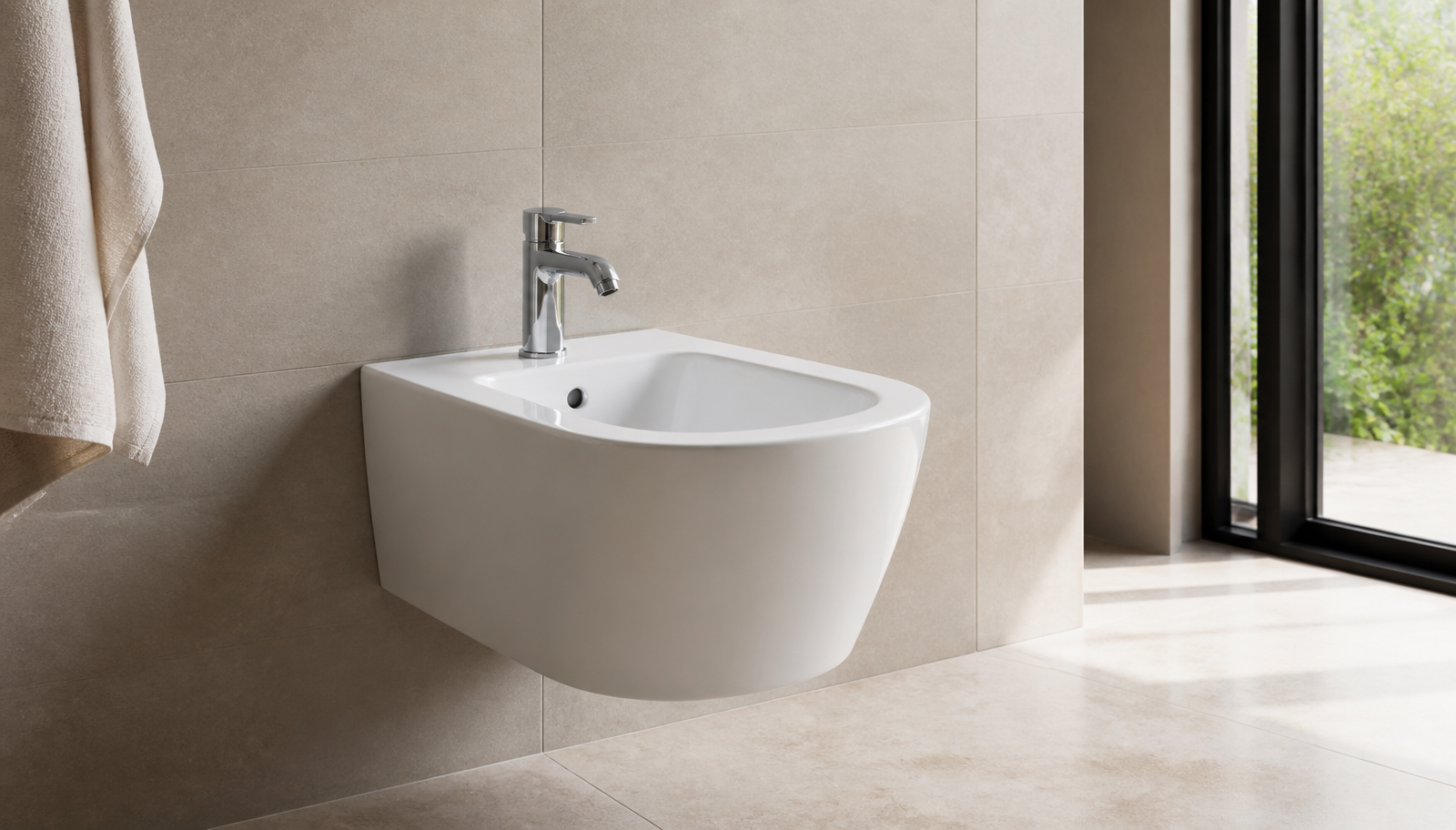
| Wall-Hung Bidet | A separate bidet fixture that floats off the floor. Requires a concealed in-wall support frame. | For a modern, minimalist look in a full renovation. It makes cleaning the floor much easier. |
| Shower Toilet | All-in-one toilet and bidet. Features warm water, dryer, heated seat. Needs power and water. | For the ultimate in hygiene, comfort, and space-saving. The best choice for a high-end, full renovation. |
| Electronic Bidet Seat | Replaces your existing toilet seat. Adds warm water, drying, etc. Requires a nearby electrical outlet. | When you want luxury features without changing the toilet itself. A great retrofit option if power is available. |
| Handheld Bidet Sprayer | A trigger-activated spray nozzle connected to the toilet's water line. | For a simple, affordable, and versatile upgrade. Ideal for renters or for a quick DIY-style installation. |
Quick comparison
| Feature | Traditional Bidet | Bidet Attachment/Seat | Shower Toilet (Integrated) |
|---|---|---|---|
| Space Requirements | High (requires space for a second large fixture) | Low (fits onto your existing toilet) | Lowest (combines two fixtures into one footprint) |
| Installation Complexity | High (requires dedicated hot/cold plumbing and drain) | Low to Medium (DIY-possible for non-electric; requires electrician for seat) | Very High (requires professional plumbing, electrical, and often wall framing) |
| Hygiene Features | Basic water stream | Good (adjustable spray, some with warm water/drying) | Excellent (fully adjustable warm wash, dryer, self-cleaning nozzles) |
| User Experience | Requires moving from toilet to bidet | Convenient (use without leaving the toilet) | Seamless (all functions controlled by remote while seated) |
Common mistakes to avoid
Over the years, I've been called in to fix a few bidet installations that went wrong. Here are the most common mistakes I see people make. Avoiding them will ensure your project is a success from the start.
- Ignoring Electrical Safety. This is the most dangerous mistake. Connecting an electronic bidet seat or shower toilet to an extension cord or an existing, non-RCD-protected bathroom circuit is a serious fire and electrocution hazard. It *must* have its own dedicated, protected circuit installed by a certified electrician.
- Mismatched Toilet and Bidet Seat. Not all toilet bowls are the same shape. Buying a bidet seat online without checking if it's compatible with your 'round' or 'elongated' bowl is a common error. Always check the manufacturer's compatibility chart and measure your toilet carefully.
- Forgetting to Check Water Pressure. Many people buy a bidet system only to find the spray is weak and ineffective. This is often due to low household water pressure. A simple pressure test before purchase can tell you if the model you want will work, or if you need to consider a model designed for low-pressure systems.
- DIYing Complex Plumbing. It can be tempting to try and install a traditional bidet or move pipes yourself to save on labour. I strongly advise against this. An incorrect drain slope can lead to clogs and bad smells, and a single leaky water connection behind a new wall can cause thousands of euros in damage. It's just not worth the risk.
- Choosing Style Over Practicality. A beautiful, ultra-modern wall-hung bidet looks fantastic, but if it's installed in a family bathroom used by children, a more robust floor-standing model might be more durable. Consider who will be using the bathroom and choose a solution that is practical for everyone.
- Neglecting In-Wall Support. For wall-hung toilets and bidets, the in-wall carrier frame is everything. Using a cheap, no-name brand or incorrectly securing the frame to the wall structure can lead to the fixture sagging over time or, in the worst case, coming off the wall. We only use certified frames from brands like Geberit for this very reason.
Pre-project checklist
Before you even call for a quote, running through this simple checklist can help you refine your ideas and have a more productive conversation with a project manager like me.
- [ ] Decide Your Project Scope: Is this a simple fixture swap or a full bathroom renovation? This is the most important decision.
- [ ] Measure Your Space: Know the exact dimensions of your bathroom. Note the distance between the toilet's current waste pipe and the side walls.
- [ ] Identify Your Toilet: Is your toilet bowl round or elongated? Is it a standard floor-mounted unit or a wall-hung model?
- [ ] Locate Utilities: Find your toilet's water shut-off valve. Look for electrical outlets in or near the bathroom. Is the fuse box easily accessible?
- [ ] Assess Your Needs: Do you need warm water? Is a heated seat important? Is this for a main bathroom or a guest WC? Make a list of 'must-have' vs. 'nice-to-have' features.
- [ ] Inspiration: Collect a few photos of bidet systems or bathrooms you like. This helps us understand the aesthetic you're aiming for.
- [ ] Consult Local Regulations: Especially if you live in a historic or protected building (common in Lisbon and Porto), check if there are any restrictions on plumbing or electrical work.
- [ ] Contact a Professional: Once you have a clearer idea, it's time to talk to an expert. A professional site visit is the best way to get accurate advice for your specific home.
How Mudelar handles it
At Mudelar, we manage the entire modern bidets installation process from start to finish, providing a seamless turnkey service. It begins with a detailed, no-obligation consultation where I or one of my colleagues will visit your home in Lisbon, Porto, Setúbal, or the surrounding areas. We listen to your vision, assess the technical realities of your space, and provide you with a transparent and detailed proposal. You won't have to worry about coordinating plumbers, electricians, tilers, and painters; that's my job. We manage the entire team to ensure the project runs on time and to the highest quality standards.
Our team is comprised of certified and experienced professionals who specialise in bathroom renovations. We handle all material procurement from trusted suppliers like Roca and Sanindusa, manage any necessary permits, and guarantee our work. Our goal is to transform your bathroom with minimal disruption to your life, leaving you with a perfectly installed, beautiful, and functional new space. To see how we work, you can explore our services or learn more about us and our commitment to quality. When you're ready, just reach out for a free quote.
Frequently asked questions (FAQ)
H3 Do I need a permit to install a bidet in Portugal?
For a simple bidet attachment or handheld sprayer, no permit is required. However, if the installation involves altering the plumbing or electrical systems—as is the case for a traditional bidet or a shower toilet—you will likely need to submit a 'comunicação prévia' to your local council (câmara municipal). As part of our service at Mudelar, we handle all the necessary paperwork and ensure your renovation is fully compliant with local regulations.
H3 How long does a bidet installation take?
A non-electric bidet attachment can be installed in under an hour. An electronic bidet seat might take 1-2 hours if an outlet is already present. However, a full modern bidets installation for a wall-hung model or a shower toilet as part of a renovation is a multi-day process. The plumbing and electrical rough-in takes about 1-2 days, followed by wall-closing, waterproofing, and tiling (2-3 days including drying), and finally, the fixture installation and testing (1 day).
H3 Are shower toilets worth it?
From a hygiene, comfort, and space-saving perspective, absolutely. They offer a superior cleaning experience, reduce toilet paper consumption, and free up valuable floor space. For individuals with mobility limitations or certain medical conditions, they can be life-changing. While the initial investment is higher than a standard toilet, clients who have them installed almost universally agree that the benefits in daily comfort and cleanliness make it a worthwhile long-term addition to their home.
H3 What's the difference between a bidet and a bidet attachment?
A traditional bidet is a separate, standalone ceramic fixture that sits next to the toilet. A bidet attachment, on the other hand, is a device that fits onto your existing toilet, under the seat. The bidet is a complete appliance with its own plumbing, while the attachment is an accessory that uses the toilet's water supply to provide a cleansing spray. The attachment is a much simpler and less invasive way to get bidet functionality.
H3 How to choose the right bidet for a small bathroom?
For small bathrooms, space efficiency is key. I almost always recommend an integrated shower toilet or an electronic bidet seat. Both options add bidet functionality without taking up any extra floor space. A wall-hung shower toilet is the ultimate space-saver as the hidden cistern and floating bowl make the room feel significantly larger. If a renovation isn't planned, a slimline bidet seat is the next best choice.
H3 Can I install a bidet seat on any toilet?
No, compatibility is crucial. Most bidet seats are designed for either 'elongated' or 'round' shaped bowls, and you must choose the correct one. Additionally, some modern toilets with a 'French curve' or highly sculpted design may not have a flat enough surface at the back for the bidet seat to mount securely. It's always best to check the bidet seat manufacturer's compatibility guide or consult with a professional.
H3 What are the electrical requirements for a shower toilet?
A shower toilet or electronic bidet seat requires a dedicated electrical circuit, protected by a Residual Current Device (RCD), known in Portugal as a 'diferencial'. The outlet must be rated for use in bathrooms (IP44 or higher) and installed at a safe distance from water sources as per Portuguese electrical code (RTIEBT). It can't be plugged into a standard socket. This is a job strictly for a certified electrician.
H3 Is a handheld bidet sprayer easy to install?
Yes, for someone comfortable with basic plumbing tasks, it is generally considered an easy installation. It typically involves shutting off the water to the toilet, unscrewing the water supply hose, adding a 'T-adapter' that comes with the kit, and then reattaching the hoses. The most important step is to ensure all connections are tight to prevent leaks. However, always remember to turn the sprayer's valve off after each use to avoid pressure buildup in the hose.
Conclusion
Navigating the world of modern bidet systems doesn't have to be complicated. Whether you’re leaning towards the all-in-one luxury of a shower toilet, the practicality of an electronic bidet seat, or the simplicity of a handheld sprayer, there is a solution that fits your bathroom, lifestyle, and renovation plans. The key is understanding the differences in features and, most importantly, the specific plumbing and electrical requirements for a safe and successful modern bidets installation. My best advice is to think about long-term comfort and hygiene. A bathroom renovation is an opportunity to significantly improve your daily life. If you're in Lisbon, Porto, Setúbal or anywhere in between and are considering an upgrade to your bathroom's hygiene, don't hesitate to reach out. We can walk you through the options in person and help you make the best choice for your home. To get started, I invite you to request a free quote from my team at Mudelar today.
Ready to start your renovation?
Request a free, no-commitment quote. We reply within 24 hours.
Request a quoteLer em português: Bidés Modernos 2026: Guia de Instalação e Alternativas | Mudelar