
31 August 2026
Pull-Out Kitchen Taps Guide 2026: A Pro's Advice | Mudelar
Discover the best pull-out kitchen mixer taps for your Porto home. Our guide covers types, installation, and choosing the right extendable kitchen faucet. Get a free quote.
As a technical lead at Mudelar, I’ve overseen countless kitchen renovations across Porto and the North. One of the most impactful upgrades you can make is installing a pull-out kitchen mixer tap. This isn't just about aesthetics; it’s a significant functional improvement that changes how you use your kitchen sink every day. A quality pull-out tap offers unparalleled flexibility, making it effortless to wash large pots, rinse fresh produce from the local market, or clean down the entire sink basin. In this guide, I'll walk you through everything you need to know, drawing on my hands-on experience to help you select, install, and maintain the perfect model for your kitchen in Portugal.
Quick summary
- Enhanced Flexibility: A retractable hose simplifies rinsing vegetables, cleaning large pots, and washing the sink itself, reaching every corner with ease.
- Dual Spray Modes: Most models feature a toggle button on the spray head, allowing you to switch between a standard, aerated stream and a powerful spray function for tougher jobs.
- Improved Kitchen Workflow: By making tasks quicker and more efficient, a pull-out tap streamlines your daily kitchen routine, from food prep to clean-up.
- Modern Aesthetics: These taps come in a vast range of styles and finishes, from minimalist chrome to bold matte black, instantly updating the look of your kitchen.
- Space Efficiency: Particularly in smaller kitchens in urban areas like Lisbon or Braga, a single-hole pull-out tap can consolidate functions and free up counter space.
- Professional Installation is Key: Correctly fitting the tap, connecting the water lines, and balancing the counterweight is crucial for long-term, leak-free performance.
Table of contents
- What Exactly is a Pull-Out Kitchen Mixer Tap?
- The Core Benefits: Why Upgrade Your Kitchen Tap?
- Types of Pull-Out Kitchen Mixer Taps Explained
- Key Materials and Finishes: Durability Meets Design
- The Installation Process: A Step-by-Step Overview
- Maintenance and Care for Your Pull-Out Tap
- Recommended materials and options
- Quick comparison
- Common mistakes to avoid
- Pre-project checklist
- How Mudelar handles it
- Frequently asked questions (FAQ)
- Conclusion
What Exactly is a Pull-Out Kitchen Mixer Tap?
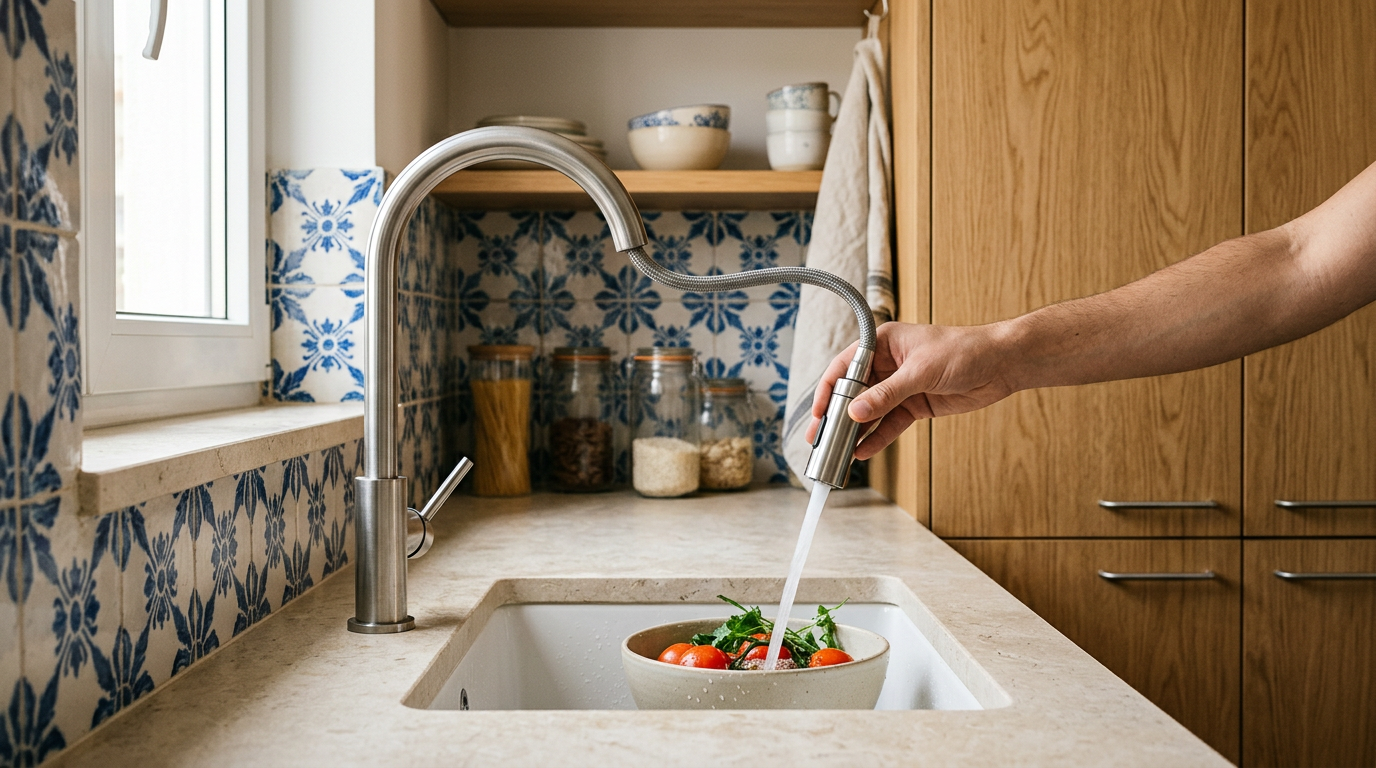
A pull-out kitchen mixer tap is a faucet where the spray head can be detached and pulled out from the main body on a flexible hose. This simple yet brilliant mechanism transforms a static fixture into a versatile kitchen tool. The magic lies in the components hidden beneath the sink: a long, braided nylon or metal hose that runs through the tap's body, and a counterweight attached to it. When you pull the spray head, the hose extends smoothly. When you let go, the weight pulls it back, guiding the head to securely dock back into the spout.
This design is distinct from the more common fixed-spout taps. While a standard tap's reach is limited to its swivel radius, a pull-out tap can extend 50-70 cm or more, allowing you to direct water precisely where you need it. This functionality is invaluable for modern, open-plan kitchens where the sink is often a central hub of activity. It’s a feature we frequently recommend during our renovation projects in areas like Cascais and Oeiras, where functionality and clean design are paramount.
It's also important to distinguish between 'pull-out' and 'pull-down' models. A traditional pull-out tap features a lower-profile spout, and the handle pulls straight out towards you. A pull-down tap, often with a high-arc or gooseneck spout, has a spray head that you pull downwards into the sink. Both offer similar functionality, but the choice often comes down to sink depth, overhead clearance, and personal preference.
The Core Benefits: Why Upgrade Your Kitchen Tap?
The primary advantage of a pull-out tap is its sheer convenience and flexibility. Think about filling a large pot or a coffee machine reservoir that doesn't fit in the sink. Instead of awkwardly tipping it under the faucet, you simply bring the spray head to the pot. This same flexibility makes cleaning the sink basin itself a two-minute job rather than a chore, as you can easily spray down every corner and rinse food debris towards the drain.
Most pull-out taps come with a dual-function spray head. With the press of a button, you can switch from a steady, aerated stream (perfect for filling glasses) to a powerful, wide spray (ideal for dislodging stubborn food from plates or rinsing salad greens). This targeted cleaning power can reduce water consumption and make washing up significantly faster. It’s a practical upgrade that homeowners in busy households, from Setúbal to Braga, immediately appreciate.
Beyond function, these taps offer a significant aesthetic upgrade. They signal a modern, well-equipped kitchen. With a huge variety of designs available, from industrial-style spring-loaded models to sleek, minimalist options, you can find a tap that perfectly complements your kitchen's style. For many of our clients, choosing a statement tap from a quality brand like Grohe or Sanindusa becomes a key design decision in their overall kitchen renovation.
Types of Pull-Out Kitchen Mixer Taps Explained
Understanding the main categories will help you narrow down your choice. While the core function is similar, the design and ergonomics differ, making each type suitable for different kitchen layouts and user needs.
Standard Pull-Out Taps
This is the classic design, typically featuring a compact, straight, or gently curved spout. The spray head itself forms the end of the spout and pulls directly out towards the user. These taps are often more understated and are an excellent choice for smaller kitchens or for homeowners who prefer a less prominent fixture. Their lower profile means less risk of splashing in shallower sinks. They provide all the functional benefits of a retractable hose without dominating the visual space above the sink.
Pull-Down Taps (High-Arc/Gooseneck)
Arguably the most popular style today, the pull-down tap features a high, arching 'gooseneck' spout. The spray head points downwards and is pulled vertically into the sink. This design offers excellent clearance, making it extremely easy to wash tall stockpots and stacking dishes. The high arc creates a dramatic, professional look that works well in larger kitchens or with island sinks. When choosing one, it's vital to match it with a deep sink to minimise splashing, a detail we always verify during our on-site assessments in Porto and Aveiro.
Professional-Style Spring Taps
For those who are serious about cooking, a professional-style tap brings a touch of the restaurant kitchen home. These are a subset of pull-down taps, characterised by an exposed, flexible spring that supports the main hose, and a separate docking arm to hold the spray head. This design is robust, offers exceptional reach and flexibility, and makes a bold design statement. While larger than other types, it’s the ultimate tool for functionality and is becoming a sought-after feature in high-end kitchen renovations.
Key Materials and Finishes: Durability Meets Design
The longevity and performance of a pull-out tap are directly linked to its construction materials. The best taps on the market, such as those from Roca or Grohe, use a solid brass body. Brass is highly resistant to corrosion and is extremely durable, ensuring the tap's core will last for decades. Stainless steel is another excellent option, prized for its natural resistance to rust and tarnishing. Lower-end models might use zinc alloys, which are less durable and more prone to corrosion over time—a compromise we advise against.
Internally, the most critical component is the ceramic disc cartridge. This mechanism controls water flow and temperature. High-quality ceramic discs provide a smooth, drip-free operation for many years, far outlasting older rubber washer systems. The pull-out hose itself is also important; look for braided nylon or flexible metal hoses that are designed to withstand constant movement without kinking or fraying.
The finish is what defines the tap's look and feel. Here are some popular choices:
- Polished Chrome: Timeless, easy to clean, and matches most kitchen hardware.
- Brushed Nickel/Stainless Steel: Hides fingerprints and water spots better than chrome, offering a softer, contemporary look.
- Matte Black: A bold, modern choice that creates a striking contrast, especially against light-coloured countertops like Silestone.
- Brass/Gold/Copper: Warm metallic tones that add a touch of luxury and pair well with classic or industrial designs.
The Installation Process: A Step-by-Step Overview
While it might seem straightforward, installing a pull-out kitchen tap correctly requires precision to prevent future leaks and ensure smooth operation. As professionals, we follow a meticulous process.
First, the main water supply to the kitchen is shut off. The old tap is disconnected from the hot and cold water lines and unbolted from underneath the sink. This can often be the trickiest part, especially if the old fittings are corroded. Once the old tap is removed, the sink or countertop surface is thoroughly cleaned.
The new tap's base and gasket are fitted through the hole. From underneath, the mounting hardware is tightened to secure the tap firmly in place—it must be stable, with no wobble. Next, the hot and cold water supply lines are connected. We use flexible, braided steel hoses for reliability. Then, the pull-out hose is fed through the tap body and connected to the spray head.
The final, and most crucial, step is attaching the counterweight. It's clamped onto the pull-out hose at a specific point. This weight must have a clear, unobstructed path to move up and down. If it catches on pipes or other items stored under the sink, the hose will not retract properly. We test the mechanism a dozen times to ensure a smooth, secure glide before turning the water back on and checking thoroughly for any leaks.
Maintenance and Care for Your Pull-Out Tap
To keep your pull-out tap functioning perfectly and looking new, a little regular maintenance goes a long way. The most important task is to periodically clean the spray head's nozzles, or aerator. Over time, mineral deposits from the water (limescale) can build up and disrupt the spray pattern. Most modern spray heads have soft silicone nozzles that can be cleaned simply by rubbing them with your finger.
For more stubborn build-up, you can unscrew the spray head and soak it in a 50/50 solution of white vinegar and water for an hour. This will dissolve the mineral deposits. It's also wise to occasionally pull the hose out fully and wipe it down with a damp cloth to remove any grime that could be drawn back into the tap body. Check the connection points under the sink once a year to ensure they remain tight and leak-free.
To clean the tap's finish, avoid harsh abrasive cleaners or scouring pads. A soft cloth with mild soap and water is all that’s needed. For finishes like matte black or brushed brass, always check the manufacturer's specific cleaning recommendations to avoid damage. This simple care routine will ensure your tap remains a reliable and attractive feature in your kitchen for years to come.
Recommended materials and options
| Type | Features | When to choose |
|---|---|---|
| Solid Brass with PVD Finish | Extremely durable core material with a resilient, scratch-resistant coating. | For a high-traffic kitchen where longevity and a lasting finish are top priorities. |
| 304 Stainless Steel | Naturally corrosion-resistant, lead-free, and offers a modern, hygienic look. | When you want a professional aesthetic that hides fingerprints and water spots well. |
| High-Arc Pull-Down Tap | Gooseneck spout providing maximum clearance for large pots and pans. | For kitchens with deep sinks and ample overhead space, especially on an island. |
| Low-Profile Pull-Out Tap | Compact, straight spout design that pulls towards the user. | For smaller kitchens, shallower sinks, or where a less obtrusive tap is desired. |
| Professional Spring-Loaded | Exposed spring and docking arm for maximum flexibility and industrial style. | For the serious home cook who values ultimate functionality and a bold design statement. |
| Touchless Sensor Tap | Integrated motion sensor for hands-free operation; includes pull-out hose. | For enhanced hygiene and convenience, reducing the spread of germs during food prep. |
Quick comparison
Request a free, no-commitment quote. We reply within 24 hours.
Request a quote →| Feature | Pull-Out Tap | Pull-Down Tap | Standard Mixer Tap |
|---|---|---|---|
| Spout Design | Lower profile, straight or gently curved | High-arc, gooseneck style | Fixed spout, various heights and shapes |
| Hose Motion | Pulls straight out towards the user | Pulls vertically down into the sink | No hose |
| Best For | Smaller kitchens, shallower sinks | Deep sinks, kitchen islands, washing tall pots | Basic functionality where flexibility is not a need |
| Splashing Risk | Generally lower due to closer proximity to sink | Can be higher if paired with a shallow sink | Dependent on water pressure and spout height |
| Aesthetics | Understated, integrated look | Professional, statement-making appearance | Traditional or minimalist, depending on design |
| Hose Reach | Typically 50-70 cm, ergonomic for wide sinks | Similar reach, gravity aids retraction | Limited to spout's swivel range |
Common mistakes to avoid
- Ignoring Under-Sink Space. Before buying, you must check that there is enough clear vertical space under the sink for the hose and counterweight to move freely. If the weight snags on plumbing or stored items, the pull-out function will be useless.
- Choosing an Incompatible Size for Your Sink. A large, high-arc pull-down tap paired with a shallow sink is a recipe for a flooded countertop. The scale of the tap should match the scale and depth of your sink basin to minimise splashing.
- Opting for Low-Quality Materials. It’s tempting to choose a cheaper tap, but models made from zinc alloy with plastic components will fail much sooner. Investing in a solid brass body with a ceramic disc cartridge will save you headaches and replacement tasks down the line.
- Overlooking Water Pressure. Some pull-out taps require a minimum water pressure (usually around 1.0 bar) to function effectively, especially the spray feature. In older buildings, particularly in historic centres like Porto, it's vital to check your home's water pressure first.
- DIY Installation Without Experience. A leaking tap can cause significant water damage to your kitchen cabinets, especially those made from MDF or particleboard. Professional installation ensures all connections are watertight and the mechanism is perfectly balanced.
- Forgetting about Overhead Clearance. If you have cabinets directly above your sink, measure the height carefully before choosing a tall, high-arc pull-down model. Ensure you have enough space for the tap and for comfortable use.
- Mismatching the Finish. While a bold matte black or gold tap can be a great feature, ensure it complements the other hardware in your kitchen (cabinet handles, light fixtures) for a cohesive design.
Pre-project checklist
- Measure the diameter of the existing tap hole(s) on your sink or countertop.
- Count the number of holes available (1, 2, 3, or 4) to ensure the new tap is compatible or if you'll need a deck plate.
- Check the water pressure in your home. You can buy a simple pressure gauge that attaches to an outdoor tap.
- Measure the depth of your sink basin.
- Measure the vertical clearance from the countertop to any overhead cabinets.
- Open the under-sink cabinet and assess the space. Is there a clear path for a 40-50 cm drop for the counterweight?
- Decide on your preferred style: low-profile pull-out or high-arc pull-down.
- Choose a finish that complements your kitchen's existing hardware and colour scheme.
- Take photos of your current sink area and the space underneath to show to our team.
How Mudelar handles it
At Mudelar, integrating a feature like a pull-out tap is a seamless part of our turnkey renovation process. We don't just install a tap; we design the entire kitchen workspace around your needs. During our initial consultation, we discuss how you use your kitchen and recommend fixtures that enhance that experience. We handle the technical assessment, ensuring the model you love—whether from Grohe, Roca, or another leading brand—is perfectly compatible with your home's plumbing and your new sink.
Our expert teams in Porto, Lisbon, and across Portugal manage every detail, from sourcing the fixture to the meticulous installation and testing. By incorporating this into a full renovation project, we ensure all elements work in harmony—the countertop, the sink, the cabinetry, and the tap. It's this holistic approach that guarantees a beautiful, functional, and durable result. If you're ready to transform your kitchen, you can learn more about our services or request a free quote to get started.
Frequently asked questions (FAQ)
Are pull-out kitchen taps reliable?
Yes, high-quality pull-out taps from reputable brands are extremely reliable. Modern models use durable braided hoses and robust ceramic disc cartridges designed for longevity. The key is professional installation and choosing a tap made from solid brass rather than cheaper alloys. With proper care, a good pull-out tap can easily last 10-15 years without issues like leaks or poor retraction.
Do I need a plumber to install a pull-out tap?
While it's possible for a skilled DIY enthusiast to install one, I always recommend professional installation. A plumber or a qualified fitter like our teams at Mudelar ensures a leak-proof seal on water connections and correctly balances the counterweight for smooth operation. An incorrect installation can lead to leaks, water damage to your cabinets, and a frustrating user experience, so it's worth getting it right the first time.
What is the difference between a pull-out and a pull-down kitchen tap?
The main difference is the spout design and direction of pull. A 'pull-out' tap usually has a lower, more compact spout, and the handle pulls straight out. A 'pull-down' tap has a high-arching gooseneck spout, and the spray head is pulled vertically downwards into the sink. The choice depends on your sink's depth, overhead clearance, and aesthetic preference.
How do you clean the hose of a pull-out tap?
Cleaning the hose is simple. Fully extend the hose and wipe it down with a soft, damp cloth and a little mild soap to remove any build-up. Avoid harsh chemicals. Do this every few months to prevent grime from being retracted back into the tap's body, which helps maintain a smooth gliding action.
Can a pull-out tap be installed on any sink?
Almost any sink can accommodate a pull-out tap, provided it has a standard-sized tap hole (typically 35mm in diameter). The more important consideration is the sink's depth and the space underneath. Pull-down taps are best with deep sinks to prevent splashing, and you must have clear space below for the hose and counterweight mechanism.
How long should a pull-out kitchen tap last?
A quality pull-out kitchen mixer tap from a reputable manufacturer should last for 10 to 15 years, and sometimes longer. The lifespan depends heavily on the quality of the internal components, particularly the ceramic disc cartridge and the hose material. Regular, gentle maintenance can significantly extend its functional life.
Do pull-out taps reduce water pressure?
A properly installed pull-out tap should not noticeably reduce your home's overall water pressure. However, the aerator in the spray head is designed to mix air with water, which can make the flow feel softer while actually using less water. The spray function may feel more powerful due to the way it forces water through smaller nozzles, but it doesn't increase your line pressure.
Is a pull-out kitchen tap worth it for a small kitchen?
Absolutely. In fact, a pull-out tap can be even more beneficial in a small kitchen. It combines the function of a standard tap and a side spray into one neat fixture, saving counter space. The ability to direct water precisely makes cleaning and food prep in a compact area much more efficient. A sleek, single-hole pull-out tap is an excellent choice for optimising functionality in a small footprint.
Conclusion
A pull-out kitchen mixer tap is more than just a fixture; it's a fundamental upgrade that enhances the daily functionality of your kitchen. By providing unmatched flexibility for cleaning, rinsing, and food preparation, it streamlines your workflow and adds a touch of modern sophistication. From the robust materials to the elegant finishes, choosing the right model can elevate your entire kitchen space. As we’ve seen in countless renovations from Lisbon to Braga, it's an investment in convenience and style that you'll appreciate every single day. If you're considering a kitchen upgrade, let's discuss how the perfect tap can fit into your vision. Request a free quote today, and my team at Mudelar will help you get started.
Ready to start your renovation?
Request a free, no-commitment quote. We reply within 24 hours.
Request a quoteLer em português: Misturadoras de Cozinha com Chuveiro Extensível 2026 | Mudelar