
24 August 2026
Pyrolytic Ovens 2026: A Complete Guide for Portugal | Mudelar
Considering pyrolytic ovens for your kitchen in Portugal? Learn about the benefits of a self-cleaning oven, maintenance tips, and installation. Get a free quote!
As a project manager with over a decade of experience in kitchen renovations across Lisbon and its surrounding areas, I’ve seen appliance trends come and go. However, the move towards pyrolytic ovens is one I wholeheartedly endorse. These incredible machines offer a level of convenience that transforms kitchen maintenance. If you’re tired of spending hours scrubbing greasy oven interiors with harsh chemicals, this technology is for you. In this guide, I’ll walk you through everything you need to know about pyrolytic ovens, from how the self-cleaning magic works to installation requirements here in Portugal and how to keep your appliance in top condition for years to come. It’s a game-changer for any modern kitchen.
Quick summary
- Effortless Cleaning: Pyrolytic ovens use extreme heat (around 500°C) to incinerate food residue, turning it into a fine ash that you can simply wipe away.
- Superior Hygiene: The high-temperature cycle eliminates grease, baked-on food, and bacteria far more effectively than manual scrubbing.
- No Harsh Chemicals: Say goodbye to toxic and fume-heavy oven cleaners. The pyrolytic function cleans using only heat, which is better for your home and your health.
- Safety First: These ovens feature automatic door locks that engage during the high-heat cycle, preventing accidental opening until it cools to a safe temperature.
- Energy Efficiency: While the cleaning cycle consumes energy, these ovens are typically very well-insulated, which means they are often more efficient during regular cooking.
- Professional Installation: Proper setup is key, requiring a dedicated electrical circuit and correct integration into your kitchen cabinetry for safety and performance.
Table of contents
- What Exactly is a Pyrolytic Oven?
- The Core Benefits of Installing a Pyrolytic Oven
- How the Pyrolytic Cleaning Cycle Works: A Step-by-Step Guide
- Installation and Technical Requirements in Portugal
- Pyrolytic Ovens vs. Other Oven Types
- Maintaining Your Pyrolytic Oven for Longevity
- Recommended materials and options
- Quick comparison
- Common mistakes to avoid
- Pre-project checklist
- How Mudelar handles it
- Frequently asked questions (FAQ)
- Conclusion
What Exactly is a Pyrolytic Oven?
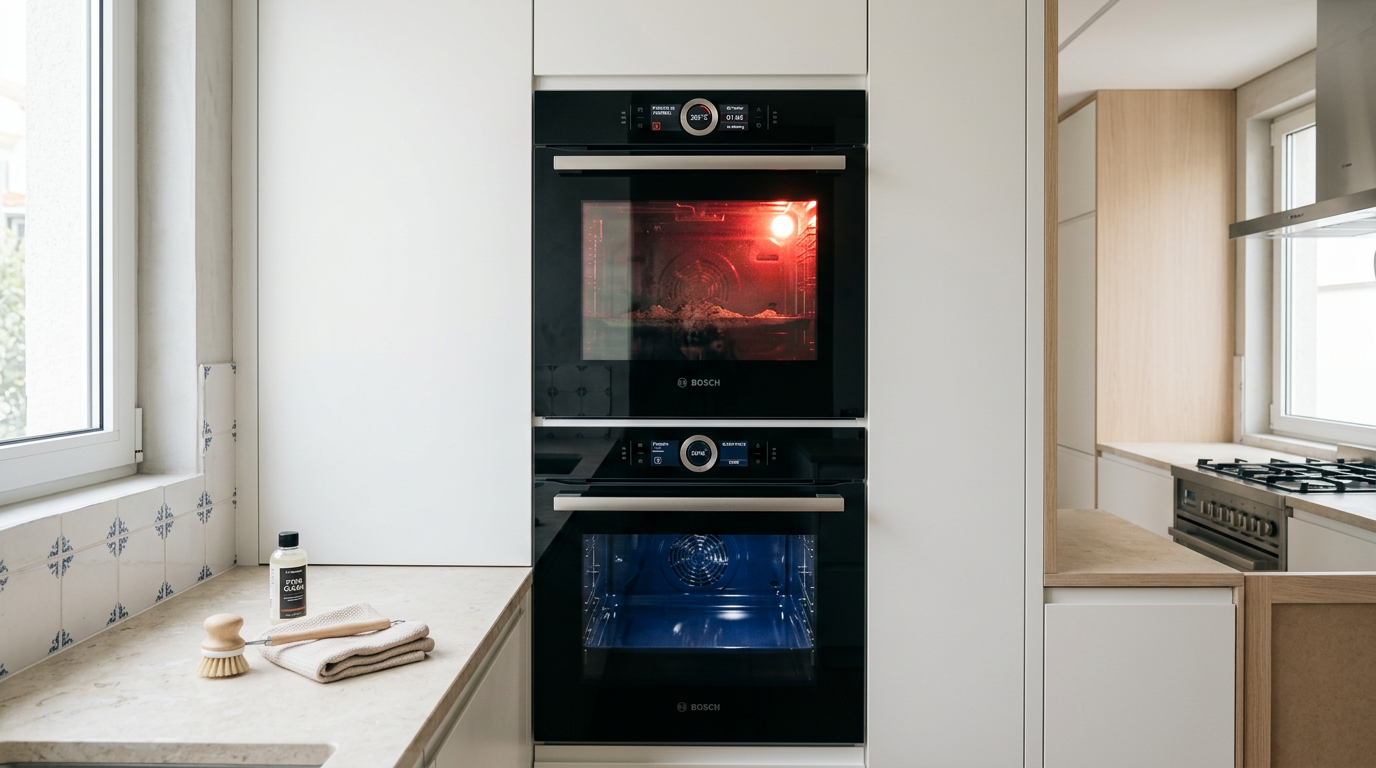
A pyrolytic oven is, quite simply, a self-cleaning oven. The term 'pyrolysis' refers to the process of thermal decomposition at very high temperatures in the absence of oxygen. In practical terms, when you activate the pyrolytic cleaning function, the oven door locks automatically for safety, and the internal cavity heats up to approximately 500°C. This intense heat carbonises and incinerates all food splatters, grease, and baked-on residue, reducing it to a small pile of fine ash.
Once the cycle is complete and the oven has cooled down, all that’s left for you to do is wipe away the ash with a damp cloth. There’s no need for aggressive scrubbing, abrasive pads, or pungent chemical cleaners. This technology provides a deep, hygienic clean that is virtually impossible to achieve by hand. It’s a feature we are increasingly incorporating into kitchen projects in Lisbon and Porto for clients who value convenience and a pristine cooking environment.
Differentiating from Other Cleaning Types
It’s important not to confuse pyrolytic cleaning with other 'easy-clean' features. Some ovens have catalytic liners, which are specially treated panels that absorb grease and break it down during normal cooking at temperatures above 200°C. While helpful, they are less effective than pyrolysis, don't clean the whole cavity, and the liners may need replacing over time. Other models offer steam cleaning (hydrolysis), which uses steam to loosen light soil, but this still requires manual wiping and scrubbing for tougher stains.
Pyrolysis is the most comprehensive and effective self-cleaning oven technology available. It cleans the entire interior, including the back, sides, roof, and often the inner door glass. The result is an oven that looks almost new after every cycle. This is why brands like Bosch, Siemens, and Teka feature this technology prominently in their mid to high-end ranges, which we frequently recommend for kitchen renovations in areas like Cascais and Oeiras.
The Core Benefits of Installing a Pyrolytic Oven
The most obvious benefit is the incredible convenience. The chore of oven cleaning is universally disliked. With pyrolytic ovens, you reclaim hours of your time and eliminate the physical effort of scrubbing. A task that once took an hour or more of hard work with unpleasant chemicals is reduced to pushing a button and, later, a quick wipe with a cloth. This is a lifestyle upgrade that our clients in busy households truly appreciate.
Beyond convenience, there is a significant hygiene advantage. The extreme temperatures of the pyrolytic cycle not only destroy food residue but also sterilise the oven cavity, eliminating germs and bacteria. This ensures a healthier cooking environment for you and your family. Furthermore, because there are no residual chemical cleaners left behind, you can be confident that your food isn’t being exposed to any unwanted substances. This peace of mind is invaluable.
These ovens also tend to offer superior cooking performance. To withstand the intense heat of the cleaning cycle, pyrolytic ovens are built with better, thicker insulation and often feature multi-layered glass doors. This robust construction means they retain heat more effectively during everyday cooking, leading to more stable temperatures, even cooking results, and greater energy efficiency. So, while the cleaning cycle uses a burst of energy, you may save on electricity during your regular baking and roasting.
Finally, adding a high-quality appliance like a pyrolytic oven can add to the long-term value and appeal of your property. In a competitive property market like Setúbal or Braga, a modern, well-equipped kitchen is a major selling point. It signals a high-spec, low-maintenance home, which is very attractive to potential buyers or renters. It’s an investment in your home and your quality of life.
How the Pyrolytic Cleaning Cycle Works: A Step-by-Step Guide
Understanding the process makes it much less intimidating. It’s a safe and straightforward procedure, but following the manufacturer’s instructions is crucial. I always run through this with clients after an installation. Here’s a general breakdown of what to expect.
Before You Begin
First, prepare the oven. You'll need to remove all accessories from the cavity, including oven racks, baking trays, and any telescopic runners, unless they are specifically marked as 'pyro-proof'. Some higher-end models from brands like AEG or Neff now include pyrolytic-resistant accessories, which is a fantastic feature. Wipe out any large food debris or puddles of grease with a paper towel. This isn’t strictly necessary, but it helps reduce the amount of smoke and odour produced during the cycle.
During the Cycle
Once you’ve prepared the oven, close the door and select the pyrolytic cleaning program. Most ovens offer two or three cycles of varying duration, typically from 1.5 to 3 hours, depending on the level of soiling. When you start the program, the oven door will automatically lock. A symbol will appear on the display to indicate the lock is engaged. The oven will then begin heating up to its maximum temperature of around 500°C. You may notice a slight odour, particularly the first few times you use it, so it's a good idea to ensure your kitchen is well-ventilated by opening a window or using your extractor hood.
After the Cycle
After the high-heat phase is complete, the oven will begin to cool down. The door will remain locked until the internal temperature drops to a safe level (usually below 200°C). This can take another 30 to 90 minutes. Once the lock disengages, you can open the door. You will see a fine layer of greyish ash on the bottom of the oven cavity. Simply wait for the oven to cool completely, then use a soft, damp cloth to wipe out the ash. That’s it – your oven is sparkling clean and ready for its next use.
Installation and Technical Requirements in Portugal
Properly installing pyrolytic ovens is not just about fitting a box into a hole; it’s a technical task that ensures safety and performance. As part of our turnkey renovation service at Mudelar, we handle all the technical aspects, but it's good for homeowners to be aware of the requirements, especially in older buildings in cities like Sintra or Almada.
Electrical Considerations
The single most important requirement is the electrical supply. Due to the high power draw during the cleaning cycle, a pyrolytic oven must be connected to its own dedicated circuit from your main electrical panel. It cannot be simply plugged into a standard wall socket that shares power with other appliances. This prevents overloading the circuit, which could trip breakers or pose a fire risk. An electrician must ensure the wiring and circuit breaker are correctly rated for the oven's power specifications (usually found in the technical manual).
Cabinetry and Ventilation
These ovens generate significant heat, even on the exterior, during the pyrolysis cycle. Therefore, the surrounding cabinetry must be able to withstand it. We use high-quality, moisture-resistant MDF or other suitable materials for our kitchen cabinets that can handle the temperatures. Crucially, there must be adequate ventilation gaps around the appliance as specified by the manufacturer. This typically means a gap at the back and sometimes a channel under or above the unit to allow air to circulate and dissipate heat, protecting your cabinetry from damage. A standard 60cm built-in oven needs to be installed into a housing unit that is designed for this purpose.
Pyrolytic Ovens vs. Other Oven Types
When planning a kitchen remodel, you'll be faced with several choices for ovens. Understanding the key differences in cleaning technologies helps you make an informed decision that suits your cooking habits and lifestyle. Here’s how pyrolytic ovens stack up against the alternatives.
Pyrolytic vs. Catalytic Liners
As mentioned earlier, catalytic ovens are the next step down in self-cleaning. They have rough-textured liners on the sides or back of the oven that absorb grease. When the oven is run at high temperatures (over 200°C) during normal cooking, a chemical reaction helps break down the grease. However, this process is passive and less thorough than pyrolysis. It doesn’t clean the oven floor, door, or racks, and heavy soiling can overwhelm the liners. Over time, these liners lose their effectiveness and may need to be replaced. Pyrolysis, in contrast, is an active, intense cycle that deep cleans the entire cavity.
Pyrolytic vs. Steam Cleaning (Hydrolysis)
Many modern ovens offer a steam or hydrolytic cleaning function. This is a low-temperature, low-energy option. You pour a small amount of water (and sometimes a drop of washing-up liquid) into a recess in the oven floor and run a 20-30 minute cycle. The steam generated helps to soften grime and food spills, making them easier to wipe away. While this is great for light, recent soiling, it lacks the power to tackle baked-on grease and carbonised food. You will still need to apply some elbow grease and potentially a non-abrasive cleaner. Pyrolysis is the only truly 'hands-off' solution for heavy-duty cleaning.
Maintaining Your Pyrolytic Oven for Longevity
While the pyrolytic function does the heavy lifting, a little routine care will keep your oven in perfect working order and looking its best. The technology is robust, but it’s not completely maintenance-free. Following these simple steps will ensure you get the most out of your investment for years to come.
Routine Cleaning Tasks
Between pyrolytic cycles, it's good practice to wipe up major spills as they happen (once the oven is cool, of course). For the exterior, a microfibre cloth with a bit of water or a pH-neutral cleaner is usually sufficient to clean stainless steel or glass fronts without scratching. The oven door seal is crucial for maintaining temperature during both cooking and cleaning. Wipe it down regularly with a soft, damp cloth and avoid using any abrasive cleaners on it, as this can damage the seal and compromise its effectiveness.
Many pyrolytic ovens have multi-layered glass doors that can be disassembled for thorough cleaning. Over time, condensation or streaks can appear between the panes. Your user manual will show you how to safely remove the inner glass panels to clean them. This is typically a straightforward process and makes a huge difference in the overall appearance of your appliance.
When to Run the Pyrolysis Cycle
How often you should run the pyrolysis cleaning cycle depends entirely on your usage. For a family that uses the oven daily for roasting meats and other greasy foods, you might run the cycle once every month or two. If you're a less frequent user or mainly bake cakes, you might only need to do it two or three times a year. A good rule of thumb is to run the cycle whenever you notice a build-up of grime or when the oven starts to smoke or smell during preheating. Most modern ovens will even recommend when a cleaning cycle is due.
Recommended materials and options
Request a free, no-commitment quote. We reply within 24 hours.
Request a quote →When choosing a pyrolytic oven, the cleaning function is just one feature. Here are some other options and finishes to consider for your kitchen renovation in Portugal.
| Feature/Finish | Description | When to choose |
|---|---|---|
| Stainless Steel Finish | A classic, durable finish that resists fingerprints and corrosion. | For a timeless, professional look that coordinates with other appliances. |
| Pyro-proof Racks & Rails | Racks and telescopic rails treated to withstand the 500°C cleaning cycle. | For ultimate convenience, as it means you don't have to remove and scrub them by hand. |
| Telescopic Rails | Rails that slide out smoothly and safely, allowing you to check on dishes easily. | Essential for anyone who handles heavy roasting pans or wants safer, easier access to food. |
| Soft-Close Door | A hydraulic mechanism that prevents the oven door from slamming shut. | For a premium feel, enhanced safety (no trapped fingers), and reduced wear on the hinges. |
| Integrated Food Probe | A temperature probe that plugs into the oven wall to monitor the internal temperature of meat. | Perfect for home cooks who want precise, repeatable results for roasts and poultry. |
| Black or White Glass | A sleek, modern alternative to stainless steel, offering a seamless look. | To create a minimalist, integrated aesthetic in a contemporary kitchen design. |
Quick comparison
Here’s a quick comparison of the main oven cleaning technologies to help you decide.
| Oven Cleaning Type | Mechanism | User Effort | Best For |
|---|---|---|---|
| Pyrolytic | High-heat (500°C) incinerates residue to ash. | Minimal (push button, wipe ash). | Heavy users who want a deep, hygienic, hands-free clean. |
| Catalytic | Special liners absorb and break down grease during normal cooking. | Low (liners work passively, but require eventual replacement). | Moderate users looking for some assistance with cleaning, but not a full deep clean. |
| Steam/Hydrolytic | Low-temperature steam loosens light soiling. | Medium (requires significant manual wiping and scrubbing for tough stains). | Light users who clean their oven frequently after minor spills. |
| Manual Clean | Enamel interior that requires traditional cleaning methods. | High (requires chemical cleaners and intense manual scrubbing). | Those on a very tight budget for whom cleaning effort is not a primary concern. |
Common mistakes to avoid
Over my years managing projects, I’ve seen a few common errors. Avoiding them will keep you and your oven safe.
- Forgetting to remove non-pyro-proof accessories. Leaving standard chrome racks, trays, or telescopic runners inside during a cycle will ruin them. They will discolour, warp, and lose their smooth finish. Always check the manual.
- Not removing large food deposits first. While the oven can handle it, large piles of food or pools of grease will produce more smoke and odours. A quick wipe-out beforehand makes the process much more pleasant.
- Running the cycle without adequate ventilation. The process is safe, but it can generate some smoke and smells, especially from the grease burning off. Always open a window or use your kitchen's extractor fan.
- Trying to force the door open. The automatic lock is a critical safety feature. Never attempt to bypass or force it open. It will unlock on its own once the oven has cooled to a safe temperature.
- Using chemical cleaners inside the oven. The interior of a pyrolytic oven has a special enamel coating. Abrasive or chemical cleaners can damage this surface and interfere with the pyrolysis process. The whole point is to avoid these products!
- Neglecting the door gasket. The seal around the oven door is vital for efficiency. Scrubbing it with abrasive pads will cause damage, leading to heat loss during cooking and cleaning. A simple wipe-down is all it needs.
Pre-project checklist
Before you commit to a new pyrolytic oven for your kitchen in Aveiro or beyond, run through this checklist.
- Accurately measure the cabinetry housing dimensions (height, width, depth).
- Confirm with an electrician that you have, or can install, a dedicated power circuit for the oven.
- Decide which extra features are must-haves for you (e.g., telescopic rails, food probe).
- Assess your kitchen's ventilation – is there an extractor hood and/or an operable window nearby?
- Plan the logistics for delivery and installation, ensuring clear access to the kitchen.
- Choose a finish (stainless steel, black, white) that complements your overall kitchen design.
- Consult a professional kitchen renovation company like Mudelar to ensure seamless integration.
- Review the energy label to understand its efficiency rating for regular cooking.
How Mudelar handles it
At Mudelar, a kitchen renovation is a complete, turnkey process designed to be stress-free for you. When it comes to appliances like pyrolytic ovens, we don't just leave you with a catalogue. We discuss your cooking habits, your lifestyle, and your aesthetic preferences to help you select the perfect model. Our service includes sourcing the appliance, managing the delivery, and ensuring our certified electricians and carpenters perform a flawless installation, from running a new dedicated circuit to customising cabinetry for a perfect fit.
We integrate the new oven seamlessly into your new kitchen's workflow and design. Our goal is to provide a kitchen that is not only beautiful but also supremely functional. To learn more about how we can transform your kitchen, take a look at our services and see what makes us different. If you're ready to start planning, please don't hesitate to ask for a free quote so we can discuss your project in detail. You can learn more about us and our commitment to quality on our website.
Frequently asked questions (FAQ)
How long does a pyrolytic cleaning cycle take?
A full pyrolytic cycle typically lasts between 1.5 and 3 hours, depending on the oven model and the level of soiling you select. This includes the high-heat cleaning phase and the cool-down period before the door unlocks. It's best to run it when you won't need the oven for a few hours, for instance, overnight or in the afternoon.
Are pyrolytic ovens safe to use?
Yes, they are very safe when used correctly. They have several safety features, most importantly an automatic door lock that engages once the temperature rises and only disengages when it has cooled to a safe level. The exterior, especially the door, will get warm but is designed with multi-layered glass to remain at a touch-safe temperature, protecting children and pets.
Do pyrolytic ovens use a lot of electricity?
The cleaning cycle does consume a significant amount of electricity for the few hours it's running. However, because these ovens are so well-insulated to handle the high heat, they are often more energy-efficient during regular day-to-day cooking than non-pyrolytic models. The improved heat retention means the oven doesn't have to work as hard to maintain its temperature.
Do I need a special electrical connection for a pyrolytic oven?
Yes, this is a critical requirement. A pyrolytic oven must be installed on its own dedicated electrical circuit by a qualified electrician. This is because it draws more power than most standard appliances. Attempting to run it on a shared circuit is unsafe and will likely cause issues with your home's electricity supply.
What's the difference between pyrolytic and catalytic ovens?
The main difference is the method and effectiveness. A pyrolytic oven actively cleans the entire cavity by burning everything to ash at 500°C. A catalytic oven has special liners that passively absorb and break down grease during normal cooking over 200°C. Pyrolysis is a far more thorough and effective deep-cleaning solution.
How often should I run the pyrolytic cycle?
This depends entirely on how you use your oven. For heavy users who do a lot of roasting, every 1-2 months might be necessary. For lighter users who mostly bake, 2-3 times per year could be sufficient. The best indicator is when you see a visible build-up of grime or notice smells when you preheat the oven.
Can I leave the oven racks inside during the cleaning cycle?
Only if they are specifically labelled as 'pyro-proof' or 'pyrolytic-safe' by the manufacturer. Standard chrome-plated racks will be permanently damaged by the extreme heat. Always remove them unless your manual explicitly states you can leave them in. Some premium models include these special racks for added convenience.
Is it worth getting a pyrolytic oven in Portugal?
For most households, I would say absolutely. The convenience of a self-cleaning oven saves a significant amount of time and effort, and eliminates the need for harsh cleaning chemicals. In a modern home in Lisbon or the Algarve, it's a feature that adds real value and enhances your daily life. It’s an investment in a cleaner, more convenient kitchen.
Conclusion
In my professional opinion, pyrolytic ovens are one of the best investments you can make in a modern kitchen. They solve the age-old problem of oven cleaning with remarkable efficiency, offering a level of hygiene and convenience that manual cleaning simply cannot match. While the initial choice might seem technical, the long-term benefits in time saved and a cleaner cooking environment are undeniable. For anyone planning a kitchen renovation in Portugal, from a city apartment in Porto to a family home in Setúbal, this technology should be at the top of your appliance list. If you're ready to build a kitchen that works for you, let's talk. Request a free quote today, and my team at Mudelar will help you design the perfect space.
Ready to start your renovation?
Request a free, no-commitment quote. We reply within 24 hours.
Request a quoteLer em português: Fornos Pirolíticos 2026: Vantagens e Manutenção | Mudelar