
25 July 2026
Undermount vs Drop-in Sinks 2026: A Pro Guide | Mudelar
Choosing between undermount vs drop-in kitchen sinks? Our pro guide explains top-mount and integrated sinks for your kitchen renovation in Portugal. Get a free quote!
As a project manager at Mudelar, I've overseen countless kitchen renovations across Lisbon and Porto. One of the most critical decisions my clients face is choosing the right kitchen sink. It's more than just a basin for washing up; it’s the workhorse of your kitchen, impacting both daily workflow and overall aesthetics. The choice between an undermount vs drop-in kitchen sink can feel technical, but it defines the look and feel of your countertop area. In this guide, I'll walk you through everything you need to know, from installation types and materials to which option best suits your new kitchen, whether you're in a modern apartment in Oeiras or a family home in Braga.
Quick summary
- Drop-in Sinks: These are the most traditional type, installed from above into a pre-cut hole in the worktop. Their visible rim rests on the counter surface.
- Undermount Sinks: Mounted directly beneath the worktop for a clean, seamless look. This makes wiping debris from the counter straight into the sink incredibly easy.
- Worktop Compatibility is Key: Your choice of worktop material dictates your sink options. Undermount sinks require a solid, non-porous material like engineered quartz or granite.
- Installation Differences: Drop-in sinks are generally simpler and faster to install. Undermount sinks require precise cutting and expert sealing for a secure, waterproof fit.
- Aesthetics and Cleaning: Undermount sinks offer a sleek, modern aesthetic and simplify countertop cleaning. Drop-in sinks have a more classic look, but the rim can trap food and grime.
- Other Options Exist: Beyond these two, you also have integrated sinks (made of the same material as the worktop) and flush-mount sinks for different design goals.
Table of contents
- Understanding the Basics: What Are Kitchen Sink Mounting Types?
- The Drop-in (Top-mount) Kitchen Sink: A Closer Look
- The Undermount Kitchen Sink: Sleek and Seamless
- Beyond the Basics: Integrated and Flush-mount Sinks
- Material Matters: How Your Worktop Influences Your Sink Choice
- Key Sink Materials to Consider for Your Portuguese Home
- Recommended materials and options
- Quick comparison
- Common mistakes to avoid
- Pre-project checklist
- How Mudelar handles it
- Frequently asked questions (FAQ)
- Conclusion
Understanding the Basics: What Are Kitchen Sink Mounting Types?
When we talk about kitchen sink types, the conversation usually starts with the mounting style. This refers to how the sink is physically attached to the kitchen worktop, and it has major implications for functionality, cleaning, and the final look of your space. It’s a decision we help homeowners with every day on our projects, from initial designs in Loures to final installations in Almada. The two main contenders are drop-in sinks and undermount sinks, each with its own specific characteristics.
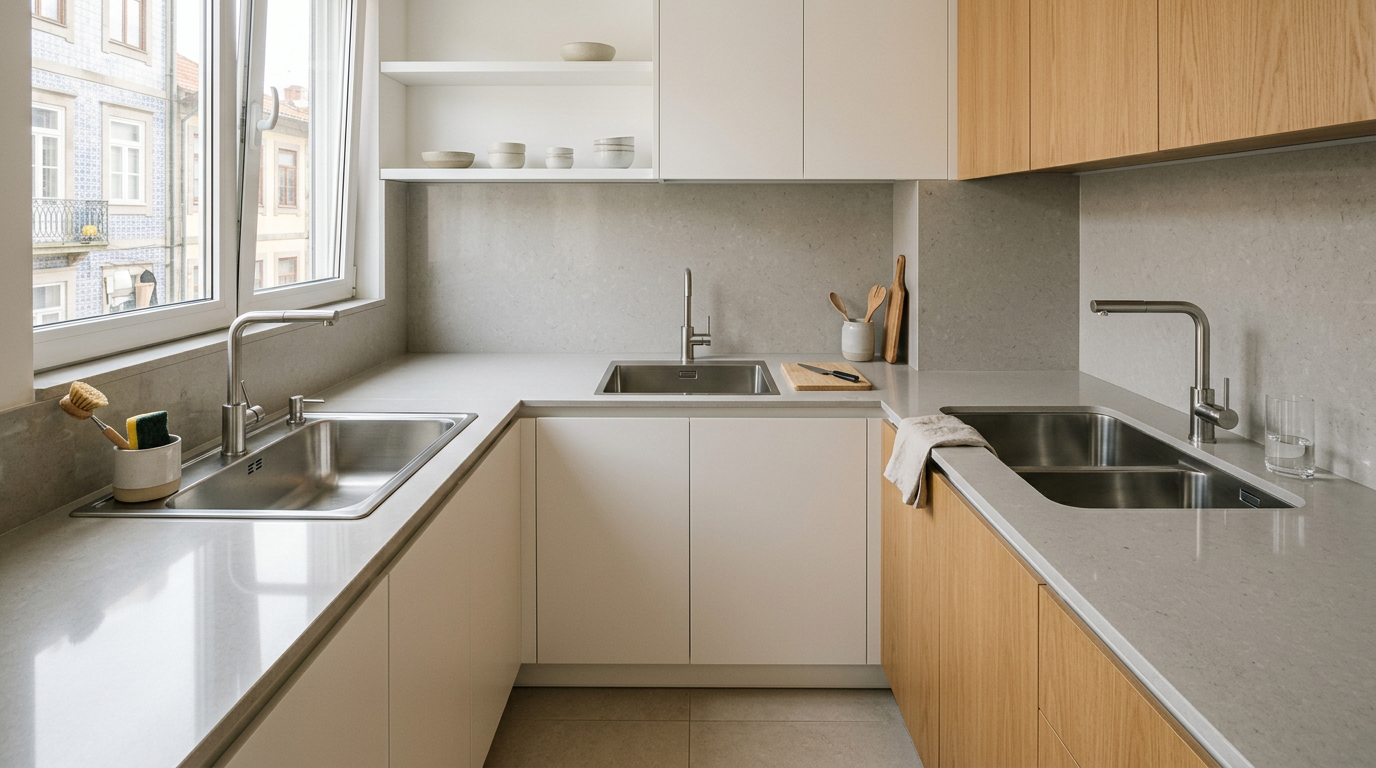
A drop-in sink, also commonly called a top-mount or self-rimming sink, is installed from above. A hole is cut into the worktop, and the sink is 'dropped' into place. Its weight is supported by the rim that rests on the top of the counter. In contrast, an undermount sink is installed from below the worktop. It's held in place by clips and a strong adhesive or silicone sealant. The edge of the worktop material is exposed and polished, creating a continuous, seamless surface from counter to sink basin. This fundamental difference in installation is the source of all their pros and cons.
The Drop-in (Top-mount) Kitchen Sink: A Closer Look
Drop-in sinks have been the standard in kitchens for decades, and for good reason. They are versatile, straightforward, and compatible with almost any worktop material, including laminate, which is a key consideration in many renovation projects. If you're looking at your current kitchen sink and it has a visible metal or ceramic lip sitting on top of the counter, you have a top-mount sink. They are a reliable and familiar choice for many homeowners across Portugal.
Installation Process
Installing a drop-in sink is a relatively direct process. First, our team makes a precise template and cuts an opening in the worktop. A bead of high-quality silicone sealant is applied to the underside of the sink's rim to create a watertight seal. The sink is then lowered into the opening, and clips on the underside are tightened to secure it firmly to the worktop. Any excess sealant is cleaned away for a tidy finish. The tap is typically mounted directly onto the sink deck itself, which comes with pre-drilled holes.
Pros and Cons of Drop-in Sinks
The main advantage of a drop-in sink is its compatibility with all worktop materials, especially laminates where the raw, cut edge needs to be covered and protected from water. The installation process is also less intensive than for an undermount sink. However, the primary disadvantage is the rim. This lip can be a collection point for food crumbs, grime, and water, requiring regular cleaning to prevent mould and mildew build-up. Aesthetically, it breaks the clean line of the countertop, which might not suit a minimalist, modern design.
Best Use Cases for Drop-in Sinks
I often recommend drop-in sinks for projects where a laminate or wood worktop is being used. Because these materials have cores that are vulnerable to water damage, the sink's rim provides essential protection over the cut edge. They are also an excellent choice for a straightforward replacement of an existing drop-in sink, as the new unit can often fit the existing cutout with minimal modification. For a practical, no-fuss kitchen in a rental property or a home in Setúbal with a more traditional style, the drop-in sink remains a solid contender.
The Undermount Kitchen Sink: Sleek and Seamless
In modern kitchen design, particularly in new builds and high-end renovations in areas like Cascais and central Lisbon, the undermount sink reigns supreme. Its defining feature is the absence of a visible rim on the countertop. This creates an uninterrupted flow from the worktop into the sink, lending the kitchen a sophisticated and clean aesthetic. Beyond looks, this design offers a significant functional advantage: you can wipe water and crumbs directly from the counter into the sink without any lip getting in the way.
Installation Specifics and Requirements
The installation of an undermount sink is more complex and requires absolute precision. The worktop must be made from a solid, waterproof material like engineered quartz (from brands such as Silestone or Compac), granite, marble, or a solid surface composite. Laminate or standard wood worktops are not suitable because the exposed cut edge would be highly susceptible to water damage. The hole is cut to the exact dimensions of the sink, and the inside edge is polished. The sink is then securely bonded and clipped to the underside of the stone by a specialist installer.
Advantages and Disadvantages of Undermount Sinks
The primary advantage is twofold: superior aesthetics and easier cleaning. The seamless transition is perfect for minimalist and contemporary kitchens. From a practical standpoint, being able to sweep spills and debris straight into the bowl is a convenience you'll appreciate every day. The main disadvantages are the more involved installation process and the limitation on worktop materials. Taps for undermount sinks are installed directly into the worktop, which requires additional precise drilling, so faucet placement must be planned in advance.
Where Undermount Sinks Shine
Undermount sinks are the go-to choice for any kitchen featuring a solid stone or engineered quartz worktop. They elevate the overall look of the space, making the worktop material the star of the show. In busy family kitchens where spills and messes are a daily occurrence, the easy-to-clean nature is a game-changer. At Mudelar, we almost exclusively pair undermount sinks with quartz and granite worktops in our projects, as it delivers the premium, durable finish our clients expect.
Beyond the Basics: Integrated and Flush-mount Sinks
While drop-in and undermount styles cover most situations, two other types are worth mentioning for those seeking a truly unique kitchen design. They are less common but offer distinct aesthetic benefits.
An integrated sink is one where the sink basin is made from the exact same material as the worktop, creating a single, continuous piece. This is most often seen with solid surface materials like Corian or custom-fabricated stainless steel or quartz worktops. The look is incredibly fluid and monolithic, with no seams whatsoever between the sink and the counter. It's a high-end choice that delivers a powerful design statement.
The flush-mount sink is a hybrid that attempts to combine the best of both worlds. The sink has a very thin, precisely engineered rim that sits in a recessed 'rebate' cut into the worktop. This allows the top of the sink rim to sit perfectly level, or 'flush', with the counter surface. The result is a smooth surface that's easy to clean, but installation requires incredible precision from the worktop fabricator. It’s a stylish alternative but less common than the main two types.
Material Matters: How Your Worktop Influences Your Sink Choice
A common mistake I see homeowners make is choosing a sink without first deciding on their worktop material. The two decisions are completely intertwined. The structural and water-resistant properties of your chosen worktop will either open up or limit your sink mounting options.
Sinks for Laminate and Wood Worktops
If you're planning to use a laminate worktop, your choice is almost always a drop-in sink. Laminate worktops are made from a particleboard or MDF core with a thin decorative layer on top. Cutting a hole for an undermount sink would expose this core material directly to water, leading to swelling, delamination, and eventual failure. A drop-in sink's rim covers and seals this vulnerable edge, making it the only truly safe option for this material. The same logic applies to most non-specialised solid wood worktops.
Sinks for Stone and Engineered Quartz Worktops
For solid worktops like granite, marble, or the incredibly popular engineered quartz from brands like Silestone and Compac, you have complete freedom. However, the undermount sink is the natural partner for these premium materials. Installing an undermount sink allows the beautiful polished edge of the stone to be visible and accentuates the quality of the worktop. It creates the clean, high-end finish that homeowners investing in these materials are typically looking for. In our projects across Braga and Porto, 9 out of 10 stone worktops are paired with undermount sinks.
Technical considerations for installation
Regardless of type, professional installation is crucial for a long-lasting, leak-free result. For drop-ins on laminate, the silicone seal must be perfectly applied. For undermounts on stone, the process is even more critical. It involves specialist epoxy resins for bonding and robust mechanical clips to support the weight of the sink when full of water. A poor installation can lead to the sink detaching or a failed seal causing slow, hidden water damage to your cabinets. This is a job for experienced professionals, not a DIY task.
Key Sink Materials to Consider for Your Portuguese Home
Once you’ve settled on a mounting style, you need to choose the sink material itself. This choice affects durability, maintenance, sound insulation, and style. Leading brands like Roca, Sanindusa, and Grohe offer sinks in a variety of these materials.
- Stainless Steel: The most popular choice for its durability, resistance to heat and rust, and affordability. Look for a lower gauge (16-18) for better quality and thickness, which reduces noise. It's a versatile material that works with both drop-in and undermount styles.
- Composite (Granite/Quartz): Made from a mix of crushed stone and acrylic resin, these sinks are extremely durable, scratch-resistant, and non-porous. They come in a variety of matte colours (black, grey, white, beige) that can be matched to your worktop or taps. They offer excellent sound deadening qualities. Egger and Kronospan are more known for boards, but composite sinks follow a similar logic of durable, engineered materials.
- Ceramic (Fireclay): Fired at extremely high temperatures, these sinks are incredibly hard, non-porous, and resistant to staining and chipping. They have a classic, timeless appeal, perfect for farmhouse or traditional kitchens. They are heavy, however, and require sturdy cabinet support, especially for large 'Belfast' or 'Butler' style sinks.
- Solid Surface: Materials like Corian allow for the creation of integrated sinks. They are non-porous and can be repaired if scratched. The design possibilities are vast, but they are less resistant to high heat than other materials.
Recommended materials and options
Request a free, no-commitment quote. We reply within 24 hours.
Request a quote →| Type | Features | When to choose |
|---|---|---|
| Stainless Steel | Durable, heat-resistant, hygienic, and available in many shapes and sizes. Look for 16-18 gauge. | For a busy, functional kitchen where practicality and durability are the top priorities. Fits any style. |
| Granite Composite | Extremely hard, scratch-and-stain resistant, non-porous, and available in various matte colours. | When you want a modern look, want to match your sink colour to your worktop, and desire excellent durability. |
| Ceramic/Fireclay | Classic glossy finish, highly resistant to stains and chemicals, very durable and easy to clean. | For traditional, farmhouse, or country-style kitchens. Creates a strong visual focal point. |
| Solid Surface | Allows for fully integrated sinks with no seams. Non-porous and repairable. | For a minimalist, high-end contemporary kitchen where a seamless, monolithic look is desired. |
| Copper | Develops a unique patina over time, naturally antimicrobial. A statement piece. | For a unique, rustic, or luxurious kitchen design where the sink is intended to be a standout feature. |
Quick comparison
| Feature | Drop-in (Top-mount) Sink | Undermount Sink | Integrated Sink |
|---|---|---|---|
| Installation | Simple; dropped into a cutout. DIY-friendly for the skilled. | Complex; requires professional bonding and clamping from below. | Very specialised; fabricated as one piece with the worktop. |
| Cleaning & Hygiene | Rim can trap dirt and grime, requiring regular cleaning. | Seamless edge allows for wiping debris directly into the sink. Very hygienic. | The most hygienic option, with no seams or joints to trap bacteria. |
| Aesthetics | Traditional look; the rim is always visible. | Modern, sleek, and minimalist. The worktop is the visual star. | Ultimate seamless and fluid look. A major design statement. |
| Worktop Compatibility | Compatible with all materials, including laminate. | Requires solid, non-porous materials like stone, quartz, or solid surface. | Limited to specific materials like solid surface, steel, or custom quartz. |
Common mistakes to avoid
Over my years managing renovations, I've seen a few common missteps when it comes to sinks. Avoiding them will save you headaches down the line.
- Mismatching Sink and Worktop. The biggest error is selecting an undermount sink for a laminate worktop. This will lead to irreparable water damage. Always finalise your worktop material before committing to an undermount model.
- Ignoring the Cabinet Base Size. You can't fit a 90cm sink into a 60cm cabinet. Always measure the interior width of your sink's base cabinet before you go shopping to ensure it will fit physically.
- Attempting a Complex DIY Installation. While a drop-in sink replacement can be a DIY job for some, installing an undermount sink is not. Improper sealing or support can lead to leaks and structural failure. It's worth investing in a professional.
- Forgetting Tap and Accessory Holes. Drop-in sinks come with pre-drilled holes. For undermounts, the holes are drilled into your expensive worktop. Decide on your tap, soap dispenser, and other accessories *before* the worktop is fabricated.
- Not Considering Bowl Depth. A very deep sink can look great but may be uncomfortable to use for long periods if you are tall, causing you to stoop. A shallow sink might cause more splashing. Think about your habits and ergonomics.
- Overlooking Drainage. Check the position of your existing plumbing. Moving waste pipes can add complexity and require more work, so it's best to plan for a sink that aligns with the current setup if possible.
Pre-project checklist
Before you finalise your sink choice, run through this quick checklist:
- Confirm your kitchen worktop material.
- Measure the internal width of your sink's base cabinet.
- Decide on the bowl configuration you need (single bowl, double bowl, 1.5 bowl).
- Choose a sink material that suits your lifestyle and maintenance preference.
- Select a tap that complements the sink and allows enough clearance for pots.
- Consider if you need a draining board (integral with the sink or separate).
- Think about accessories like a waste disposal unit, soap dispenser, or boiling water tap.
- Verify the location of your existing water and waste plumbing.
- Gather inspiration from modern kitchen projects in places like Porto or Lisbon.
- Book a site visit with Mudelar to get professional advice tailored to your space.
How Mudelar handles it
At Mudelar, we make the entire process seamless. During our initial consultation for your kitchen renovation, we discuss all these options with you. We help you choose the perfect combination of sink type, material, worktop, and tap that fits your functional needs and design vision. Our service is turnkey, meaning we handle everything from the precise digital measurement of your kitchen to the sourcing of high-quality materials from partners like Roca and Sanindusa and the expert installation by our skilled teams in Lisbon, Porto, Setúbal, and beyond.
For undermount sinks, our stone fabricators create a flawless cutout and polished edge, while our installers ensure a perfect, waterproof seal and secure mounting that will last for decades. We take the guesswork out of the equation so you can focus on enjoying your beautiful new kitchen. To learn more about our process, explore our services or read more about us and our commitment to quality.
Frequently asked questions (FAQ)
How long does it take to replace a kitchen sink?
If it's a like-for-like replacement of a drop-in sink, the work can often be completed in 2-4 hours by a professional. Replacing a sink along with the worktop, especially when installing an undermount sink, is part of a larger renovation process that typically takes several days, accounting for templating, fabrication, and installation.
Do I need a license or permit to change my kitchen sink in Portugal?
A simple sink replacement does not typically require a municipal license (licença municipal). However, if the work involves altering the building's plumbing or electrical systems, or is part of a larger renovation that changes the layout, a formal communication or permit might be necessary. At Mudelar, we manage all necessary paperwork for our projects.
Is an undermount sink worth it?
For many homeowners, yes. If you are investing in a stone or quartz worktop, an undermount sink enhances that investment by providing a high-end, seamless look. The practical benefit of easier cleaning is also a significant long-term advantage that makes daily kitchen life more convenient. It's a key feature of a modern, functional kitchen.
What's the difference between a top-mount and drop-in sink?
There is no significant difference; the terms are used interchangeably. Both refer to a sink that is installed from above and has a visible rim that rests on the countertop. 'Top-mount' and 'drop-in' describe the same installation method. I tend to use both so clients new to the terminology understand.
How do you choose the right size kitchen sink?
The size of your sink should be proportional to your kitchen and your base cabinet. A standard kitchen cabinet is 60cm wide, which can typically accommodate a sink up to 55cm wide. For larger kitchens with 80cm or 90cm cabinets, you can install much larger single or double bowl sinks. Consider your typical usage: do you wash large pots and pans frequently?
Can you put an undermount sink on an existing countertop?
Yes, but only if the existing countertop is made of a suitable solid material like granite, quartz, or solid surface. The process involves carefully removing the old sink, cutting and polishing the hole from underneath, and then installing the new sink. It is a very specialised job that requires an experienced professional to avoid damaging the worktop.
What is the most durable kitchen sink material?
Granite composite sinks are arguably the most durable for all-around performance. They are exceptionally resistant to scratches, chips, stains, and heat. High-quality, thick-gauge stainless steel is also extremely durable, though it can be more prone to showing scratches over time compared to the matte finish of a composite sink.
How do I clean and maintain an undermount sink seal?
The silicone seal is crucial. To maintain it, avoid using harsh abrasive cleaners or tools around the join. A simple wipe-down with a soft cloth and gentle soap is sufficient. Periodically check the seal for any signs of peeling or gaps. A properly applied seal from a professional installer should remain intact and watertight for many years.
Conclusion
Choosing between an undermount vs drop-in kitchen sink is a pivotal decision in your kitchen renovation. The right choice hinges on your worktop material, your aesthetic preferences, and your daily habits. A drop-in sink offers versatility and simplicity, ideal for laminate worktops and traditional designs. An undermount sink provides a sleek, modern look and superior functionality, perfectly complementing stone or quartz surfaces. As a project manager, my best advice is to consider these elements together to create a cohesive and practical workspace. If you're planning a kitchen renovation in Lisbon, Porto, or the surrounding areas, our team at Mudelar is here to guide you. Request a free quote today, and let's build the perfect kitchen for your home.
Ready to start your renovation?
Request a free, no-commitment quote. We reply within 24 hours.
Request a quoteLer em português: Pia de Cozinha 2026: Encastrar, Sobrepor ou Sob Bancada? | Mudelar