
20 July 2026
Wall-Hung Toilets 2026: A Pro's Guide for Portugal | Mudelar
Considering wall-hung toilets for your home? Discover the benefits of a concealed cistern, from space-saving design to easy cleaning. Get a free quote today.
Wall-Hung Toilets and Concealed Cisterns: The Definitive 2026 Guide
As a technical lead at Mudelar, I've overseen countless bathroom renovations across Porto, Lisbon, and the surrounding regions. One of the most impactful upgrades homeowners are choosing is the installation of wall-hung toilets with concealed cisterns. They offer a clean, modern aesthetic that dramatically transforms a bathroom, making it feel larger and more streamlined. This system, which hides the bulky tank and plumbing within the wall, is no longer just a feature of high-end hotels. It’s a practical and stylish solution for homes of all sizes. In this comprehensive guide, I'll walk you through everything you need to know, from the installation process and structural requirements to maintenance and choosing the right components for your home in Portugal.
Quick summary
- Modern Aesthetics: A wall-hung toilet creates a minimalist, 'floating' look that enhances any contemporary bathroom design.
- Space-Saving Illusion: By lifting the toilet off the floor and hiding the cistern, it makes the room appear significantly larger and less cluttered.
- Superior Hygiene: Cleaning is far easier without a toilet base or external pipework to gather dust and germs. You can mop the entire floor surface underneath.
- Professional Installation is Key: This is not a DIY task. It requires a rigid support frame, precise plumbing, and proper wall construction to ensure safety and reliability.
- Quiet and Efficient: Modern concealed cisterns are designed for quiet flushing and often feature dual-flush technology to conserve water.
- Surprising Reliability: Despite fears about in-wall access, systems from reputable brands like Grohe and Geberit are extremely durable and fully accessible through the flush plate for maintenance.
Table of contents
- What Exactly Are Wall-Hung Toilets with Concealed Cisterns?
- The Core Benefits: Why Choose a Wall-Hung System?
- The Installation Process: A Step-by-Step Breakdown
- Understanding the Concealed Cistern and Frame
- Design Considerations and Flush Plate Options
- Maintenance and Accessibility: Debunking the Myths
- Are Wall-Hung Toilets Suitable for Every Bathroom in Portugal?
- Recommended materials and options
- Quick comparison
- Common mistakes to avoid
- Pre-project checklist
- How Mudelar handles it
- Frequently asked questions (FAQ)
- Conclusion
What Exactly Are Wall-Hung Toilets with Concealed Cisterns?
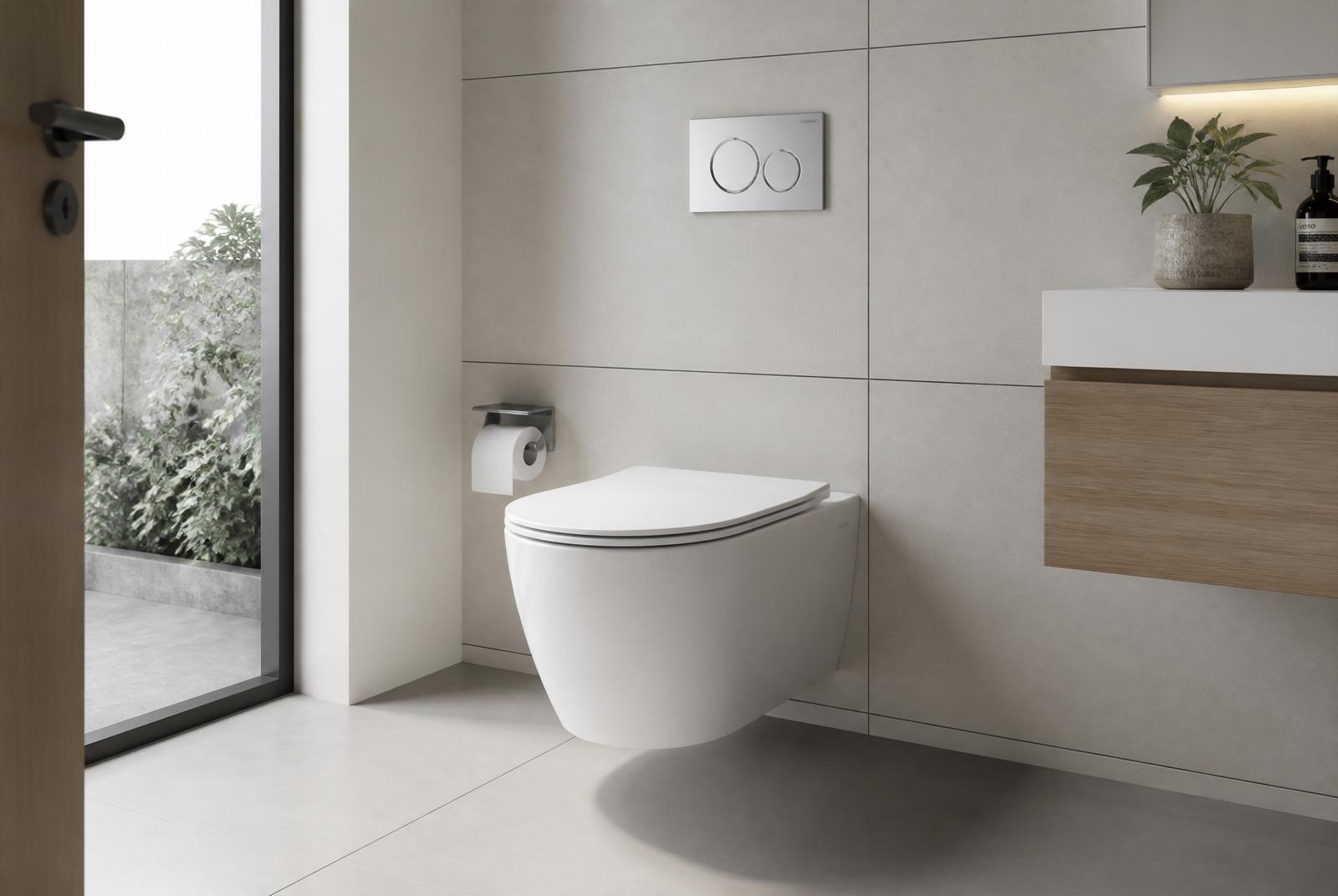
A wall-hung toilet system is composed of two primary parts: the toilet bowl itself, which is mounted directly to the wall, and the concealed cistern and frame, which is hidden behind it. This is a significant departure from traditional close-coupled toilets where the tank sits directly on top of the bowl and both rest on the floor. With a wall-hung system, all the functional components—the water tank, the fill and flush valves, and the waste pipe—are housed within a sturdy steel frame that is bolted to the floor and/or wall.
This frame does all the heavy lifting, supporting the weight of the toilet bowl and its user (typically rated for up to 400kg). The cistern is a slim, plastic tank integrated into this frame. The only parts you see are the ceramic bowl and the flush plate (or actuator) on the wall. This setup is what gives the toilet its 'floating' appearance and opens up the floor space, a feature we find is particularly valued in the often compact bathrooms of apartments in central Lisbon and Porto.
The Support Frame
The unseen hero of the system is the metal frame. Brands like Geberit (with their Duofix frames) and Grohe (with Rapid SL) are industry leaders, providing incredibly robust and reliable solutions. These frames are adjustable in height, allowing the toilet bowl to be set at a comfortable level for the user—a key ergonomic advantage. The frame is securely fastened, and a false wall, typically built from metal studs and moisture-resistant plasterboard, is constructed in front of it to hide the entire assembly.
The Cistern and Plumbing
Inside the frame sits the cistern. These are highly engineered units, usually made from a single piece of moulded plastic to eliminate seams and potential leak points. They are insulated to prevent condensation forming on the outside and to dampen the sound of the tank refilling. All the plumbing, including the water inlet and the waste outlet, is connected to the frame before the wall is closed up. The design ensures a clean, pipe-free finish in the bathroom, which is a major aesthetic goal for many of our renovation projects in Braga and Aveiro.
The Core Benefits: Why Choose a Wall-Hung System?
While the installation is more involved than a standard toilet, the long-term benefits of a wall-hung system are compelling. Homeowners who make the switch rarely look back, and the reasons go far beyond just looks. It’s about creating a more functional, hygienic, and spacious-feeling bathroom.
At Mudelar, we often recommend them for small bathrooms, a common challenge in older buildings in cities like Setúbal and Sintra. The visual trick of seeing the floor continue uninterrupted beneath the bowl creates a powerful illusion of space. The physical space saved by the concealed cistern, even though it requires a false wall (typically 15-20cm deep), can often be integrated with other features like shelving niches, making the design intentional and practical.
Hygiene and Cleaning
This is perhaps the most significant practical advantage. A conventional toilet has a complex base, nooks, crannies, and pipes at the back that are notoriously difficult to clean. They become magnets for dust, hair, and grime. A wall-hung toilet eliminates this problem entirely. You can simply sweep and mop the floor underneath without obstruction. Many modern bowls also feature rimless technology, meaning the inner bowl has no rim overhang, preventing germ buildup and making it incredibly easy to wipe clean.
Aesthetic and Design Flexibility
The sleek, minimalist look is undeniable. A floating toilet instantly modernizes a bathroom, contributing to a spa-like, high-end feel. Because the cistern is hidden, your choice of toilet bowl and flush plate becomes a key design statement. This allows for perfect coordination with other fixtures. Furthermore, the ability to set the bowl's height during installation is a fantastic feature for user comfort, especially for taller individuals or those with mobility considerations, a detail we always discuss with clients during our project planning phase.
The Installation Process: A Step-by-Step Breakdown
Installing a wall-hung toilet is a job reserved for experienced professionals. The integrity of the installation depends on a perfect sequence of plumbing, carpentry, and finishing work. A small mistake can lead to big problems down the line. Here’s a simplified overview of how our teams at Mudelar approach the process.
- Site Assessment and Preparation: First, we assess the existing wall and floor structure. The support frame must be mounted to a solid surface. We then mark out the precise locations for the frame, water supply, and waste pipe according to the agreed-upon height of the toilet bowl.
- Frame Installation: The steel frame is assembled and securely bolted to the floor and/or the structural wall behind it. We use heavy-duty anchor bolts to ensure there is absolutely no movement. The height of the bowl’s mounting bolts and the waste pipe connection are set at this stage.
- Plumbing Connections: Our certified plumbers connect the water supply to the cistern's fill valve and connect the waste outlet to the main soil pipe. Every connection is tested for leaks under pressure before proceeding. This is a critical step; everything must be perfectly sealed before it's enclosed.
- Building the False Wall: We construct a new wall in front of the frame, typically using a metal stud system and moisture-resistant plasterboard. Cutouts are made for the bowl’s mounting rods, the water connection, the waste pipe, and the flush plate access window. In wet areas, we apply waterproofing membranes for extra protection.
- Finishing the Wall: The new wall is then plastered, skimmed, and prepared for tiling or painting. Our tilers lay the tiles, cutting them precisely around the openings. Grouting is done carefully to create a waterproof seal.
- Final Mounting: After the wall is finished and the tile adhesive and grout have fully cured, the toilet bowl is pushed onto the mounting rods. It's secured with nuts, and the final water and waste connections are made. The flush plate is clipped into place, and the entire system is tested one last time.
Understanding the Concealed Cistern and Frame
The heart of a wall-hung toilet system is the technology hidden behind the tiles. Understanding its components can help you appreciate its reliability and engineering. These systems are designed for decades of trouble-free use, and the leading brands have perfected their designs.
Frame Types
There are two main types of frames. The most common is the full-height version (around 1.2m) that is bolted to the floor and the wall, providing maximum stability. However, for installations under a window or a low countertop, low-height frames (around 0.82m) are available. These often require more robust wall fixings as they don't have the same leverage. We always select the appropriate frame based on the specific structural conditions of the bathroom in places like Cascais or Oeiras.
The Cistern's Anatomy
Modern cisterns, like those from Sanindusa or the international giants Grohe and Geberit, are marvels of efficiency. They are typically dual-flush, offering a full flush (4.5-6 litres) and a reduced flush (3 litres), helping to meet water conservation goals. They are made from durable, seamless plastic and are fully insulated. This insulation serves two purposes: it stops condensation from forming inside the wall cavity and it makes the refilling process remarkably quiet.
Design Considerations and Flush Plate Options
With all the mechanics hidden, your design choices are distilled down to two key elements: the toilet bowl and the flush plate. This allows you to create a perfectly coordinated and uncluttered look.
Choosing a Toilet Bowl
Toilet bowls come in a variety of shapes (round, square, D-shaped) and sizes (standard, compact). For smaller bathrooms, a compact bowl with a shorter projection can save valuable centimetres. The biggest innovation in recent years is rimless technology. Traditional bowls have a rim where water flows to clean the bowl, but this area is hard to reach and a breeding ground for bacteria. A rimless bowl has a smooth, easy-to-clean surface and uses a direct flush technique for superior hygiene.
The Flush Plate: The Finishing Touch
The flush plate is the only part of the cistern you interact with. It's not just a button; it's a design element. Plates are available in hundreds of styles, materials, and finishes to match your taps and accessories. You can choose from simple white plastic, polished chrome, matte black, brushed steel, or even glass and wood finishes. They also house the dual-flush mechanism, usually with a large button for the full flush and a smaller one for the half flush. It's a small detail that has a big impact on the final look.
Maintenance and Accessibility: Debunking the Myths
A common question I hear from clients is: "What happens if something goes wrong inside the wall? Do you have to tear down the tiles?" This is the biggest myth surrounding wall-hung toilets. The answer is a definitive no. The entire system is designed for access through the flush plate opening.
By simply removing the flush plate (which usually clips off without tools), a plumber gains direct access to the internal workings of the cistern, including the fill valve and the flush valve. These components are designed as modular cartridges that can be easily removed, serviced, or replaced if necessary. Leading manufacturers guarantee the availability of spare parts for up to 25 years. The systems are so reliable that problems are rare, but it's reassuring to know that maintenance is straightforward and non-destructive.
Are Wall-Hung Toilets Suitable for Every Bathroom in Portugal?
Request a free, no-commitment quote. We reply within 24 hours.
Request a quote →While incredibly versatile, there are some structural considerations. A wall-hung toilet cannot be mounted directly onto a simple plasterboard or non-structural partition wall. It needs a solid anchor. In most Portuguese homes, this is not an issue.
- Solid Brick/Block Walls: These are ideal. The frame can be bolted directly and securely to the masonry wall.
- Stud Walls: A stud wall can also be used, but it must be properly reinforced. We often add extra horizontal timber or metal noggins between the studs to provide a solid fixing point for the frame. This is a standard part of the process for our teams.
Even if your chosen wall isn't suitable, we can almost always build a new, reinforced stud wall (or 'technical wall') just deep enough (15-20cm) to house the frame. This wall can run the full length of the bathroom, creating a clean 'service duct' and providing space for built-in shelves or cabinets, turning a technical requirement into a design feature. This is an excellent solution for renovations across the greater Lisbon and Porto metro areas.
Recommended materials and options
| Type | Features | When to choose |
|---|---|---|
| Rimless Toilet Bowl | No internal rim, direct flush technology, superior hygiene, easy to clean. | For any modern bathroom where hygiene and ease of maintenance are priorities. |
| Compact Bowl | Shorter projection from the wall (typically under 50cm). | For small bathrooms, cloakrooms, or WCs where every centimetre counts. |
| Standard Height Frame | Approx. 1.2m tall, floor and wall-mounted for maximum stability. | The default, most secure option for solid walls or properly reinforced stud walls. |
| Low Height Frame | Approx. 0.8m tall, for installation under windows or countertops. | When vertical space is restricted; may require stronger wall fixings. |
| Dual-Flush Plate | Two buttons for a full and reduced water flush, saves water. | Standard choice for all new installations for both economy and ecology. |
| Moisture-Resistant MDF/Plasterboard | Green or blue tinted board designed for use in humid environments. | Essential for constructing the false wall to prevent moisture damage over time. |
Quick comparison
| Feature | Wall-Hung Toilet | Close-Coupled Toilet (Standard) | Back-to-Wall Toilet |
|---|---|---|---|
| Aesthetics | Minimalist, modern, 'floating' | Traditional, functional, cistern is visible | Floor-standing but with a concealed cistern |
| Space | Creates illusion of space, floor is clear | Takes up significant floor space | Floor is occupied, but pipes and cistern are hidden |
| Cleaning | Very easy; floor is completely accessible | Difficult; base and back are hard to clean | Easier than close-coupled, but base is still on floor |
| Installation | Complex; requires professional frame installation | Simple; straightforward plumbing connection | Medium; requires a concealed cistern and furniture unit |
| Height Adjustability | Yes, can be set to a custom height during install | No, fixed standard height | No, fixed standard height |
Common mistakes to avoid
- Attempting a DIY Installation: This is the most common and dangerous mistake. Incorrectly installing the frame can lead to catastrophic failure, water damage, and injury. Always hire a professional team with experience in these systems.
- Using the Wrong Wall Fixings: The frame supports a huge amount of weight. Using inadequate screws or wall plugs for your wall type (masonry vs. stud) will compromise the entire installation’s safety.
- Incorrect Height Setting: The bowl height must be decided before the wall is closed. Changing it later is a major job. We always confirm this with the client, even marking it on the wall for visualization.
- Not Waterproofing the False Wall: The area around a toilet is a wet zone. Failing to use moisture-resistant plasterboard and appropriate waterproofing can lead to mould, rot, and structural damage within the wall cavity.
- Forgetting to Leak-Test: Before the wall is closed up, all plumbing connections must be put under pressure and tested for several hours. Skipping this step is a huge risk.
- Cutting Tiles Poorly: The cutouts in the tiles for the mounting bolts and pipes need to be precise and clean. Poor tile work will ruin the final aesthetic and can compromise the bowl's stability.
Pre-project checklist
- [ ] Assess your current bathroom wall. Is it solid brick or a stud wall?
- [ ] Measure the space accurately. How much depth can you afford for the false wall (typically 20cm)?
- [ ] Confirm the position of your existing soil pipe. Will it need to be moved?
- [ ] Browse toilet bowl styles. Do you prefer a round, square, or D-shaped design?
- [ ] Consider a rimless bowl for enhanced hygiene.
- [ ] Think about the final height. A standard height is fine, but do you have specific ergonomic needs?
- [ ] Choose a flush plate style and finish that complements your other bathroom fittings.
- [ ] Plan for the wall finish. Will it be tiled, painted, or something else?
- [ ] Acknowledge that the bathroom will be out of use during the installation, which typically takes several days.
- [ ] Contact a professional renovation company like Mudelar for an on-site evaluation.
How Mudelar handles it
At Mudelar, installing wall-hung toilets is a core part of our turnkey bathroom renovations. We take the complexity and worry out of the process. Our experienced team handles everything from the initial structural assessment to the final polish of the flush plate. We ensure the frame is immaculately secured, the plumbing is flawless, and the false wall is built with the best moisture-resistant materials and waterproofing techniques. We work with leading brands like Geber_it, Grohe, and Roca to provide systems that are not only beautiful but also built to last.
By managing the entire project, we guarantee that every trade—from the plumber to the tiler to the painter—works in perfect coordination. This integrated approach is the only way to ensure a perfect, leak-free result that you will enjoy for years to come. To see how we can transform your bathroom, take a look at our services or learn more about us. When you're ready, it's easy to request a free quote.
Frequently asked questions (FAQ)
How much weight can a wall-hung toilet hold?
This is a very common concern, but you can be completely at ease. The steel frames from reputable manufacturers like Geberit and Grohe are rigorously tested and are typically rated to support a weight of 400kg (or over 60 stone). The weight is transferred through the frame directly to the floor and/or structural wall, not the toilet bowl itself. They are incredibly strong and safe when installed correctly by a professional.
Are wall-hung toilets hard to maintain?
No, they are designed for easy maintenance. While the cistern is hidden, all the internal working parts (the fill valve, flush mechanism, etc.) are accessible by simply removing the flush plate. No tiles or walls need to be broken. These components are usually modular, allowing for quick and clean replacement if a fault ever occurs, which is rare with quality systems.
Do wall-hung toilets leak more often?
Quite the opposite. When professionally installed, they are less likely to leak than many floor-standing models. The cistern is typically a single-moulded piece of high-grade plastic with no seams, eliminating a common failure point. Furthermore, all plumbing connections are made and pressure-tested before being sealed in the wall, ensuring a secure, long-lasting installation.
How long do concealed cisterns last?
A high-quality concealed cistern and frame from a leading brand is engineered to last the lifetime of the bathroom, easily 25 years or more. The frame itself is made of powder-coated steel to resist corrosion. While a mechanical part like a washer might need replacing after 10-15 years of heavy use, these parts are readily available and simple to replace via the flush plate access.
Do I need a special wall for a wall-hung toilet?
The toilet needs to be fixed to a strong support frame, which in turn needs to be fixed to a solid part of the building. This can be a masonry wall or a reinforced timber/metal stud wall. It cannot be hung on an unreinforced plasterboard partition wall. As part of any renovation, our team can build the necessary reinforcements to ensure a safe installation.
What is the difference between a wall-hung and a back-to-wall toilet?
A wall-hung toilet is mounted to the wall and 'floats' above the floor. A back-to-wall toilet sits firmly on the floor but, like a wall-hung model, uses a concealed cistern hidden in the wall or a furniture unit behind it. It offers a cleaner look than a standard toilet but doesn't provide the same ease of cleaning or sense of space as a true wall-hung version.
How to choose a wall hung toilet?
First, choose a reputable brand for the concealed frame and cistern (e.g., Grohe, Geberit). This is the most critical part. Then, select a bowl based on aesthetics (shape, size) and features (e.g., rimless technology for hygiene). Finally, choose a flush plate that matches your bathroom's design scheme. Our team at Mudelar can guide you through the best options available in our what-we-do section.
Are rimless wall-hung toilets better?
Yes, for hygiene and cleaning, they are significantly better. Traditional toilets have a rim where water flows, which is a hidden area where germs and limescale accumulate. A rimless toilet has a completely smooth bowl. A powerful, direct flushing system cleans the entire surface effectively with every flush, making your cleaning routine much simpler and the toilet more hygienic overall.
Conclusion
Choosing wall-hung toilets is an investment in your home’s style, hygiene, and functionality. The clean lines and floating appearance can make any bathroom, large or small, feel more spacious and luxurious. While the installation process is more complex than for a standard toilet, the benefits are undeniable. The key to a successful, long-lasting installation lies in professional execution—from the frame mounting to the final plumbing connections. At Mudelar, we have the expertise to ensure your bathroom renovation is flawless. If you're ready to elevate your bathroom with a modern, space-saving design, request a free quote and my team will be happy to discuss your project.
Ready to start your renovation?
Request a free, no-commitment quote. We reply within 24 hours.
Request a quoteLer em português: Sanitas Suspensas: Guia Completo 2026 para a Sua Casa | Mudelar